CEN Blog
Platforming member’s voices
Celeste MacLeod-Brown
DAgim Abebe
Dawit Algerson
Gabrielle Barkess-Kerr
Lu Rose Cunningham
Sarah Maria Lillig
Silla Simone
Suzana Milevska
Weronika Tupaj
*All views expressed in these articles are the author’s own.
*Ordered by author A-Z.
Celeste MacLeod-Brown
Artist, curator and writer
Blogs
First-person curating: An ethics of auto theory and curatorial coming-togetherness
#curatorialpositionality
To cite: Macleod-Brown, Celeste. “First-person curating. An ethics of auto theory and curatorial coming-togetherness.” Curatorial Ethics Network (blog). April 10, 2025. https://www.curatorialethicsnetwork.org/blog

First-person curating
An ethics of auto theory and
curatorial coming-togetherness
Celeste MacLeod-Brown
What follows is a brief introduction—a provocation—into some of my thoughts surrounding autotheory and the Curatorial. By treating the Curatorial as a noun, I signal an intention to engage with it as a discursive field, rather than merely as an adjective qualifying exhibitions or practices. My focus here is on how an understanding of autotheory—and more precisely, the discourse it generates—might offer ways to reimagine curatorial infrastructures and approaches. Specifically, I want to consider how notions of collectivity can be informed by the positioning of the subjective self—whether through first-person narrative or other articulations of individual identity within the collective. In doing so, I aim to introduce some exploration into what an embodied, affective, and person-driven curatorial practice might look like, and what this means for ethical curating.
This is a loose mapping of my thoughts—not a fixed argument nor a formalised outcome of any specific case study—and should be viewed as a practice-based process of figuring-out. I’ll touch on autotheory’s curatorial potential, an example of collectiveness formed around autotheory, and what a curatorial “coming-together” might mean in light of autotheoretical methods.
Common Ground
I find it increasingly useful to speak of the Curatorial from a kind of mutable first-person perspective—one that wavers between assertion and hesitation, much like the practice itself. The uncertain, malleable, and indefinite nature of curating demands a language—and perhaps an authorial voice—that mirrors its complexities. In navigating these questions, I often devise tools for analysis that draw upon methods from other cultural disciplines, bringing together disparate yet resonant ideas in ways that, I like to think, are somewhat curatorial in themselves.
When engaging with questions of embodiment and ‘the self’ in curating, I find the most momentum when I draw parallels with modes of self-writing practice—specifically autotheory and its more popular relative, autofiction. These literary modes offer a generative lens through which to consider authorship, agency, labour, power, voice, and gender within the curatorial field. Beyond their thematic overlaps, autotheory and curating also share a certain slippery conceptual looseness: both resist fixed definition, instead operating within evolving, contested spaces of uncertainty and negotiation.
Loosely defined, autotheory is the practice of writing/generating/analysing/performing theory through subjective experience and embodiment—a blending of theoretical and philosophical discourse with personal narrative, individual perspective, and bodily experience. It disrupts traditional boundaries between scholarship and lived experience, inviting a mode of inquiry that is both analytical and affective. This intermingling of the critical and the personal offers curatorial discourse ways to navigate tensions between individual and collective authorship, between fact and fictioned fact, between the institution and the self.
Autotheory’s application to curatorial thought has gained traction in recent years, particularly through Lauren Fournier’s seminal book Autotheory in Art, Writing, and Criticism (2021), where she traces autotheory’s lineage through feminist and queer genealogies, particularly in contemporary video and performance art. The term’s coinage is often associated with written works like Maggie Nelson’s The Argonauts (2015) and Paul B. Preciado’s Testo Junkie (2008)—though the practice long predates its rather contemporary usage. Similarly, first-person perspectives have run throughout various feminist histories, but autotheory is most commonly linked to third- and fourth-wave feminisms.
One particularly fruitful way to explore autotheory’s curatorial potential is through attentiveness to embodiment. I recommend Fournier’s 2021 interview with Alicia Reymound in Brand-New-Life, “Embodied Curating: Reflections on Autotheory as Ways In and Through the Work,” where they discuss curating through the lenses of autotheory, subjectivity, and embodiment—while also situating themselves as white women working from intersectional and anti-racist frameworks. When asked what an autotheoretical approach to curating might look like, Fournier responded:
“An autotheoretical approach to curating, for me, is rooted in the belief that there is something politically, ethically, and aesthetically interesting, generative, and important about being self-reflective about how I relate to the works at hand and how I frame them.” (2021)
Coming-Together
While autotheory’s curatorial potential is still emerging, understandings of embodied curating are already more established. But one area of interest lies in a less obvious place: recognising the auto within collective models. Contemporary critiques of authorship, labour divisions, and institutional authority have made collectivity increasingly appealing in curating. Co-organisation, non-hierarchy, cohabitation—there’s a broad, but historically-rooted, sense that collective structures may offer more ethical models.
So why, then, might a practice so centred on the self be relevant to fostering ethical practice? Why allocate space for a form that privileges the individual perspective?
In conversation with Reymound, Fournier reflected on the familiar “auteur” critique in curating, highlighting the problem of the curator’s tendency toward authorial control. Perhaps the clearest link between autotheory and curating lies in the question of authorship. The critiques levelled at first-person writing—self-centering, narcissism, representation—might apply equally to curatorial work. Yet, autotheoretical writing often reflects critically on its own position. Chris Kraus, for instance, has expressed discomfort with the concept of memoir, saying she often finds others’ experiences to be as real to her as her own—a sentiment reflected in Aliens & Anorexia, where her voice merges with biographical writing on Simone Weil.
Here, we might view autotheory as curatorial in itself—through its processes of selection and presentation, and in its need to handle narratives and experiences, beyond the author’s own, with care and attentiveness. I would define this as a kind of coming-together: a melding of voices and theoretical discourse, facilitated by a singular voice through which the collective can, if done successfully, speak. In this sense, the coming-together becomes public, in the interest of reimagining and communicating theory, echoing Beatrice von Bismarck’s framing of curatorial situations as a “coming-together in the interest of the becoming-public of art and culture.”
Who Comprises the Collective?
In 2019, three Master’s students at HDK-Valand Academy of Art and Design initiated a collective enquiry into autotheory’s potential in artistic practice. They quickly realised their questions would benefit from broader multiplicity, and launched an open call to invite others into an evolving, unnamed artist collective. In line with Parse Journal’s reference, I refer to them here as the autotheory group (which I’ll leave purposefully uncapitalised).
Their aim wasn’t simply to explore autotheory beyond the written form, but to use collectivity itself as a site and method of knowledge production. Rather than developing theory from a solitary position, they oriented their inquiry around the reciprocal relationship between individual art practices and the possibilities of autotheory. The autotheory group’s project Exploring Alternative Applications of Autotheory, presented as a performative lecture at the 2019 Parse Research Conference, exemplified this approach—autotheory as aim, content, and method.
Though they didn’t define themselves as a curatorial collective, their practice—especially their attentiveness to voice beyond the self, and that specific performance’s inclusion of internal nuance surrounding autotheory—offers insight into how both collectivity and autotheoretical discourse might inform curatorial thinking. Specifically, as we consider how uncertainty, contradiction, and multiplicity—hallmarks of both autotheory and the Curatorial—can become generative forces when approached within a diverse and non-hierarchical group.
Of course, collective practice is far from easy. Non-hierarchical structures often risk uneven labour distribution and the reproduction of the very inequalities they aim to resist—entangled as they are with race, class, gender, and institutional legibility. Annelies Vaneycken, writing on the autotheory group’s methodology, notes their commitment to a feminist ethos in which “equality rules and the diversity of the many ‘selves’ are addressed with respect”, also reiterating that their refusal to name the group reflects a prioritisation of shared production over individual identity.
Towards an Embodied Collective Ethics
So, we circle back to autotheoretical methods more broadly: the embodiment of lived experience, emotion, and the feelings of those within collective structures. If individuals are enabled to speak, act, and curate as themselves—with all the nuances of their backgrounds and preferences—then perhaps ethical tensions in curatorial collectives can be seen not as failures, but as indicators of plurality and difference.
Instead of a cacophony where only the loudest voices rise, a more nuanced form of collectivity might emerge—one in which each voice retains its specificity while contributing to a shared practice. This is not just a model of care, but a recalibration of curatorial ethics through the lens of autotheory.
Ironically, though I’ve only drawn here from secondhand sources, what I find most useful in devising a curatorial “tool” from autotheory is, quite simply, to write through it. Much curatorial writing relies on the first person—not only because of autotheoretical influence, but because the field is often so niche that theorists must speak from personal experience. Theoretical examples are frequently drawn from the self, because the discourse may scarcely extend beyond one’s department, community, or even self.
I often write by framing personal encounters as curatorial situations in themselves. This allows me to examine power dynamics and the emotional dimensions of cultural organising, while also writing theory through subjectivity—as a critical choice. I could say this disrupts academic language or widens access, though I’m not sure it does. But it does allow me to treat writing as curating, and thus to always write from within a curatorial situation.
Fictioning often enters the picture here, as I consider how to center a person-led approach to curatorial research without simply exposing the personal lives of those involved. So, I’ll end here—on that conundrum—and leave open the broader questions of embodied practice, the recognition of selves within collectivity, and how autotheory permeates so many areas of the Curatorial. We might further embed notions of care within collective organising structures by shifting towards a more nuanced attentiveness to the individual selves that comprise them—but that, too, may unravel the very issue of authorship all over again. Personal narrative can be a tool to amplify a more diverse multiplicity of voices, but it also risks being co-opted to spread specific rhetorics, transforming the subjective into “fact.” The challenge, then, is to consider where this holds potential for ethical practice—and where it might, in fact, pose the threat of the opposite.
References
Autotheory Group (2020) “Script for a Performative Lecture: Exploring Alternative Applications of Autotheory”, Parse Journal (Issue 12: ‘Human’, Autumn).
Bismarck, B. von (2022) The Curatorial Condition. London: Sternberg Press.
Fournier, L. (2022) Autotheory as Practice in Art, Writing, and Criticism. Massachusetts: MIT Press.
Fournier, L. (2024) ‘Why Me? ̶ "On the Usefulness of ʻAutotheoryʼ: Toward a Standard of Analysis"’, Cogut Institute for the Humanities. Online video recording. Available at: https://www.youtube.com/watch?v=o8BNPPyVfLk&list=PL1vIK9qrbktcsR-IzQou3sjf2jy8KE9Bp (Accessed: 6 April 2025).
Kraus, C. (2000) Aliens & Anorexia. Cambridge: MIT Press.
Preciado, P. B. (2013) Testo Junkie: Sex, Drugs, and Biopolitics in the Pharmacopornographic Era. Translated by Bruce Benderson. New York: The Feminist Press at CUNY.
Nelson, M. (2015) The Argonauts. Minneapolis: Graywolf Press.
Reymond, A. (2021) ‘“Embodied Curating: Reflections on Autotheory as Ways in and Through the Work”’, Brand New Life. Available at: https://brand-new-life.org/b-n-l/embodied-curating/ (Accessed: 6 April 2025).
Rumsby, M. (2008) CHRIS KRAUS #5: Aliens and Anorexia, online video recording. Available at: https://www.youtube.com/watch?v=F5mmrNCcTlM&t=71s (Accessed: 27 March 2025).
Vaneycken, A. (2020) ‘“Collectiveness as a Form of Autotheory”’, Parse Journal (Issue 12: ‘Human’, Autumn).
Dagim abebe
Artist, curator and writer
Blogs
Curating as critical praxis: Weaving memory against forgetting and the ethics of reconstruction
#curatorialdiscourse
To cite: Abebe, Dagim. “Curating as critical praxis. Weaving memory against forgetting and the ethics of reconstruction.” Curatorial Ethics Network (blog). September 4, 2025. https://www.curatorialethicsnetwork.org/blog
Curating against the odds: The struggle to sustain Ethiopia’s art ecosystem
#artsecosystem
To cite: Abebe, Dagim. “Curating against the odds. The struggle to sustain Ethiopia’s art ecosystem.” Curatorial Ethics Network (blog). March 19, 2025. https://www.curatorialethicsnetwork.org/blog
Curating as critical praxis
Weaving memory against
forgetting and the ethics of
reconstruction
Dagim Abebe
Introduction
To curate Woven Memories at The Space Ethiopia - Art gallery was to enter into a silent pact with our past, the kind that linger in the frayed edges of domestic textiles, in the faded imprints of silkscreened fragments, in the deliberate imperfections of salvaged linens. Birhanu Manaye’s artwork collections enact its unsteady resurrection, demanding of me as curator complicity in a radical act of remembering.
Here, the domestic objects in Woven Memories underwent an evidentiary metamorphosis; what might appear as simple household textiles became documentations of emotional connection under Birhanu's exacting gaze. This transformation enacted a radical materialist historiography where the act of stitching becomes a quiet insurrection against erasure. Birhanu’s practice exists at the dangerous intersection of postcolonial haunting (Gordon, 2008), where the past refuses to be buried and where matter itself is agential, whispering its testimonies to those who dare to handle it. To curate this work was to confront an unsettling question: How does one exhibit what was never meant to be seen?
As both artist and curator, I moved through this project with the uneasy double vision of the insider-outsider. There was the epistemic weight of giving form to memory, balanced against the ethical vertigo of speaking for absences I could never fully know. Birhanu’s labor, his patient in obsessive layering, and his careful mutilation of domestic order, mirrored my fraught reckoning:
• Who gets to reassemble history?
• Where does preservation end and appropriation begin?
• What happens when we pull too hard on a thread that was meant to remain loose?
His practice became my archive of shadows, filled with textiles that bore the imprint of unseen hands and hands that had washed, folded, repaired, and eventually discarded these now-sacred remnants. To arrange them in a gallery was to stage an encounter between the living and the spectral, where every curatorial decision risked either repeating the violence of institutional framing or, if done with enough care, offering something like redemption.
This was an act of critical disobedience against the tyranny of "finished" histories, against the arrogance of the archive, against the notion that some memories are worth preserving while others are left to unravel. Woven Memories asked, in cloth and silence: What does it mean to hold what refuses to be held? And more dangerously: What does it do to us when we try?
To walk through Woven Memories was to move through a landscape of deliberate incompletion, where every textile, every stitch, every ghostly silkscreen whispered: Look closer, but don't presume to understand. These artworks act as a strategic refusal, dismantling the museum's obsession with grand narratives to instead honor what Carlo Ginzburg (1993) called micro-histories; those fragile, domestic traces that official archives discard as ephemera.
Here lies the curatorial tightrope: How does one exhibit absence without turning it into another form of consumption? The gallery, after all, has its hunger, a tendency to digest even resistance into something sleek, something sellable. My solution emerged through Mieke Bal's (2002) notion of exposition as a gesture not for the purpose of displaying, but orchestrating an encounter. I arranged the exhibition as a living circuit of historical energy, where artworks conversed across time and materiality through deliberate spatial choreography. The arrangement followed neither chronology nor medium, but the voltage of connection between fragments and the gallery space became what I call a tactical stratigraphy.
Housed within the layered strata of the historic EthioPost headquarters, where modernist foundations, political reinforcements, and contemporary interventions collide, the exhibition Woven Memories transformed its architectural container into an active participant in the curation of memory, leveraging the building’s history to stage a dialectic between revelation and occlusion. The deliberate preservation of the structure’s raw, exposed conduits, and scarred masonry, mirrored the textiles’ material testimonies, while the introduction of floor-to-ceiling glass partitions bisecting the gallery created a tension between the weight of history and the illusion of transparency, refracting Addis Ababa’s urban dynamism into the static displays and forcing the city’s present to contend with the exhibition’s archival ghosts. This spatial strategy not only heightened the visibility of Birhanu’s works through shifting light and shadow but also implicate viewers in the act of remembrance, as their reflections superimposed onto fragile textiles, rendering them both witnesses and unwitting collaborators in the construction of meaning, an architectural metaphor for memory’s inherent instability, where clarity and distortion coexist, and where every attempt to illuminate the past inevitably reflects the contingencies of the present.
The deliberate placement of The River of Memory suspended in the central axis of the gallery’s architectural flow transformed the artwork into a responsive membrane between history and body. As visitors moved through the triangulated space, their footsteps generated subtle air currents that animated the work’s silkscreened plastics and frayed textiles, causing the fragments to tremble, sway, and momentarily align into legible patterns before dissolving again into abstraction. This choreography of chance movements extended Azoulay’s "civil contract of photography" into the realm of textile haptic. The result was an unscripted performance of memory itself, never static, always responsive to the present’s disruptions, yet never fully graspable. Like history’s fragile traces, the work teased legibility before dissolving again into its materiality, leaving visitors not as passive observers but as unwitting collaborators in the constant re-stitching of meaning.
Their arrangement is performed through their relationships, making visible the invisible currents that connect personal artifacts to historical ruptures. Each work became both witness and conductor in this carefully unbalanced circuit, where proximity generated meaning not through didactics, but through material empathy, the silent understanding that passes between a stain and a rust mark, between a dropped stitch and a hole.
In the end, the exhibition design performed its quiet violence, not against the artworks, but against the viewer's expectations. No clear chronology. No didactic explanations. Just the artworks that almost told their stories before retreating into ambiguity. Because some absences shouldn't be filled. Some gaps must remain wounds that won't heal into neat scars. Here, domestic textiles, patterns and objects came to die – and be reborn in his process: a ritual of calculated undoing. First, the precise violence of scissors splitting seams. Then, the slow medicine of needle and thread. Finally, the haunting of silkscreen, where ghost images of forgotten objects stain fabric. This was Walter Benjamin's (1940) "pile of debris" made manifest not as a metaphor, but as methodology.
The River of Memory emerged as the exhibition's central paradox between layers of translucent plastic and floated silkscreened fragments. These were not static images but traces in migration, bleeding at the edges where the ink resisted containment. Anna Tsing's (2015) "leakage" took physical form here – memory not as narrative current but as percolating dampness, seeping through the artificial barriers we erect against the past.
The exhibition text bled footnotes. Ariella Aïsha Azoulay's "potential history" (2019) haunted the gallery walls, turning every displayed art collection into a protest against linear time. Here, a curtain wasn't a relic, but a still-unfolding event, and its stains still spreading, its frayed edges whispering names the archive never recorded. When we cited Ousmane Sembène's "man is culture," we weren't decorating our brochure with radical chic; we were planting explosives beneath the museum's false dichotomy between "art" and "artifact." The questions that stalked us weren't abstract:
• When does the curator's hand become another form of extraction?
• How thin is the line between bearing witness and aestheticizing pain?
• Can fragility be exhibited without performing it?
Birhanu’s artistic practice elevates ordinary household objects into profound carriers of collective memory, challenging traditional hierarchies of value and preservation. By repurposing worn textiles and domestic artifacts, his work reveals how daily life quietly inscribes history onto material surfaces. A simple curtain becomes a testament to time’s passage, its fading patterns and mended tears speaking volumes about private and political realities that official archives overlook.
In Woven Memories, these everyday materials were presented with deliberate reverence, their humble origins clashing against and ultimately transforming the museum’s conventional display practices. A well-mended curtain, its stitches visible like scars, was granted the same prominence. These curatorial choices forced a reckoning: What makes an object worthy of remembrance?
Birhanu’s work acts as refusing to let domestic artifacts fade into obscurity; his practice insists that history is not just written in grand events, but in the folds of a well-worn shirt, the stubborn persistence of a stain, the careful repair of a tear. These objects, once overlooked, become monuments to the endurance of everyday life. The true revolution, his work suggests, lies not in the spectacular but in the steadfast act of remembering.
The river of memory didn't hang on the gallery wall; it haunted it, and the work existed in a state of calculated disintegration, where silkscreened images of objects of daily life, objects silkscreened, bled into creating a layering of half-remembered faces. What at first appeared to be empty spaces revealed themselves, upon closer inspection, as negative imprints, ghostly absences where fabric had been meticulously unstitched thread by thread. This was curation as controlled erosion, where every display decision became an act of simultaneous revelation and concealment.
We installed the river of memory in the gallery's most vulnerable location at the central piece in between two entrance doors to the gallery with full access from both outside and inside since the wall is full glass from the slings to the floors, and the collection is full of movement, speaking back with the questions. Between the displays, there are narrow passageway spaces, where visitors had to turn sideways to pass, and their bodies briefly brushed against the work's fragile surface. This physical negotiation mirrored Glissant's (1997) "right to opacity" made manifest:
• The work refused perfect sightlines, demanding viewers move constantly to catch partial glimpses.
• Wall text was placed just beyond comfortable reading distance, forcing a choice between stepping back (losing detail) or leaning in (violating personal space)
• Lighting shifted throughout the day, as if the piece itself was fading in and out of memory.
Conclusion
Finally, as I walked through Woven Memories one last time, the exhibition whispered back to me all the questions it had etched into my practice like needle marks on fingertips:
1.The Beneficiary Paradox
Who truly gains when we frame marginal memories? The grandmother who recognizes her stitches in a displayed quilt? The academic mining for theory? The museum is boosting its radical credentials? The answer, I realized, changes with each new pair of eyes that passes through the turnstile.
2.The Spectacle Trap
We’d hung the most fragile textiles at angles that forced viewers to kneel - not in reverence, but because true witnessing requires uncomfortable positions. Yet even this careful choreography couldn't prevent some visitors from snapping Instagram shots of unraveling edges, turning our anti-spectacle into another kind of performance.
The gallery walls, now bare, bore ghostly outlines where textiles had hung paler rectangles that seemed to accuse us of another kind of removal. These absences became the final exhibit: proof that every act of display is simultaneously an act of displacement.
References
Gordon, Avery F. (2008). Ghostly Matters: Haunting and the Sociological Imagination (2nd Ed.). University of Minnesota Press.
Ginzburg, Carlo. (1993). Microhistory: Two or Three Things That I Know about It. Critical Inquiry, 20(1), 10-35.
Bal, Mieke. (2002). Travelling Concepts in the Humanities: A Rough Guide. University of Toronto Press.
Azoulay, Ariella Aïsha. 2008. The Civil Contract of Photography. New York: Zone Books.
Benjamin, Walter. (1940). On the Concept of History (Thesis IX). In Illuminations (1968 ed.).
Tsing, Anna Lowenhaupt. (2015). the Mushroom at the End of the World: On the Possibility of Life in Capitalist Ruins. Princeton University Press.
Azoulay, Ariella Aïsha. (2019). Potential History: Unlearning Imperialism. Verso Books.
Glissant, Édouard. (1997). Poetics of Relation. University of Michigan Press.
Sembène, Ousmane. 1979. "Man is Culture." The Sixth Annual Hans Wolff Memorial Lecture, delivered March 5, 1975. African Studies Program, Indiana University, Bloomington.
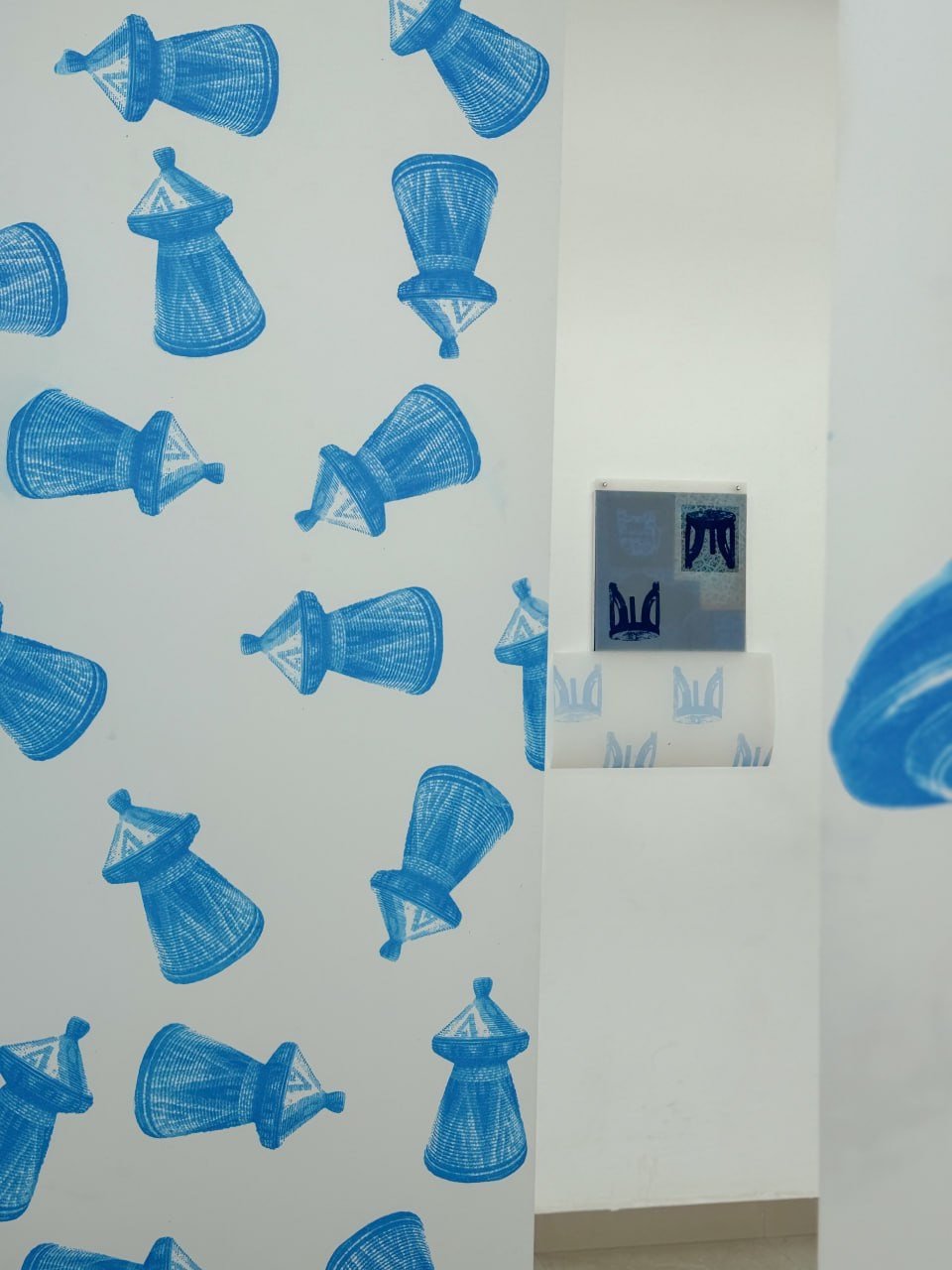
Fig. 1. Birhanu Manaye, (2025). Installation view, Woven Memories, the space Ethiopia, Addis Ababa. Image © Birhanu Manaye.
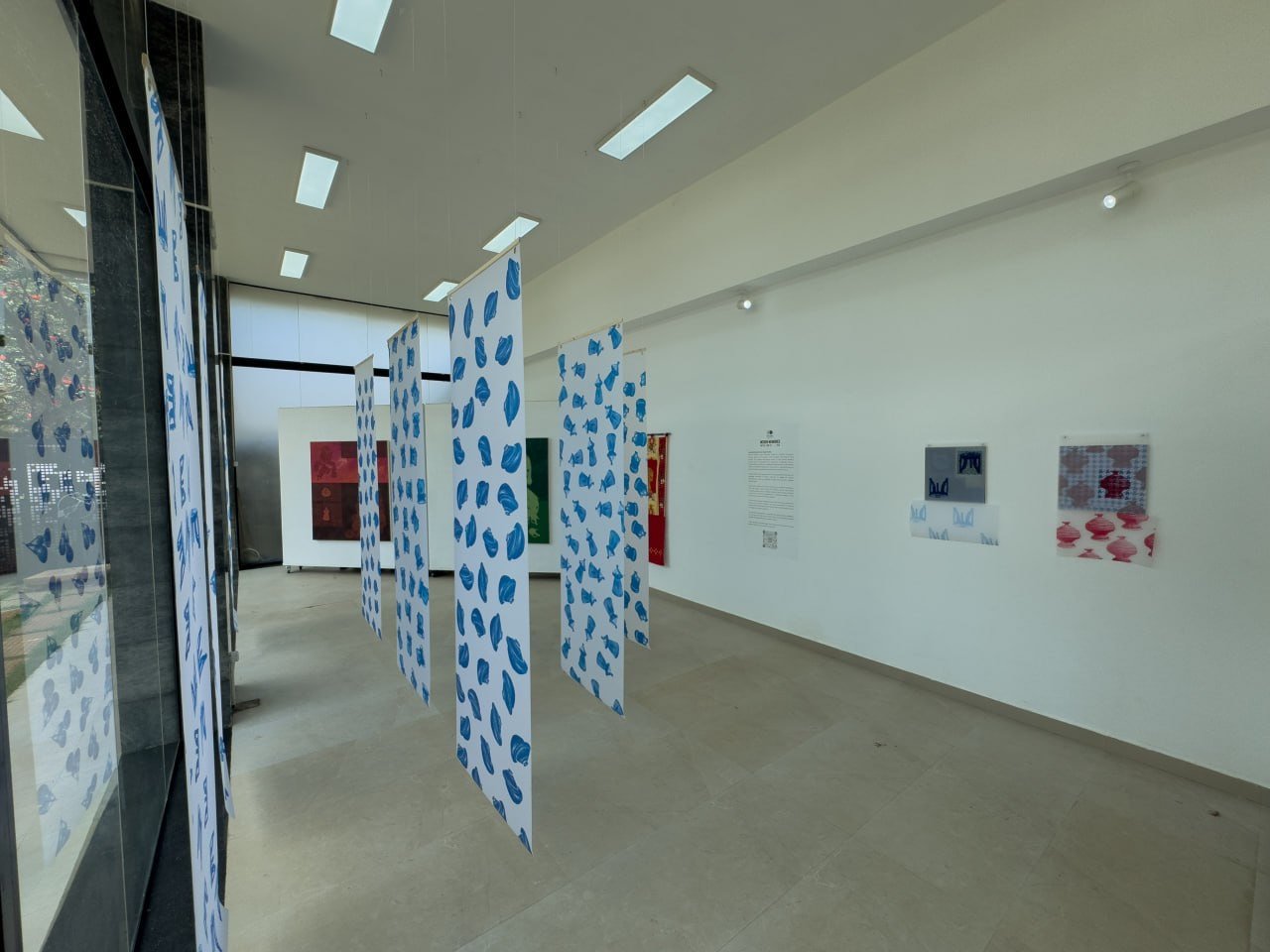
Fig. 2. Birhanu Manaye, (2025). Installation view, Woven Memories, the space Ethiopia, Addis Ababa. Image © Birhanu Manaye.
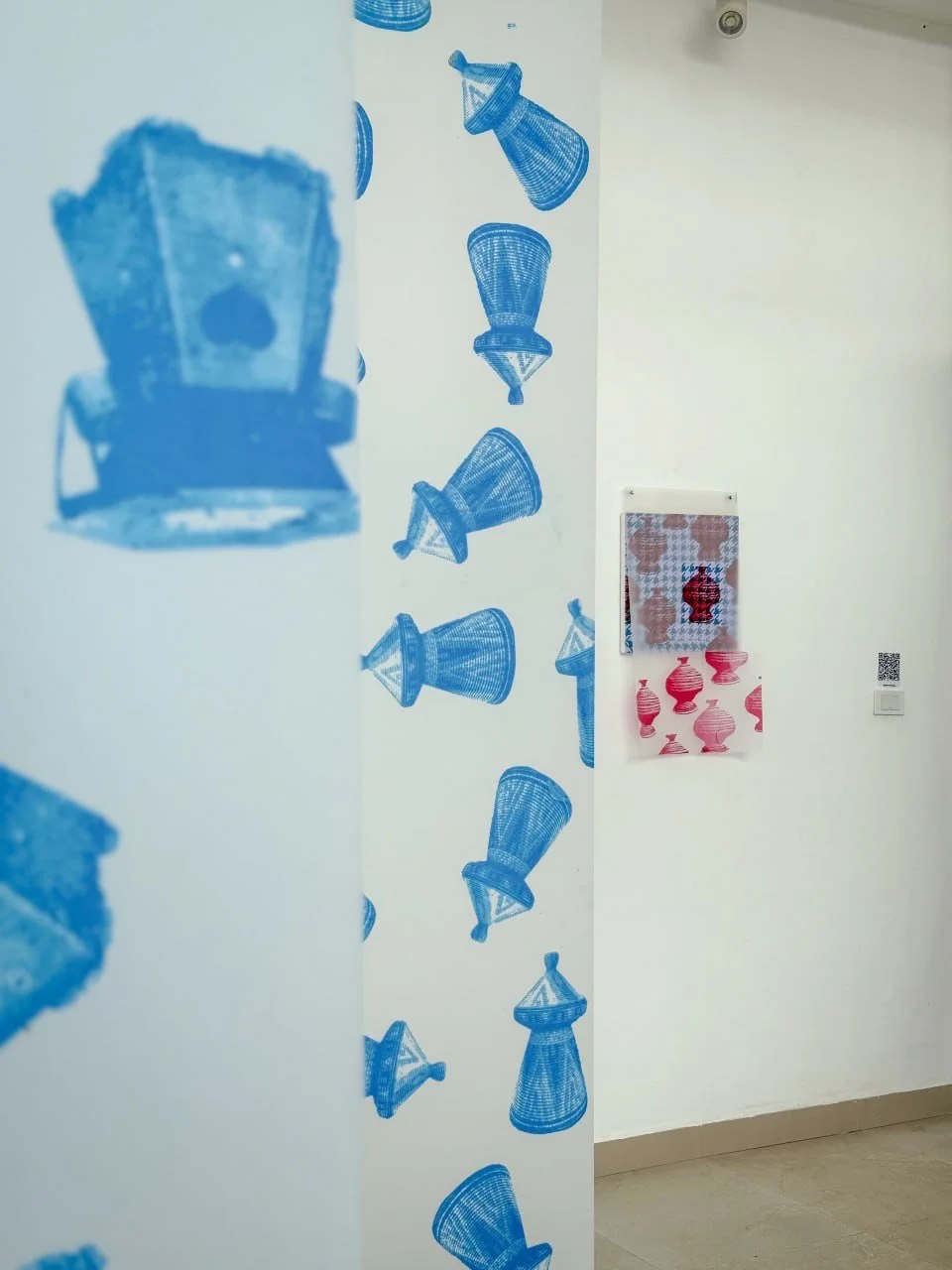
Fig. 3. Birhanu Manaye, (2025). Installation view, Woven Memories, The space Ethiopia, Addis Ababa. Image © Birhanu Manaye
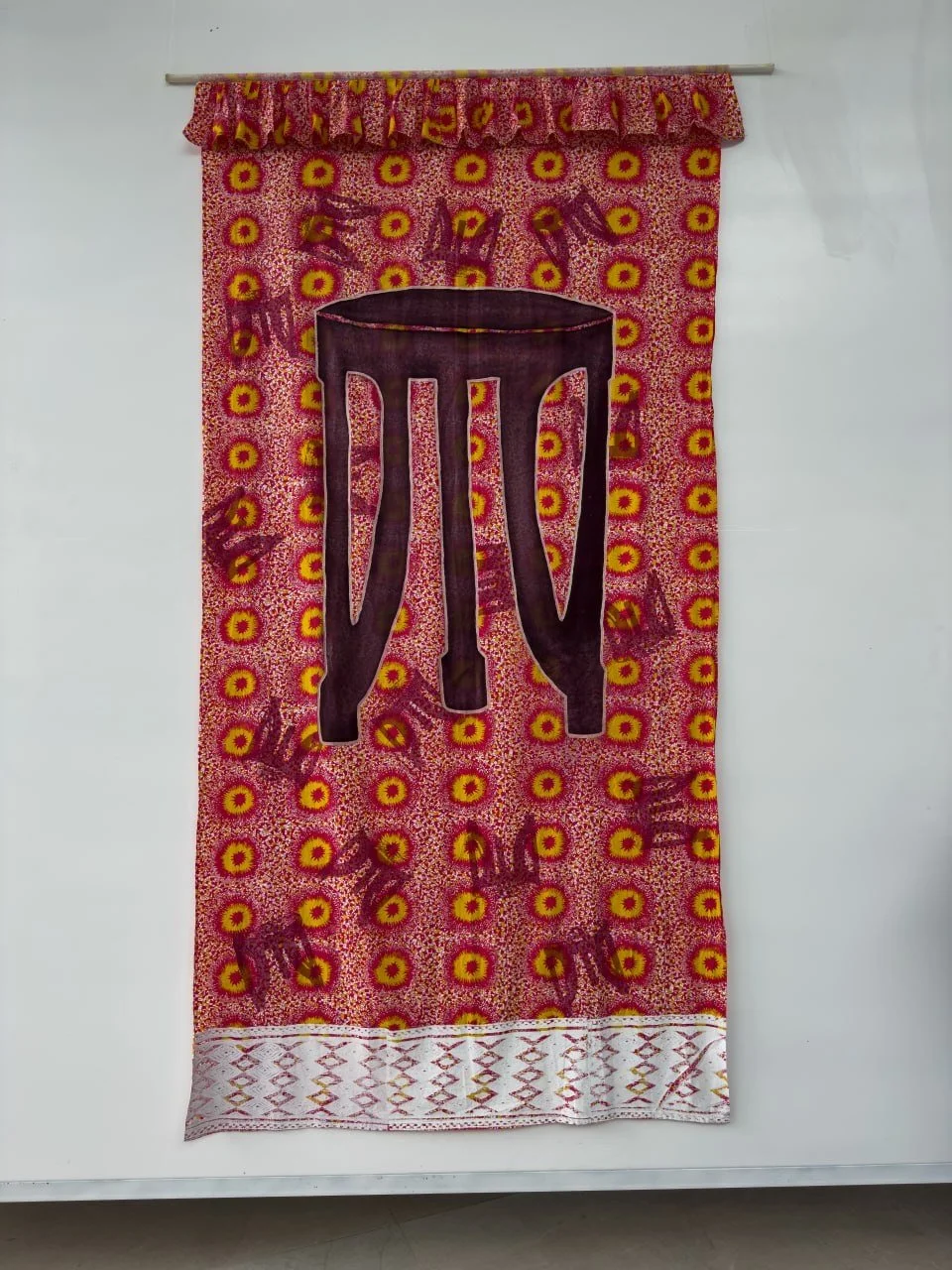
Fig. 4. Birhanu Manaye, Extension of self (2025). Installation view, Woven Memories, the space Ethiopia, Addis Ababa. Image © Birhanu Manaye
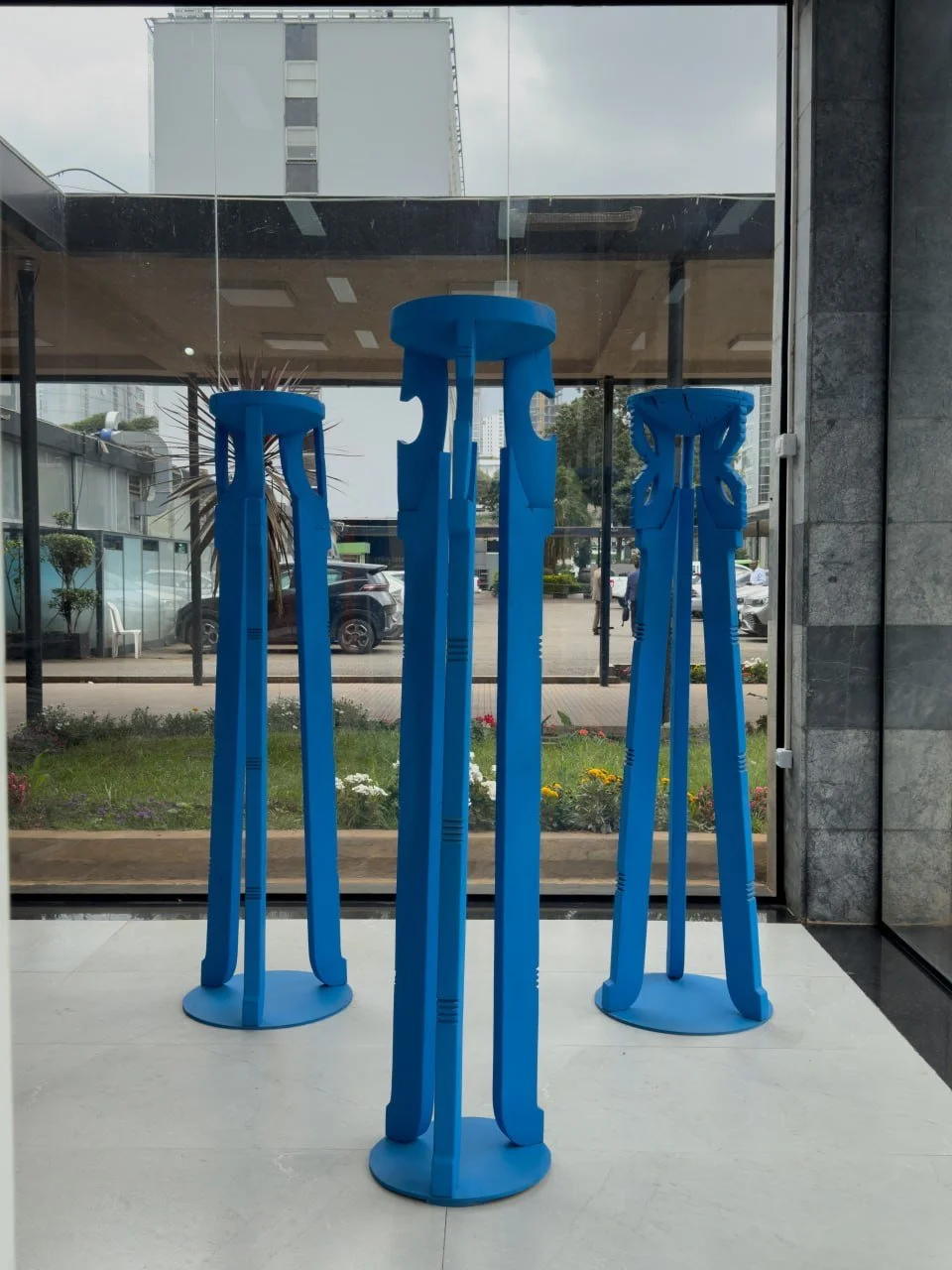
Fig. 5. Birhanu Manaye, Altered States of Being 2025). Installation view, Woven Memories, the space Ethiopia, Addis Ababa. Image © Birhanu Manaye
Curating against the odds
The struggle to sustain
Ethiopia’s art ecosystem
Dagim Abebe
Introduction
Art has to be considered the soul of this nation since it is a powerful mirror that reflects its history, struggles, and aspirations. In Ethiopia, a country with a cultural heritage spanning thousands of years, art has been transmitted in different forms from generation to generation, consisting of oral traditions, performance and other forms of art practice. The roles of curators are crucial in preserving, interpreting, and promoting artistic legacy in different platforms. Yet, curators are trying to navigate a precarious landscape - one shaped by historical upheavals, economic instability, and institutional neglect.
Unlike in many other countries where curatorial studies are well-established disciplines, Ethiopia lacks formal training programs for curators in the homegrown institute, leaving passionate individuals to learn through experience and sheer determination. Meanwhile, dwindling art spaces and the closure of vital galleries have further weakened the fragile ecosystem that once supported artistic expression. The absence of consistent institutional backing - both from governmental and private sectors - has made it even more difficult for curators to sustain exhibitions, engage with audiences, and foster critical discourse around contemporary Ethiopian art.
Despite these challenges, a few Ethiopian curators continue to push forward, creating platforms for dialogue, innovation, and artistic preservation. Their resilience is a testament to the enduring power of art in the face of adversity.
The Role of Curators in Ethiopia
Curators are the architects of shaping artistic and cultural dialogue. They shape narratives, challenge perspectives, and create spaces for artists to thrive. In Ethiopia, their role extends far beyond exhibition-making. They have to educate, mentor, and advocate. Despite this, curators are often working in isolation with endless fights to sustain and uplift the country's art ecosystem. In the absence of formal curatorial education and institutional support, Ethiopian curators operate in an environment where resilience and ingenuity become necessities rather than choices. However, curatorial development for future generations who may follow in their footsteps is not a central focus of existing curators. Therefore, the process of learning also remains elusive in this sense.
Unlike in other global art capitals where curators are formally trained and have access to extensive resources, emerging Ethiopian curators must navigate their profession without fragmented opportunities - occasional workshops, short courses, and hands-on experience. The lack of structured training not only limits their ability to compete on an international stage but also stifles the development of a strong, theory-driven curatorial practice within the country. Without critical discourse and institutional backing, curators are left to forge their own paths, often relying on personal networks and self-directed learning to build exhibitions and foster artistic conversations.
Yet, despite these challenges, some curators have managed to carve out a niche in the contemporary art world. Through sheer determination, they have introduced Ethiopian artists to audiences, facilitated crucial artistic exchanges, and cultivated new spaces for dialogue. Their work is a testament to their passion and adaptability, but it comes at a cost. Many operate without stable funding, without access to archival resources, and without the institutional support necessary to build sustainable careers. As a result, curators often bear the burden of preserving and promoting Ethiopia's artistic legacy with little recognition or security. On the other hand, all the burdens are shared by the artist to fulfill the needs and have to work on the gaps created by a shortage of curators.
The urgent need to address these structural gaps cannot be overstated. If Ethiopia is to nurture a thriving art scene that is critically engaged with both its own history and the global contemporary discourse, curators must be empowered with education, resources, and institutional backing. The role of a curator is not only about displaying art - it is about shaping collective memory, challenging historical narratives, and fostering a cultural consciousness that extends beyond the gallery walls. Investing in curatorial education and infrastructure is not a luxury, but a necessity for the future of Ethiopian art.
A Fragile Ecosystem on the Brink
Running an art space in Ethiopia is sustained by passion rather than profit. Galleries and alternative art spaces serve as critical sites for artistic production, dialogue, and cultural exchange, yet they operate under immense financial strain. The costs of rent, utilities, exhibition materials, and staffing are prohibitively high, while revenue from art sales remains unreliable. Unlike in other parts of the world where galleries benefit from public funding, private sponsorships, and an established art market, Ethiopian art spaces function with minimal institutional or governmental support.
Many gallery owners and independent curators are forced to rely on personal savings, sporadic grants, or maybe international donors to keep their doors open. This financial instability makes long-term sustainability nearly impossible, leading to a cycle where art spaces emerge with promise but struggle to survive beyond a few years. The closure of key spaces in Addis Ababa, such as Netsa Art Village, Guramayle Art Center, and Asni Gallery, LeLa Art Gallery, underscores the severity of this crisis.
Perhaps one devastating example of this struggle was the demolition of Netsa Art Village by the government in 2014. Founded by eleven artists most of them are graduates of Addis Ababa University, School of Fine Arts and Design in 2008, Netsa was a vital cultural hub that provided artists with studio spaces, hosted experimental exhibitions, and nurtured a community of creative minds. Its impact extended far beyond the walls of its exhibition space, offering residencies, workshops, and public programs that fostered a dynamic exchange of ideas.
Netsa's closure was the loss of a space where artistic voices could develop, challenge conventions, and engage with broader audiences. The shockwaves from its disappearance are still felt today, as no institution has risen to fill the void it left behind. As noted by Contemporary And (2023), Netsa Art Village was a pioneering institution that redefined Ethiopia's contemporary art scene, and its closure represents a significant setback for the country's artistic ecosystem.
The disappearance of spaces like the Asni Gallery and Guramayle Art Center further illustrates the precarious state of Ethiopia's art scene. These venues once provided crucial platforms for experimental and contemporary art, allowing emerging artists to break free from commercial constraints and explore new ideas. Their closures point to a deeper structural issue: the lack of a sustainable cultural infrastructure capable of supporting artistic initiatives.
When a gallery shuts down, it is the collapse of an entire network of opportunities for artists, curators, and audiences. Each closure represents the erosion of Ethiopia's artistic ecosystem, making it increasingly difficult for new generations of artists to find exhibition opportunities, engage in critical discourse, or build sustainable careers. As highlighted by MoMAA (2023), the financial and institutional challenges faced by Ethiopian art spaces are systemic, requiring urgent intervention to prevent further decline.
Despite these challenges, individuals like Konjit Seyoum, an artist, curator, and owner of Asni Gallery, and Mifta Zeleke, a curator and owner of Guramayle Art Center, have demonstrated remarkable resilience. Both have transitioned into roles as independent curators, continuing to shape and influence Ethiopia's art scene. Their efforts highlight the enduring spirit of Ethiopia's artistic community, even in the face of systemic neglect and financial insecurity.
In many countries, the arts thrive under a well-structured support system that includes government funding, private sponsorships, and cultural policies designed to sustain artistic expression. Museums, galleries, and cultural centers receive grants, tax incentives, and subsidies to ensure that creativity remains an integral part of society. However, in Ethiopia, the art sector operates in a near-total vacuum. There is little to no government funding for the arts, no dedicated cultural policies to protect artistic spaces, and maybe only minimal private investment. The absence of institutional backing places an overwhelming burden on curators, gallery owners, and artists, who are left to navigate an unsustainable system where financial distress is the norm.
Without state support, the responsibility of sustaining the Ethiopian art scene falls on individuals who often sacrifice their own financial stability to keep artistic initiatives alive. Many curators and gallery owners function as both cultural workers and financial backers, pouring personal resources into maintaining spaces that serve the greater artistic community. This model is not only exhausting but ultimately unsustainable - without external funding, even the most ambitious art spaces eventually collapse under the weight of financial constraints.
The lack of cultural policies to protect and promote art spaces exacerbates this crisis. In countries with robust arts policies, governments intervene to preserve cultural heritage, provide funding for emerging artists, and ensure that art remains accessible to the public. In Ethiopia, no such mechanisms exist. There are no laws in place to safeguard galleries from skyrocketing rents or the threat of commercial redevelopment. Without legal protections, cultural spaces remain highly vulnerable, often forced to close as urban development encroaches on the few remaining artistic hubs.
This policy vacuum has created a shrinking landscape for creativity, where art is pushed to the margins of society. Galleries and independent art spaces struggle to secure long-term leases, making it nearly impossible for them to establish stability or plan for the future. When a gallery closes, it is not just a loss for artists - it is a loss for the public, for cultural discourse, and for the preservation of Ethiopia's artistic identity.
While Ethiopia's galleries struggle to stay afloat, the country's museums face an equally pressing crisis: outdated and ineffective display practices that fail to do justice to Ethiopia's rich cultural heritage with overcrowded space display. Museums should serve as bridges between history and contemporary society, offering immersive and educational experiences. Yet, many Ethiopian museums suffer from neglect, inadequate curation, and a lack of resources to modernize their exhibition spaces.
Visitors to these institutions often encounter poorly lit galleries, disorganized collections, minimal signage, and a near-total absence of interpretive materials. Labels are often sparse, offering little context or background information, and exhibits lack the interactive elements that could make history come alive. As a result, rather than inspiring curiosity or deep engagement, many museum visits feel passive, leaving both local and international audiences disconnected from the country's rich artistic and historical legacy.
A stark example of these challenges is the National Museum of Ethiopia in Addis Ababa, home to some of the most significant archaeological finds in the world - including the fossilized remains of Lucy (Dinkinesh). While the museum's collection is undeniably remarkable, its presentation leaves much to be desired. Dim lighting, outdated display cases, and a lack of narrative structure diminish the impact of these priceless artifacts. Visitors walk past treasures of global importance with little guidance on their historical, scientific, or cultural significance. The absence of engaging, well-researched interpretation not only limits public interest but also weakens the museum's role as an educational and cultural institution. However, the museum is currently undergoing renewal. It is hoped that this process will address all existing limitations and provide effective solutions. Once completed, the impact of these changes will become clear.
Beyond aesthetics, the lack of conservation efforts also threatens the long-term preservation of these artifacts. Without proper environmental controls - such as humidity regulation, specialized lighting, and secure mounting - Ethiopia's invaluable historical objects risk degradation. International museums have invested heavily in cutting-edge preservation and display techniques, yet Ethiopian institutions struggle with the most basic maintenance due to chronic underfunding.
The issue is not simply one of aesthetics but of missed opportunities for education, cultural diplomacy, and national identity-building. Museums should be spaces where Ethiopians can engage with their past in meaningful ways, fostering a sense of pride and historical continuity. They should also serve as major cultural attractions for international visitors, contributing to tourism and global awareness of Ethiopia's contributions to civilization.
If Ethiopia is to cultivate a thriving art ecosystem, urgent reforms are needed. The creation of government-backed arts funding, grants for curatorial projects, and policies that protect cultural spaces could provide a foundation for long-term sustainability. Encouraging private sector investment in the arts - through tax incentives or public-private partnerships - could also help alleviate the financial burden on individuals.
Additionally, the establishment of an arts council or cultural institution dedicated to funding and advocating for the arts could be a transformative step. Such an institution could not only provide financial support but also create educational programs, research initiatives, and networking opportunities to strengthen Ethiopia's artistic infrastructure.
Art is an essential part of national identity, historical consciousness, and social progress. Without institutional support, Ethiopia risks losing its creative lifeblood. The time to act is now before more galleries shut their doors, more artists leave the country, and an entire generation of cultural workers is left without the means to sustain their practice.
Conclusion
Ethiopia's art and cultural heritage are at a crossroads. The challenges faced by curators, artists, and cultural institutions are immense, but they are not insurmountable. The resilience of Ethiopia's art community is a testament to the enduring power of creativity, even in the face of systemic neglect and financial instability. However, resilience alone is not enough. To ensure the survival and flourishing of Ethiopia's artistic legacy, urgent and collective action is needed.
From establishing curatorial training programs and increasing funding for the arts to protecting cultural spaces and fostering international collaborations, the path forward requires a multifaceted approach. Ethiopia's museums, galleries, and cultural institutions must be revitalized, not only to preserve the past but to inspire future generations. The time to act is now before more art spaces disappear, more artists leave the country, and an entire generation of cultural workers is left without the means to sustain their practice.
Art is a vital force that shapes identity, fosters dialogue, and preserves history. Ethiopia's artistic legacy is too precious to be lost. By investing in the arts, we invest in the soul of the nation, ensuring that its creative voice continues to resonate for generations to come.
References
Artnet News. 2023. "Art in Ethiopia." Accessed [March 10]. https://news.artnet.com/market/art-in-ethiopia-1605268.
Contemporary And. 2023. "Netsa Art Village." Accessed [March 10]. https://contemporaryand.com/institue/netsa-arts-village/.
Migrazine. 2023. "Netsa Art Village Legacy: Inhabiting and Creating Green Urban Spaces." Accessed [March 12]. https://migrazine.at/artikel/netsa-art-village-legacy-inhabiting-and-creating-green-urban-spaces.
MoMAA. 2023. "Contemporary Art Challenges in Ethiopia." Accessed [March 12]. https://momaa.org/contemporary-art-challenges-ethiopia/.
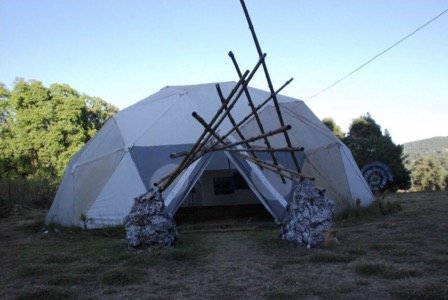

Fig. 1 ©Netsa Art Village, Date Uknown, courtesy of Netsa Art Village, Addis Ababa, Ethiopia.
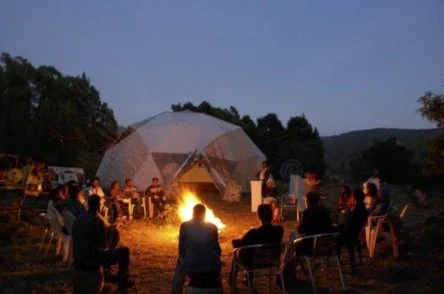
Fig. 2 ©Asni Art Gallery, 2021, courtesy of Konjit Seyoum, Addis Ababa, Ethiopia.
Fig. 3 ©Netsa Art Village, Date Uknown, courtesy of Netsa Art Village, Addis Ababa, Ethiopia.
DAWIT ALgerson
Curator
Blogs
A smaller footprint, a fairer art world.
#carbonfootprint #artworld
To cite: Algerson, Dawit. “A smaller footprint, a fairer artworld.” Curatorial Ethics Network (blog). November 5, 2026. https://www.curatorialethicsnetwork.org/blog
What does an exhibition ask of us? Discomfort, knowledge, and curatorial responsibility
#discomfort #knowledge #curatorialresponsibility
To cite: Algerson, Dawit. “What does an exhibition ask of us? Discomfort, knowledge, and curatorial responsibility.” Curatorial Ethics Network (blog). October 5, 2026. https://www.curatorialethicsnetwork.org/blog
The museum has my history: A case for artistic reparation
#reparation
To cite: Algerson, Dawit. “The museum has my history. A case for artistic reparation.” Curatorial Ethics Network (blog). August 20, 2026. https://www.curatorialethicsnetwork.org/blog
Beyond inclusivity: Toward ethical accountability in global curating
#inclusivity #accountability
To cite: Algerson, Dawit. “Beyond inclusivity. Towards ethical accountability in global curating.” Curatorial Ethics Network (blog). November 6, 2025. https://www.curatorialethicsnetwork.org/blog
Inclusivity as an ethical imperative in curating: Who we include, why it matters, and what is at stake
#inclusivity
To cite: Algerson, Dawit. “Inclusivity as an ethical imperative in curating. Who we include, why it matters, and what is at stake.” Curatorial Ethics Network (blog). September 15, 2025. https://www.curatorialethicsnetwork.org/blog
A Smaller Footprint,
a Fairer Art World
Dawit Algerson
The art world must cut its emissions. Making that transition work for artists in the Global South requires changes to how opportunity, funding and responsibility are shared.
The art world needs to reduce its carbon emissions. That commitment should shape how institutions operate, how exhibitions are produced, how artworks move and how people travel. A sector that invites us to imagine different futures has a responsibility to help make those futures possible.
The climate argument is also an argument about fairness. The Intergovernmental Panel on Climate Change finds that many of those most vulnerable to climate impacts have contributed least to the problem. For cultural communities facing those vulnerabilities, effective climate action matters profoundly.
The difficult question is how the art world distributes the work of changing. As institutions introduce environmental expectations, artists arrive with different resources, transport options and access to professional networks. A policy that appears reasonable from one location can become a considerable obstacle from another.
How can the art world reduce its emissions while making international participation more equitable for artists in the Global South?
The answer begins with recognising where commercial power sits. According to the 2026 Art Basel and UBS Global Art Market Report, the United States accounted for 44% of global sales by value in 2025, and the United Kingdom for 18%. Together, those two markets represented 62%. China’s 14% share complicates any simple division between the West and the rest. These figures measure commercial sales, rather than every form of artistic opportunity, but they demonstrate substantial concentration.
That concentration matters when distance becomes an environmental consideration. An artist already near a major market and an artist whose work must cross an ocean to reach it face different practical choices. If access continues to depend on entering established centres, reducing movement without changing how those centres operate could reinforce existing advantages.
The Global South, of course, contains very different economies, institutions and artistic communities. Wealth and exclusion exist within countries as well as between them. Any fair policy must consider an artist’s actual resources, location and circumstances. Geography alone cannot tell the whole story.
Across Europe, environmental responsibility is taking several forms: funding conditions, government frameworks, institutional standards and voluntary commitments. Precision matters here. A certification scheme, a grant requirement and a national law have different scopes and consequences.
In Denmark, Copenhagen Museum, Thorvaldsens Museum and Nikolaj Kunsthal have obtained Green Attraction certification, which includes requirements concerning emissions, energy, water, waste and procurement. These institutions also operate within Copenhagen’s municipal environmental policies. This is a concrete example of changing institutional practice.
France offers a more direct example of environmental commitments entering funding relationships. Its Framework for Action and Cooperation for Ecological Transformation, known as CACTÉ, is mandatory for artistic production, presentation and training organisations with Culture Ministry agreements lasting three years or more. The framework specifies incorporation into contractual documents through renewal or amendment before the end of 2026. Its scope is a defined group of organisations, rather than every participant in the French art world.
One of its accompanying suggestions brings the access question into focus: curatorial choices that reduce the number of artworks travelling from distant locations. The guidance also proposes shared freight and coordinated touring, and explicitly recognises equity in international circulation. Crucially, these particular actions are illustrative options, not compulsory restrictions on distant artworks.
Nevertheless, the suggestion deserves examination. The location of a work is different from the nationality of its maker: an African artist may already have work in a European collection. But a preference for nearby loans could benefit artists whose work has already entered those collections, while making a first presentation more difficult for someone whose work remains elsewhere. That is a potential consequence to monitor when designing programmes.
Similar questions arise around travel. An artist in Brussels may have a practical rail connection to a European exhibition. An artist travelling from Lagos faces a different set of possibilities. The instruction to choose greener transport must account for the routes that actually exist, alongside cost, safety,accessibility and immigration requirements.
Artists have already articulated this problem. In his 2023 “Letter from Tunis,” Tunisian choreographer Selim Ben Safia describes how international performances can help sustain artistic creation at home. His observation is direct: “To ‘go local’ you need an infrastructure that allows it.” He also describes building local opportunities through Al Badil’s Hors Lits! performances in people’s homes. Although his account concerns dance, it offers a valuable lesson for the wider cultural sector: local investment and international exchange can support one another.
The concern also appears in UNESCO’s 2026 Re|Shaping Policies for Creativity report, which warns that environmental approaches insufficiently adapted to different contexts may deepen inequalities in cultural mobility. It also cautions against imposing digital participation as a substitute for physical exchange. These are identified risks, rather than proof that sustainability policies have already caused a measurable, universal loss of opportunity across the Global South.
There are useful principles within European policy itself. The European Commission’s guidance for assessing environmental aspects of Creative Europe projects recognises unequal starting conditions and the absence of greener alternatives in some contexts. It also advises that applicants should not be penalised for failing to reference environmental certifications, which may be costly or unavailable.
Those principles provide a foundation. Institutions and funders now need to make them practical.
A fair transition should begin with institutional responsibility for emissions. Museums, galleries and fairs should adopt credible reductions across their activities, including buildings, freight, production and travel. Within a declining travel budget, decisions should consider the purpose of a journey, the alternatives available and the participant’s access to opportunity.
A first significant invitation and the fifth appearance by an already well-connected participant may serve different purposes. Longstanding collaborations also deserve consideration; fairness cannot be reduced to counting newcomers. Institutions should explain their priorities and examine who benefits from them. Every journey’s emissions still count. Equity should influence how a limited budget is allocated.
Planning is another responsibility institutions can take on. Earlier exhibition schedules can make consolidated freight and slower transport possible. Shared routes, reusable packing and coordinated loans can help preserve international participation while reducing emissions.
There is practical evidence that such changes can also save money. In a 2023 account published by Gallery Climate Coalition, Thomas Dane Gallery’s registrar Hannah Wright reported that switching three shipments from air to sea reduced emissions by 34.11 tonnes of carbon dioxide equivalent and saved approximately £24,000. She also identified the limits: the shipments used full containers or consolidation, and smaller volumes might produce smaller savings.
That qualification points towards a useful intervention. Larger organisations could fund and coordinate shared shipping capacity for smaller participants. Hosts could provide earlier commitments, suitable insurance arrangements and realistic delivery windows. The environmental suitability of each journey would still need assessment, including conservation requirements and the full transport route.
Longer residencies and coordinated tours can also make fewer international journeys more productive. Their success depends on paying for the time involved. Accommodation, adequate fees, care costs, accessibility support and visa arrangements belong in the budget. Artists should have a meaningful choice: someone with children, another job or caring responsibilities may be unable to extend a stay. The full environmental impact also needs assessment; a longer visit is not automatically a lower-emission one.
Existing funding schemes demonstrate how support can accompany environmental expectations. Culture Moves Europe’s 2026–2027 individual mobility call includes a €400 green mobility top-up, alongside support for visas, children and accessibility. Eligibility depends on legal residence in a participating Creative Europe country, with a project in another participating country, so it does not provide a universal solution for artists based in the Global South. Its funding structure nevertheless offers a model that other programmes could adapt.
Environmental administration should be funded too. When an institution requires emissions information, it should provide usable tools, clear instructions and assistance proportionate to the task. Shared expertise can help smaller organisations improve their practices without requiring every artist to become an unpaid carbon accountant.
Just as importantly, artists and institutions in the Global South need authority over the policies that affect them. That means paid participation in programme design, influence over budgets and recognition of existing local expertise. Consultation becomes useful when participants can change a decision.
Investment should also strengthen opportunities closer to where artists live. Sustained support for artist-run spaces, regional exhibitions, conservation facilities, acquisitions and exchange between countries in the Global South can give artists more choices about where to build their careers. Local partners should determine the priorities. Such investment should expand their ability to collaborate internationally as well as regionally.
Finally, institutions should assess access alongside environmental performance. Annual reporting could track absolute emissions together with the distribution of invitations, commissions, artist payments and acquisitions. It could examine sustained relationships, participation by artists previously absent from programmes, and opportunities lost because of travel or shipping constraints.
These measures would help reveal whether emissions reductions are accompanied by broader participation. They would also discourage an institution from claiming progress simply because emissions have shifted to a supplier or partner elsewhere.
The art world has an opportunity to make its environmental commitments more ambitious by taking these questions seriously. That requires money, planning and a willingness to share decisions. It requires institutions to reconsider the systems through which artists reach audiences and earn a living.
A smaller carbon footprint is essential. The fairest version of that achievement will give artists more power over how they participate—and ensure that the distance between an artist and an opportunity does not become an excuse to stop building the connection.
References
French Culture Ministry, CACTÉ framework
CACTÉ action guidance, pp. 4 and 10–12
On the Move, Cultural Mobility Yearbook 2023, pp. 37–41
European Commission, assessment guidance
What does an exhibition ask of us?
Discomfort, knowledge, and
curatorial responsibility
Dawit Algerson
What happens when an exhibition asks us to engage with something uncomfortable? What responsibilities belong to the artist who makes the work, the institution that presents it, and the audience encountering it? These responsibilities meet within the exhibition, but they do not necessarily align.
These questions began taking shape while I was co-curating FEBRUARIE 2022: ECOURI, an exhibition of Valeria Duca’s work at the National Museum of Fine Arts of Moldova in 2025, alongside Alexandra Mihalaș. They returned during our symposium in Oslo earlier this year,following a presentation on curating the uncomfortable. I began reconsidering what we ask of audiences when we invite them to engage with difficult realities and what we assume those encounters can accomplish.
Museums and art spaces participate in producing knowledge. Through selection, interpretation, and display, they shape which experiences enter public discussion, whose accounts become authoritative, and what remains difficult to see. War, displacement, poverty, and violence belong to the world these institutions describe. Should information about them be excluded because it causes discomfort? Whose understanding would that protect, and whose reality might it obscure?
Yet choosing to address a difficult subject is different from choosing how to present it. An institution might decline to show a graphic image or construct an immersive simulation while communicating the history through other means. Withholding a particular representation does not necessarily mean withholding knowledge. Equally, a restrained presentation may leave something essential unexpressed.
Discomfort also has different sources. It can arise from confronting suffering, having an assumption challenged, or feeling that a representation humiliates or misrecognises someone. These experiences cannot be evaluated as though they were identical. Examining them requires attention to the relationships between artistic choices, institutional framing, and audience response.
Crossroads Foundation’s A Day in the Life of a Refugee, presented at the World Economic Forum in Davos, makes these relationships unusually visible. Although an immersive humanitarian simulation rather than a museum exhibition, it offers a useful comparison. The organisers describe a programme involving displacement, insecurity, constrained choices, and a makeshift camp, developed with refugees, internally displaced people, and humanitarian workers. Their account of the 2019 programme describes a 75-minute experience, with discussion and opportunities for further engagement forming part of the approach. They acknowledge that its composite narrative cannot represent every refugee’s life.
For participants accustomed to exercising authority, simulated powerlessness might interrupt familiar habits of thought. Information previously encountered at a distance might acquire urgency. Those helping to develop the programme may see this confrontation as a way to reach people whose decisions affect displaced populations. Rejecting their chosen method solely because it is uncomfortable could itself require justification.
Nevertheless, participants know that the exercise will end. Their return to ordinary life is anticipated, while the uncertainty of displacement cannot be contained within a scheduled encounter. This difference does not make simulation inherently worthless; every representation is partial. It does make the claims attached to the experience important.
Does the programme help participants recognise how much they still need to understand? Or might its intensity encourage confidence that they now know what displacement feels like? A strong emotional response could accompany either outcome. The discussion afterwards therefore deserves as much attention as the simulation: how does it connect temporary sensations with the histories, policies, and individual circumstances those sensations cannot explain?
A different dimension emerges in Political Art, shown at Ujazdowski Castle Centre for Contemporary Art in Warsaw in 2021–2022. The exhibition presented artistic freedom and political dissent as central concerns. In an accompanying essay, co-curator Jon Eirik Lundberg interprets Dan Park’s provocative collages as warnings against racism, totalitarianism, and political failures. This is an argument about how the works should be understood, and it forms part of the institution’s framing of them. Unwanted Warnings: On the Scandinavian Reception of Dan Park’s Collages.
The case raises questions about artistic responsibility without assuming that an artist must avoid offence. How much weight should intention carry when a work permits conflicting interpretations? What responsibility accompanies the use of imagery that some viewers may experience as degrading? An artist cannot determine every response, but the unpredictability of reception does not make the choice of imagery irrelevant.
Institutional responsibility enters through the decision to exhibit and explain that work. Presenting an artist as a dissenter may open space for arguments excluded elsewhere. It may also predispose audiences to regard objections as evidence of intolerance. What would allow visitors to examine the work, question its defence, and challenge the institution’s interpretation?
Artistic freedom makes room for difficult expression. How an institution exercises its own judgement in selecting and presenting that expression remains a separate question. Does it provide the conditions for disagreement, including disagreement with its curatorial premise? How does it distinguish an invitation to engage from an expectation that audiences accept its preferred reading?
The Davos simulation and Political Art involve different purposes and methods. They nevertheless reveal how makers and institutions construct a role for their audiences. Visitors may be invited to empathise, question themselves, reconsider a judgement, or confront an unfamiliar position. What happens when they respond differently? Can refusal, criticism, or departure also count as considered engagement?
These questions have a historical dimension. In late Victorian London, the practice of “slumming” brought relatively affluent visitors into impoverished neighbourhoods, particularly the East End. Curiosity and excitement existed alongside philanthropy, investigation, and reform. Concern for others and unequal relations of power could coexist within the same visit. Slums and Slumming in Late-Victorian London.
A contemporary simulation is not equivalent to such an excursion. Yet the visitor’s freedom to enter and leave remains worth examining. One person’s enduring circumstances become another person’s temporary encounter.
The accusation of “poverty porn” draws attention to the possibility that deprivation becomes material for someone else’s emotional consumption. Used too quickly, however, the term can become a verdict before the relationship has been examined. Who initiated the representation? Who controls its form? What can contributors challenge or refuse? Who benefits from its circulation?
A distressing representation might reduce someone to an image of need. It might also be a means through which that person deliberately demands attention. Ethical scrutiny must account for that agency. It must also remember people who are represented without being present to explain, contest, or influence what an exhibition makes of their lives.
These questions return me to ECOURI. Alongside Duca’s paintings, we included audio testimonies from Ukrainian refugees. Our intention was to allow visitors to encounter individual accounts of displacement through people’s own voices. The paintings and testimonies offered different ways into the subject, and I observed strong emotional responses among visitors.
What those responses demonstrated is less certain. They indicated that the encounter mattered emotionally to some people. They did not, by themselves, establish what visitors understood, whether their assumptions changed, or how long their attention lasted.
Words such as empathy, awareness, and impact can become too readily attached to visible emotion. Tears or silence might express recognition, grief, discomfort, or a response that remains difficult to articulate. Our intentions and observations need to remain distinguishable.
Including testimony also created responsibilities that could not be fulfilled simply by making voices audible. Selection, editing, placement, and presentation remained curatorial decisions. Contributors’ words entered a structure that we helped determine. An account heard beside a painting might be interpreted through that image; an excerpt might acquire an emphasis different from the longer account from which it came.
Looking back, I need to ask what possibilities the format gave contributors to shape that relationship. How much authority did their presence carry? Could visitors distinguish an individual account from a general statement about displacement? These questions place my practice within the ethical problem I am examining.
They also complicate the idea of audience care. A Ukrainian visitor, someone with another history of displacement, and someone approaching the subject from a distance might relate differently to the same material. None of these positions produces one predictable response. Recognition may be welcome or painful. Unfamiliarity may invite attention or resistance.
Care involves decisions about preparation, context, and choice. Allowing visitors to decide whether to encounter particular material can preserve access while recognising different needs. Removing material on their behalf, however, may prevent an encounter that contributors actively want to make possible.
Audience responsibility deserves consideration within these conditions. What might it mean to approach a work attentively, examine context, or acknowledge the limits of one’s interpretation? Such expectations cannot reasonably require endurance, agreement, or a prescribed emotional response. An institution asking visitors to remain open must also consider how it will respond when their engagement takes the form of criticism.
Funding shapes these relationships too. The European Commission has documented support for cultural projects concerned with refugee integration through Creative Europe. This establishes the existence of thematic support; it does not establish that exhibitions about traumatic subjects are generally easier to fund.
It does invite questions about how funding frameworks influence a project’s language and scope. Do they enable work that would otherwise remain unsupported? Do they encourage institutions to promise empathy or social change before anyone can know what an exhibition will produce? Supporting displaced practitioners and supporting representations of displacement are different activities. What opportunities exist for those practitioners to explore subjects unrelated to adversity?
Artists, institutions, and audiences therefore participate in a relationship where responsibility is shared but power is uneven. Institutions control access, resources, and framing. Artists make choices whose effects extend beyond intention. Audiences interpret, question, and sometimes refuse. The people represented may have influence within these processes or may remain outside them.
An appeal to artistic freedom, educational purpose, or audience openness can clarify a responsibility. It can also become a way of passing responsibility elsewhere. How might we recognise the difference in a particular exhibition?
I remain reluctant to make discomfort a sufficient reason for excluding knowledge. I am equally reluctant to treat discomfort as evidence that knowledge has been produced. What an exhibition asks of us should remain open to examination including what it asks of those whose lives, identities, or experiences make the encounter possible.
When we leave an exhibition challenged or moved, what have we learned and whose account would help us recognise what we still do not understand?
The museum has my history
A case for artistic reparation
Dawit Algerson
There is an irony I cannot ignore: I am writing this in English, a language that does not belong to me, shaped by the same colonial systems I am critiquing. That is not a disclaimer. It is, perhaps, the clearest illustration of the problem.
As a curator from he Global South, I have grown increasingly frustrated with the language that dominated contemporary discussions around decolonization. Museums speak of inclusion. Galleries speak of representation. Biennials speak of diversity. Yet beneath these well-intentioned terms, I often find the same underlying assumption: that the Global South must still explain itself in order to be understood.
The conversation around decolonisation has become widespread within the art world. Institutions are revisiting their collections, returning looted objects, and expanding visibility of artists from formerly colonised regions. These are important developments and long overdue. However, I am left wondering whether recognition alone is enough. If colonialism extracted not only objects but also histories, languages, knowledge systems, and cultural authority, can restitution alone repair the damage?
I want to be specific, because generalisation has its own violence. When I speak of colonialism’s cultural damage, I am speaking primarily from within Africa and the Middle East, my own geography of knowledge. I do not want to collapse Latin America, South Asia, and East Asia into a single narrative; their colonial histories, their losses, and their ongoing struggles are distinct and deserve their own voices. What I can speak to is the particular texture of extraction across Africa and the Arab world: the removal of archives, the suppression of languages, the rewriting of histories through foreign frameworks. This is where I stand, and I ask the reader to hold that specificity.
Across this geography, entire archives were removed. Cultural objects were taken. Languages were suppressed. Histories were rewritten through colonial perspectives. What remains is often fragmented, leaving contemporary generations to reconstruct identities from pieces scattered across continents.
Today, some of the most important cultural artefacts belonging to these societies remain housed in foreign institutions or private collections. The debate surrounding the Benin Bronzes has become one of the most visible examples but it is far from unique. The issue extends beyond a single collection or museum. It raises a larger ethical question: how can society fully understand itself when significant parts of its cultural memory exist elsewhere?
Yet the problem is not simply the location of these objects. The deeper issue is authors. Colonialism did not only remove artifacts. It removed the ability of communities to narrate themselves. The power to define culture, history, and value gradually shifted towards institutions with wealth, infrastructure, and global influence. Over time, these institutions became the primary authors of narratives that did not belong to them.
This legacy continues to shape the contemporary art world. Artists from Africa and the Arab world are often expected to translate themselves into languages, frameworks, and references that are legible to Western audiences. Curators are encouraged to provide context, simplify complexity, and make cultural specificity accessible. While these practices may be intended to foster understanding, they can also reinforce an unequal relationship in which one side is expected to explain while the other remains the default point of references.
For this reason, I believe the conversation must move beyond decolonisation and toward artistic reparation.
Artistic reparation is not simply the return of stolen objects. It is the recognition that centuries of extraction created structural imbalances that still exist today. Returning an artefact does not automatically rebuild archives, support local museums, train curators, strengthen cultural institutions, or restore historical confidence. Repair requires more than symbolic gestures. It requires investment.
If museums, foundations, art fairs, and cultural institutions acknowledge that they have benefited from systems shaped by colonial histories, then they must also ask what obligations follow from that acknowledgement. What would happen if resources were directed toward rebuilding local cultural infrastructures? What if funding prioritised long-term partnerships instead of temporary exhibitions? What if authority was shared rather than granted? What if institutions invested in helping communities tell their own stories instead of continually interpreting those stories on their behalf?
Germany’s return of the Benin Bronzes, accompanied by substantial funding for a new museum in Benin City, offered a glimpse of what artistic reparation might look like. It also exposed its limits. Disputes soon emerged over governance, ownership, and control. The lesson was revealing. Reparation is not simply a transfer of objects or money. It is a transfer of authority. The funding arrived, but authority remained contested.
The future of a more equitable art world cannot be built solely through representation. Representation without structural change risks becoming another form of management rather than transformation. What is needed is a commitment to repair: repair of memory, repair of institutions, repair of authorship, and repair of cultural agency.
The greatest theft of colonialism was not the removal of objects from their places of origin. It was the removal of authority from the people who created them. Until that authority is restored decolonisation remains incomplete.
Beyond inclusivity
Toward ethical accountability in
global curating
Dawit Algerson
The curatorial field has entered a phase of moral fatigue. After more than a decade of exhibitions promising diversity and representation, the language of ethics risks becoming aestheticised and absorbed into the institutional grammar of global art. “Inclusion” has become both a virtue signal and a containment strategy, an invitation that rarely transforms the structures it inhabits. This essay positions ethical accountability as the necessary next step in the evolution of curatorial ethics.Accountability demands more than visibility; it requires continuity, care, and critical self-implication. Curating today must not only address who is visible but also interrogate how, where, and to whom responsibility is sustained after visibility has been granted. The shift from inclusion to accountability marks a movement from symbolic representation to structural and relational ethics.
Drawing on theorists such as Irit Rogoff and Beatrice von Bismarck, this paper adopts the concept of the curatorial as a critical mode of thought, an ongoing condition rather than an isolated event. As Rogoff (2012) observes, the curatorial does not end with display but continues as a sustained relationship with context and consequence. Similarly, Nora Sternfeld and Luisa Ziaja (2012) describe post-representational curating as a process of collaborative knowledge production, positioning curating as a mode of shared epistemology rather than static exhibition-making. Together, these frameworks redefine the curator as a custodian of relational accountability.
Daniela Agostinho’s (2024) notion of curating other-archives adds a reparative dimension to this discourse. Her work frames curating as an act of witnessing and care, not to fill historical voids but to hold space for their persistence. This resonates with Temi Odumosu’s (2019) What Lies Unspoken (Statens Museum for Kunst, 2017), where listening, witnessing, and countervisuality become ethical acts within the colonial museum. Both scholars argue that accountability lies not in inclusion but in sustained responsiveness to the silences and tensions that inclusion often masks.
At an institutional level, Addis Fine Art, a dual-location gallery operating between Addis Ababa and London, illustrates these tensions. Its transnational model embodies the complexities of representing local artistic voices within global systems of validation. Rather than viewing this as a simple success story of African inclusion, this essay reads it as a site of negotiation where accountability is enacted across unequal geographies of authorship and audience. By drawing parallels to Agostinho’s Reparative Encounters (2025) network, which connects artists and curators across Ghana, Greenland, and the U.S. Virgin Islands, Addis Fine Art is situated within a broader constellation of Global South institutions striving to practice ethical responsibility within transnational frameworks.
Similarly, Daniel Cid’s (2023) Following the Fish (Venice Architecture Biennale, Institut Ramon Llull Pavilion) provides a productive parallel. His emphasis on decarbonisation and shared futures in cultural design mirrors the curatorial imperative to decarbonise representational systems and dismantle extractive models of visibility that persist under the guise of diversity. Ethical accountability, in this sense, is both ecological and institutional, a practice of care that rebalances rather than replaces. Readers can refer to the exhibition documentation of Following the Fish (Venice Biennale, 2023) for visual context.
Ethical accountability in curating requires a shift from representation to responsibility. The curatorial field increasingly recognises that inclusion and visibility, while necessary, do not in themselves transform the structures that determine who is seen and how meaning is produced. As von Bismarck, Rogoff, and Sternfeld argue, curating is not a neutral act but a form of knowledge production that both reflects and shapes social hierarchies. The question is not only who is represented, but through which systems of power representation becomes possible.
Daniela Agostinho’s concept of curating as witnessing and care provides an ethical foundation for this discussion. In her work on other-archives and the afterlives of images, Agostinho (2024) argues that curatorial practice carries a responsibility toward both the living and the dead. This form of ethical witnessing demands attentiveness to how historical materials are reactivated within exhibitions and how they can reproduce or repair harm. Curating thus becomes an act of accountability, where care functions as a political method rather than a symbolic gesture.
Building on this, Sternfeld and Ziaja (2012) define post-representational curating as an approach that moves beyond display and authority toward participation and negotiation. This aligns with Rogoff’s (2008) educational turn, which reframes curating as a pedagogical process of co-learning and critical reflection. Together, these perspectives position curating as a relational method of inquiry rather than a platform of presentation.
These frameworks reveal the need to transform institutions rather than reform their surfaces. Exhibitions such as What Lies Unspoken (SMK, 2017) and Kirchner and Nolde: Expressionism. Colonialism (SMK, 2021) exemplify this shift. As Hicks (2020) notes, institutional reflexivity alone is insufficient when material hierarchies of ownership remain unchanged; accountability requires restitution, shared authorship, and long-term collaboration. Readers can consult SMK’s public archives for images and documentation of these exhibitions.
At the global level, Daniel Cid’s Following the Fish (Venice Architecture Biennale, 2023) links ecological responsibility with postcolonial ethics. By situating architecture and art within planetary systems, the project demonstrates how curating can bridge local knowledge and global networks. Ethical accountability, therefore, becomes both structural and environmental, a method of care extending across scales of visibility.
In Eastern Europe, accountability takes on additional dimensions. Tlostanova, Annus, Oleksiyenko, and Tavadze (2024) reveal how cultural institutions remain shaped by imperial epistemologies inherited from both Soviet and Western paradigms. Their text Decolonizing Ukrainian Art History (2024) calls for dismantling dual dependencies through deimperialised frameworks of authorship. Tlostanova’s (2012) notion of decolonial aesthesis reframes aesthetics as epistemic resistance rather than imitation.
In Moldova, these ideas manifest through overlapping forms of marginality, including the legacy of Soviet domination, Romanian proximity, and Western expectation. Annus (2018) terms this condition “internal colonialism,” where empire persists in institutional and psychological forms. Fanon’s (1961) insights into decolonization as a reconstitution of selfhood remain vital here, suggesting that curatorial work must address both structural and affective residues of empire. Exhibitions such as ECOURI (National Museum of Fine Arts, Chișinău, 2025) and Grădina Urzica / Nettle Garden (Danish Cultural Institute, 2025) demonstrate how curating can operate as an act of repair, integrating ecology, memory, and decolonial awareness. Readers can refer to institutional websites and press archives for further visual and contextual reference to these exhibitions.
Across these contexts, ethical accountability thus emerges as a sustained negotiation between care, reflexivity, and structural transformation. From Agostinho’s witnessing to Sternfeld’s processual ethics, from Rogoff’s pedagogical critique to Tlostanova’s decolonial aesthetics and Fanon’s humanist reconstruction, a framework for curatorial ethics takes shape, one that privileges responsibility over representation and relation over visibility. Ultimately, curating ethically means transforming visibility into commitment and critique into care.
References
Agostinho, D. (2024). Curating Other-Archives: Witnessing, Care and Image Afterlives. In Inward Outward: Witnessing/Care & the Archive. Inward Outward Symposium Publication.
Annus, E. (2018). Soviet Postcolonial Studies: A View from the Western Borderlands. Routledge.
Bismarck, B. von, & Rogoff, I. (2012). “Curating/Curatorial.” In B. von Bismarck (Ed.), Cultures of the Curatorial (pp. 31–38). Sternberg Press.
Cid, D. (2023). Following the Fish. Venice Architecture Biennale Catalogue, Institut Ramon Llull.
Fanon, F. (1961). The Wretched of the Earth. Grove Press.
Hicks, D. (2020). The Brutish Museums: The Benin Bronzes, Colonial Violence and Cultural Restitution. Pluto Press.
Odumosu, T. (2019). What Lies Unspoken: Sounding the Colonial Archive. Statens Museum for Kunst.
Rogoff, I. (2008). “Turning.” e-flux journal, Issue 0.
Sternfeld, N., & Ziaja, L. (2012). “What Comes After the Show? On Post-Representational Curating.” On Curating, 14(12), 21–24.
Tlostanova, M. (2012). Decolonial Aesthesis and the Challenges of Post-Soviet Imaginaries. Duke University Press.
Tlostanova, M., Annus, E., Oleksiyenko, A., & Tavadze, G. (2024). Decolonizing Ukrainian Art History. Nationalities Papers, 52(3), 451–467. Cambridge University Press.
Inclusivity as an
ethical imperative
in curating
Who we include,
why it matters,
and what is at stake
Dawit Algerson
Introduction
In recent years, inclusivity has emerged as one of the defining questions of contemporary curatorial practice. It is no longer sufficient to view inclusivity as a matter of representation alone; rather, it must be understood as a structural and ethical commitment that shapes who is visible, whose histories are recognized, and which communities are invited into dialogue.
Curators are uniquely positioned as mediators of cultural knowledge and public discourse, which places a profound responsibility on them to ensure that exhibitions foster equity rather than reproduce exclusion. The ethical imperative is clear: to curate inclusively is not to follow a trend but to acknowledge the moral obligation to redress systemic gaps in representation that persist across race, gender, class, geography, and ability.
This paper takes as its starting point both my personal experiences in curatorial practice and the broader contradictions within the field today. Many contemporary art institutions actively preach the importance of inclusivity, yet their implementation often falls short. The rhetoric of openness, diversity, and access is frequently deployed in mission statements and curatorial texts, but the lived realities of representation continue to reflect structural exclusions. Nowhere is this more evident than in the persistent marginalization of the Global South. Artistic production from these regions is too often dismissed as lacking relevance within dominant art historical narratives, or it is only acknowledged when reframed through Western curatorial lenses. Such omissions are not accidental but symptomatic of ongoing systemic inequities that deny visibility and legitimacy to vast bodies of cultural knowledge.
The key to overcoming these inequities lies in recognizing and validating artistic practices from the Global South on their own terms. Inclusivity, when approached ethically, must move beyond token gestures of representation and engage with the deeper structures that determine who participates in cultural discourse. By questioning why certain voices remain excluded and by interrogating the mechanisms that perpetuate these omissions, curators can begin to transform inclusivity from an aspirational slogan into a lived and sustainable practice.
Literature Review and Theoretical Grounding: Inclusivity as Ethical Practice
Inclusivity in curating cannot be reduced to representational headcounts. It is an ethical program that must reconfigure how institutions research, platform, and share authorship. Okwui Enwezor’s curatorial model for Documenta11 remains a foundational reference point. By structuring the exhibition as a series of global platforms for discourse rather than a single Eurocentric display, Enwezor shifted curating toward engagement with geopolitics, histories of oppression, and the lived realities of marginalised communities (Enwezor 2002). His approach demonstrated that inclusivity is not achieved by simply adding more artists from diverse backgrounds but by rethinking the very frameworks through which art is presented and debated. This resonates with Walter Mignolo’s concept of epistemic disobedience, which insists that genuine inclusivity requires breaking with hegemonic knowledge systems and generating new epistemologies from those historically excluded (Mignolo 2009).
Claire Bishop complicates this discourse with her critique of participatory art in Artificial Hells. She argues that participation itself is political because it allocates voice and power, which means projects can reproduce exclusions even when framed as inclusive (Bishop 2012). Nina Simon (2010) offers a practical counterweight, proposing museum models where publics co-create content, programs, and evaluation criteria. Examples such as the Oakland Museum of California’s co-designed exhibitions or Tate Exchange in London, where communities are given authorship over programming, demonstrate how inclusivity can move from aspiration to practice when institutions are willing to share power.
Jennifer Fisher’s notion of “exhibitionary affect” extends this argument by reminding us that inclusivity is not only about who is represented but also about how exhibitions feel to audiences. Curatorial design, interpretive tone, and spatial strategies co-produce belonging or exclusion (Fisher 2001). Sharon Heal, through the Museums Association’s Museums Change Lives framework, advances a similar position by linking curatorial responsibility to civic outcomes. Museums, she argues, have the capacity and responsibility to redistribute cultural power and confront inequalities (Heal 2013). This aligns with anti-racist curatorial practice advocated by the Inclusive Historian’ s Handbook, which urges institutions to confront colonial legacies embedded in collections and narratives, while building structures that prevent extractive engagement (Sandell and Nightingale 2012; Inclusive Historian 2020).
Recent scholarship also points to the need for structural change in curatorial research itself. Margriet Schavemaker, writing in Stedelijk Studies, argues that inclusivity must be integrated at the level of research methodologies and institutional design rather than as downstream outreach (Schavemaker 2019). Independent Curators International similarly highlights that the curatorial field remains “profoundly discriminatory by nature” and that diversity initiatives must address pipelines, networks, and methodologies alongside representation (International Curators International 2017).]
The Association for Art History has pushed these conversations further by centering the Global South, emphasising how networks, activism, and embodiment challenge Euro-American frameworks of knowledge (Association for Art History 2020; 2021). Programs such as Community and Activism in the Global South and Intersections: Gender and Art in the Global South illustrate how curatorial work can repair gendered and colonial exclusions by commissioning new work and reframing authorship.
At the same time, critical reflections have highlighted the difficulty of achieving inclusivity within institutions shaped by colonial inheritances. A participatory research project in a natural science museum showed how inclusion can be achieved in spite of colonial contexts when students were invited as co-researchers rather than passive participants (Weber et al. 2025). Their recommendations—co-defining research questions, crediting community knowledge as expertise, and designing feedback mechanisms that shape institutional policy—demonstrate that inclusivity requires systemic redistribution of power.
New directions also extend these debates to digital infrastructures. Huang et al. (2022) suggest that curatorial strategies for inclusivity, such as facilitation protocols and iterative feedback, can inform the design of AI systems in order to mitigate algorithmic exclusion. While outside the traditional remit of curating, these insights demonstrate that inclusive practices developed within museums have transferable value across other knowledge systems.
Taken together, these perspectives converge on three claims. First, inclusivity is an ethical obligation because curating structures cultural memory and access. Second, inclusion must be embedded in research design, authorship, interpretation, and affect, not appended as representation. Third, perspectives from the Global South and from gendered analyses reveal where universal claims conceal exclusions. These insights support the central position of this paper: many institutions preach inclusivity but fail to implement it, leaving Global South voices and marginalised communities at the periphery of cultural discourse.
Curatorial Ethics: The Obligation to Include
The ethical obligation for curators to prioritize inclusivity stems from their role as gatekeepers of visibility and cultural legitimacy. Exhibitions do not merely present artworks; they construct narratives that determine whose knowledge and histories are legitimized. To exclude certain voices is not a neutral act, but one that reproduces systemic inequalities. Gender imbalance in exhibitions, the underrepresentation of artists from the Global South, the marginalisation of disabled practitioners, and the frequent omission of working-class or indigenous voices all highlight how inclusivity remains an unfinished project.
Curators must therefore approach inclusivity not as a symbolic gesture or tokenistic inclusion of underrepresented figures, but as a structural reconfiguration of authorship, access, and participation. The curator’s responsibility is to interrogate whose stories are prioritised and to expand the discursive space of the exhibition so that those historically left out are recognised on their own terms. Inclusivity, in this sense, is not an optional value but a fundamental ethical stance that shapes the integrity and relevance of curatorial practice.
Representation Gaps and Case References
Despite growing awareness, significant representation gaps remain across the global art world. Okwui Enwezor’s seminal exhibition The Short Century (2001) demonstrated how curating could rewrite modern art history by foregrounding African independence and liberation movements. This exhibition challenged Eurocentric narratives by placing African perspectives at the center of discussions on modernity.
Similarly, Tate’s Who Are We? project (2017), developed in partnership with Counterpoints Arts, explored themes of migration, belonging, and identity in the wake of Europe’s refugee crisis. The project highlighted the importance of inclusivity not just in artist selection but in the co-production of knowledge with migrant and diaspora communities. In Dakar, Raw Material Company under the leadership of Koyo Kouoh has developed a model of critical inclusivity by hosting residencies, public programs, and exhibitions that center African and diasporic voices in dialogue with global discourses.
Yet even as inclusivity gains prominence, galleries and institutions continue to struggle with structural inequities. Gallery 1957 in Ghana and the UK exemplifies the tension between curating for local resonance and adapting to global expectations. While the gallery amplifies Ghanaian voices, it also demonstrates how inclusivity can be compromised when international visibility requires translation into globally legible formats. These examples show that inclusivity must be continuously defended and enacted against pressures of assimilation.
Conclusion
Inclusivity in curating must be understood as an ethical imperative rather than a trend or optional practice. The question of who is included, who is excluded, and under what conditions directly shapes the cultural narratives that exhibitions produce. Drawing on Enwezor, Mignolo, Bishop, Simon, Heal, and Fisher, this paper has argued that curators have an ethical responsibility to enact inclusivity as structural justice. The stakes are high: without inclusive curatorial practices, entire communities risk being erased from cultural memory, while dominant narratives continue unchallenged.
To curate inclusively is therefore to engage in an act of accountability and transformation. It requires institutions and curators alike to resist tokenism, to redistribute visibility, and to acknowledge the epistemic value of marginalized voices. Inclusivity is not simply about expanding representation; it is about reconfiguring the structures of cultural legitimacy themselves. Only then can curatorial practice fulfill its ethical role as a platform for equity, justice, and genuine cultural dialogue.
References
Association for Art History (2020). Community and Activism in the Global South. Available at: https://forarthistory.org.uk/community-and-activism-in-the-global-south/ [Accessed 10 Sept. 2025].
Association for Art History (2021). Intersections: Gender and Art in the Global South. Available at: https://forarthistory.org.uk/intersections-gender-and-art-in-the-global-south/ [Accessed 10 Sept. 2025].
Bishop, C. (2012). Artificial Hells: Participatory Art and the Politics of Spectatorship. London: Verso.
Crawshay-Hall, R. (2013). The rise of the curator: Exhibiting art from the Global South in post-apartheid South Africa. Cape Town: University of Cape Town Press.
Enwezor, O. (2002). ‘The Black Box’. In: Documenta11_Platform 5: Exhibition Catalogue. Ostfildern-Ruit: Hatje Cantz Verlag, pp. 42–55.
Enwezor, O. (2003). ‘The postcolonial constellation: Contemporary art in a state of permanent transition’. Research in African Literatures, 34(4), pp. 57–82.
Ferguson, B. (1996). ‘Exhibition rhetorics: Material speech and utter sense’. In: Greenberg, R., Ferguson, B. and Nairne, S. (eds.), Thinking About Exhibitions. London: Routledge, pp.175–190.
Fisher, J. (2001). ‘Exhibitionary Affect’. Parachute, 103, pp. 4–11.
Heal, S. (2013). Museums Change Lives. London: Museums Association.
Huang, Y ., Fiesler, C. and Yarosh, S. (2022). ‘Curating inclusive AI: Lessons from museum practices’. Proceedings of the ACM on Human-Computer Interaction, 6(CSCW1), pp. 1–25.
Independent Curators International (2017). Diversity in the Curatorial Field. Available at: https://curatorsintl.org/records/15606-diversity-in-the-curatorial-field [Accessed 10 Sept. 2025].
Inclusive Historian (2020). ‘Equity-oriented and anti-racist curatorial practice’. Inclusive Historian’ s Handbook. Available at: https://inclusivehistorian.com/view-from-the-field-equity-oriented-and-anti-racist-curatorial-practice/ [Accessed 10 Sept. 2025].
Mignolo, W.D. (2009). ‘Epistemic disobedience, independent thought and decolonial freedom’. Theory, Culture & Society, 26(7–8), pp. 159–181. On Curating (2021). Decolonizing Art Institutions. Available at: https://www.on-curating.org/issue-51.html [Accessed 17 May 2025].
Sandell, R. and Nightingale, E. (2012). Museums, Equality and Social Justice. London: Routledge.
Schavemaker, M. (2019). ‘Changing the game: Museum research and the politics of inclusivity’. Stedelijk Studies Journal, 9. Available at: https://stedelijkstudies.com/journal/changing-the-game-museum-research-and-the-politics-of-inclusivity/ [Accessed 10 Sept. 2025].
Sheikh, S. (2006). ‘Objects of study or commodification of knowledge? Remarks on artistic research’. Art & Research, 2(2), pp. 1–8.
Sheikh, S. (2021). ‘The curator as translator’. In: Graham, B. and Cook, S. (eds.), Rethinking Curating: Art after New Media. Cambridge, MA: MIT Press, pp. 31–47.
Simon, N. (2010). The Participatory Museum. Santa Cruz: Museum 2.0.
Smith, T. and Enwezor, O. (2011). ‘World platforms: Curating across continents’. In: Welchman, J.C. (ed.), Institutional Critique and After. Zurich: JRP|Ringier, pp. 154–168.
Vergès, F. (2021). A Decolonial Feminism. London: Pluto Press.
Weber, S., Baur, N. and Müller, K. (2025). ‘Inclusion despite colonial contexts: Critical reflections through a participatory research project with students in a natural science museum’. Museum International. Available at: https://www.researchgate.net/publication/382406534 [Accessed 10 Sept. 2025].
Gabrielle Barkess-KERR
Founder of CEN,
contemporary art
curator, social
anthropologist and
academic
Blogs
Formalising ethics for the contemporary art curator?
#ethics #curatorialdiscourse
To cite: Barkess-Kerr, Gabrielle. “Formalising ethics for the contemporary art curator? A question of ethics.” Curatorial Ethics Network (blog). December 4, 2024. https://www.curatorialethicsnetwork.org/blog
Formalising ethics for the
contemporary art curator?
A Question of Ethics
Dr Gabrielle Barkess-Kerr
Philosopher Jean-Paul Martinon states that ‘the aim of ethics understood as moral philosophy is to develop and cultivate some kind of rationalist self- or social legislation. The most common example of this kind of ethics with regards to curating is, as mentioned earlier, museum and curators’ codes of ethics: short texts that put forward sets of supposedly rational principles that museums and/or curators should follow’ (2020, p.x).
For contemporary art curators, the notion of a delineated set of ethical codes dictated by a formal network of contemporary art curators arguably remains relatively obscure as contemporary art curators are recognised for their varied, complex, sometimes contradictory and nuanced expertise. Theirs is an expertise that is hard to pin down, nevermind making any attempt to streamline a series of ethical guidelines!
Therefore, what is viable about the mission of CEN? Currently, contemporary art curators are subsumed into various types of networks, but none exclusively orientated towards contemporary art curators as a professional group actively reflecting on ethics. CEN responds to this with a network committed to reflexive practice and discourse. CEN is a responsive and diverse community.
The purpose of CEN is to engage with a range of ethical challenges and to acknowledge complexities and opportunities that arise within a varied network of contemporary art curators. However, a degree of tangibility is arguably still possible. By engaging with curatorial discourse, we can further interrogate ethical dimensions of the profession. Ethics-orientated curating can also break out of abstraction and move into action in everyday terms. Regardless of the type of ethical focus or analysis of the profession that is being made, it is only through the commitments made within the everyday lives of curators that we can see the formulation of ethical questions and considerations.
There is the potential for destructive impacts to be made on behalf of the profession, therefore we cannot take for granted that curatorial expertise is guided by ethical approaches. As philosopher Meng-Shi Chen argues, ‘Ethics involves the combination of emotional insight and logical insight to help us make the right choices in our everyday lives. It’s an attempt to make reasonable decisions while taking the positions of others into account, which is exactly the situation a curator always confronts’ (2023).
CEN does not seek to create a formal set of rules, but rather a collaborative and questioning approach based around a community actively engaging with ethical practice and discourse. CEN is therefore formulated around a series of ethical provocations; constantly evolving, always responsive, and rooted in everyday experiences.
References
Chen, M. (2023) ‘Ethics of Curating’, Curatography, Issue 5 Curatorial Episteme. Available at: https://curatography.org/5-3-en/ (Accessed: 29 January 2024).
Martinon, J. P. (2020) Curating As Ethics. Minneapolis: The University of Minnesota Press.
Lu Rose Cunningham
Curator and writer
Blogs
The Writers’ Room Residency, London, Autumn 2025
#sitespecific
To cite: Cunningham, Lu Rose. “The writers’ room residency, London, Autumn 2025.” Curatorial Ethics Network (blog). October 30, 2025. https://www.curatorialethicsnetwork.org/blog
The Writers’ Room
Residency, London, Autumn 2025
Lu Rose Cunningham
Around the time of joining the Curatorial Ethics Network, I reflected deeply on what it means to be a cultural steward for the residency space I run in London, The Writers’ Room, at Holy Trinity Church, Islington. As the space has been in use for 18 months so far, with the programme running on the current site until autumn 2026, I consider the statement released upon opening our doors.
“The Writers’ Room — a newly established branch off existing independent publishing house The Wild Pansy Press (of Leeds and London) — is a site for those working at the intersection of fine art and literature — be that of art writing, memoir, auto-fiction, science fiction,fan-fiction, zine culture, sound art, broadcasting or the spoken word. The space is a working studio,but can be reimagined as a site for publication launches, performances, screenings, or symposia, with scope for intimate or public-facing engagements, with intent to foster connectivity across demographics and practices.” It is, I hope, a place to create something new, imaginative and transforming through the power of language, repositioning reading and writing as a situated embodied engagement.
Managing a public-facing programme and new practitioners each month has stretched me, and it has been challenging at times. There are constant administrative and logistical tasks to carry out, whilst ensuring access needs are met both physically and through communications internally and with audiences; studio visits to manage at the space and crits with other practitioners and curators coming to meet residents; mentoring between myself and residents; and workshops, screenings, writing/reading groups and performances to facilitate, events that encompass dynamic interdisciplinary practices.
A few years ago whilst living in Glasgow, I led a self-published project titled Turnings: Writing on Residency, opening up conversations with existing residency programmes across the UK, namely Hospitalfield and COVE PARK in Scotland, and Wysing Arts Centre in Cambridge. Through it, arose many enlightening discussions around the trials of running residency programmes, as well as the many positive impacts. We discussed why artists elect to leave familiar environs; what does it mean to inhabit a place, its geographies, movements, existing community, and what is the cost of doing so? These were times of insight; of uncertainty. I think of Emily Ogden's book On Not Knowing (Peninsular Press, 2022) — one I return to often — noting how she writes of the 'process of not knowing which might engender a relational, aberrant and ecological re-formation of art, classroom and life.’ The term ‘residency’ as a reckoning with afforded time and space, and what may come of that. The act of travel to somewhere new to practice unfolding as a shift both in mind and body; residency attached to a particular place propels immersion from the moment of leaving one's home. Artists feel the change tangibly, residency a confrontation. There is a shape-shifting process of writing that is felt in residencies also, an inherent luxury felt in having such time to use as one wants — though it should be said many residents balance their time on site with work commitments, part-time residences occurring — but also an intense process of giving permission to oneself to make, or not make anything at all, to simply ‘be.’ I came to acknowledge feelings of exposure, and how the hosting (my role) is at times uncomfortable for its performativity, challenging when overseeing many moving parts, and a test, when one has to stop performing and lower guards, because residents are made vulnerable by the experience and the host needs to recognise and support in a raw and genuine way.
Yet we also recognised the excitement that arises around changing constellations of people and conversations, the liveness. And so here I speak of The Writers’ Room with joy and enthusiasm too — it is, at heart, a room full of texts and readers/listeners/thinkers. A bookworm myself, it is special to facilitate such a space. And whilst small in scale, it is forever evolving and shape-shifting, at the whims of the resident in at any given moment; the collaborators invited in to work on projects with people; the audiences who gather to write, discuss or absorb new knowledge and ideas.
Increasingly we’re branching out offsite too — of late The Writers’ Room has partnered with neighbouring gallery CUBITT, for a series of readings and panel discussions in a larger venue to accommodate for our growing engagement with people across the arts and literary community in North London, as well as its Community Press, with whom we exhibited at our first London publishing fair this summer, celebrating self-publishing and community organising with other inspiring writers and book-makers. What came of it was more appreciation for Islington’s histories of radical and self-organised print culture, The Writers’ Room embedding into its local heritage.
From its opening in April 2025 — an afternoon of convening, sharing and imagining — the project has, and continues to, grow as an emerging site of literary and art, for making/thinking/ collaborating, for people within and beyond London. Held within the annex of a church, Holy Trinity in Islington, and supported by arts charity The Florence Trust, myself and my colleague Simon Lewandowski have engaged with over 18 residencies, many offering time and space to not just one practitioner but duos and collectives, all spanning an eclectic array of disciplines including filmmaking, scriptwriting, performance art, print-making, score-writing, expanded vocal technique and simply writing, pen to paper. A joy for words and imagery ignited.
Moments spanning this period include informative open studios with visitors coming through to learn and embrace residents’ work, including Lewisham's Chemist Gallery to visit Billy Sassi and his dynamic film-based work. Wiebke Leister's residency was marked with a series of collaborative performances from writers invited to join in, namely Regina During, Nasim Luczaj, and myself, speaking to serpentine symbolisms and acts of translation, following Wiebke's hypnotic performance held at The National Gallery. Alongside the aforementioned, we've hosted national and international partnerships, including moving-image project ‘DISTANCE, PROXIMITY & CONNECTION’, a continued relationship with our first resident TC McCormack of project space EUCA Annex in Walthamstow. This project saw The Writers’ Room working with TC McCormack and French curator Annie Auchere Aguettaz of ImagesPassages (based in Annecy, France), to exhibit varying time-based media works, drawing filmmakers and fans from across the UK and Europe, creating a bright spark of creativity lit in Islington. It was through this collaboration that I found myself writing an essay on the impact of moving-image, speaking to two of my favourite filmmakers, Vir Andres Hera and Ben Rivers. In moments like these, running The Writers’ Room lends itself to the other side of my own practice — writing, responses to/for/after others’ practices, another form of engagement with those in artistic spheres, and a means to posit myself in closer proximity to different disciplines and figures across cultural spaces.
One of my favourite outcomes of the project is my ongoing partnership with writing collective Bleet!, beginning this Spring with a workshop on speculative fiction, co-authorship and the editorial. With writer Eva Gerretsen we explored bibliomancy via Ursula K. Le Guin's essay ‘Loud Cows’ in their book Space Crone (Silver Press, 2023), creating new texts by collaging, collating language, and re-writing pieces individually and then as a group. Utilising written pieces stemming from the workshop, Bleet! then went onto use the space to record and broadcast their show on Montez Press Radio, which they have now done with relation to us a few times, continuing the reach of the residency and aural/oral experience of texts through an online/on air presence. Connecting with Montez Press has been a pleasurable experience too, being another independent publisher specialising in experimental work by feminist and queer artists, thinkers, and writers. Founded in 2012 and based in New York, their mission is to challenge the traditional publishing system,supporting and empowering marginalised creators. Since Bleet!’s residency, I have invited Bleet! back again to celebrate their latest publication, Blee(eeeeeeeeeeeeeeeeee)t! (Bleet! zine, 2025).
First launched at the Institute of Contemporary Art’s GLUE zine fair in September, the planned night of readings at The Writers’ Room acts to continue the dialogues printed in the publication,with several contributors having joined Bleet!’s workshop previously at our space. For me, curating events and establishing a relationship of longevity with Bleet! has been invaluable and aligns with how I wish to oversee The Writers’ Room, with attentiveness and curiosity in how artists use text, through diverging textual forms and programming performative media. I am reminded just how much residents and their intentions nourish our space, as a site of polyphony of voices, thoughts and words. I asked Bleet! ahead of their next event to reflect on their time within The Writers’ Room:
“Not even a year into our little collective, when it was still very much in its infancy, we were very warmly invited into The Writers’ Room by Lu. At that stage, we were just finding our rhythm; printing zines and putting on sprawling performance art events / live music gigs / poetry readings / pub nights / some kind of mix of all above that we call ‘Lug Holes’. This was fun and chaotic, and thrust us into a truly valuable logistical understanding of how to facilitate in the arts. Although we loved the intensity, the practicality of running a growing collective meant prioritising spreadsheet and emails over nurturing the creative core of Bleet!.”
Regarding The Writers’ Room, warmth is the first thing that comes to mind. Whether we’ve had the space for an afternoon to host a workshop, or a month for a hub to grow our thoughts and practices, the room has felt like a little home-away-from home, and the only physical space Bleet! has ever had. The room is a special thing that has been built by truly special people, so thank you Lu for seeing something in our madness and understanding how to iron it into something meaningful. From intuiting our needs in the form of extra chairs or drinks or shelves to lending us our wonderful words in one of our long zines, your collaboration has truly expanded our imagination and Bleet! too.’
Following this idea of continued relations with previous residents, I think about James Randell, printmaker and performance artist who resided with us earlier this year. By curating works made during his time at The Writers’ Room in a group exhibition, he invited me to run an ekphrasis writing workshop with him, opening up this visual-textual linkage with members of the public, and by extension making more people aware of the project. Welcoming opportunities for collaborative working methodologies and encouraging writing and listening between strangers, who in this case left invigorated and with new texts to share, is something truly invigorating and it’s a key stimulant for me carrying out my role.Speaking to James regarding his periods working with The Writers’ Room, James shared that:
“I had run artist-run projects in my twenties, but post-COVID and with the natural turnover of careers and relationships, I found myself somewhat more isolated as an artist, in search of those conversations and experiences that are specific to makers — the kind of lively, amorphous, and speculative chats that I need to keep going with an eclectic practice across media. It’s important to have people you respect express enthusiasm for what you do, at least every now and then.I was delighted to get access to The Writers’ Room residency. I have always written a bit and used text in the context of my collage and performance work, but the useful discomfort of attempts, alone in a small room, to seriously stretch out these muscles has helped open a channel to experiment more confidently with writing as part of my practice. The attitude of both Simon and Lu as artists and communicators, in their own ways, seems to be to embrace the open-ended and the vulnerability of leaving space for an audience. At times I’m a little agoraphobic... Having access to blank space and a network of artists and audience members to participate in the experimental, growing phases of a project (through open studios, workshops, etc.) was brilliant as it affirmed the avenues of inquiry worth following much more nakedly. My residency has resulted inpieces of text, workshops and a group show at The Florence Trust this year that developed from my research and will hopefully have further iterations. I am continuing the research that I started at The Writer’s Room and keep finding richer and more murky depths to plumb.”
James framed it as ‘avenues of inquiry’. I returned again to the impetus for running the Writers’ Room — of working between image and text — and recalled a project earlier this year with artist Lily Petch, for the first time hosting a site-specific exhibition in the space, titled ‘watching night fall like closing the first set of eyelids’. Only a week long, the central work in the show was a series of grass strips cut to size and shape of the room’s windows, placed at such an angle on the ground as to embody shadows from light passing. Over the course of a week, Lily spent time refining a body of written work and the presentation of metal etched plates, whilst the grass began to dry out and adjust to the conditions of the room and changing light inside. Other works included etchings and Lily’s self-published book, ‘The written unit, signs, grave markers and the left behind object’.
Within this time frame, Lily was drawn to the sense of architecture and time, the feeling of day stretching longer when working intensely in the space and coming close to the texture and narrative of objects and surfaces worked with. Her exhibition — of writing and sculpture — was the first intervention of such nature in the space, highlighting the scope for the room to be both aworking studio and for exhibiting, outside the conventional white cube gallery format, a space replete with its own existing imagery. The show spoke to a melding of material symbolism, archaeology, poetry, a re-surfacing of rites and memory, all embedded in the Writers’ Room home of a church. Meeting with Lily more recently for a catchup — Lily and I have become friends since this exhibition — we reflected back on this period. Lily recollected:
“I originally met Lu over Instagram due to our mutual interest in artists writing, poetry, and artwork around archaeology, flight and light, and then in person during my BA degree show in 2024. We spoke at length about our practices and current views on artist’s writing and research,before Lu generously proposed to host an event in support of my practice. As my practice often involves embedding works into the architecture of specific locations, The Writer’s Room offered an alternative space which allowed me to continue this ethos — particularly fitting in a church room, following a previous body of research into burial rites and excavations.The approachability and atmosphere of the space — distinct from a usual white cube setup — enabled the research, writing, and sculptural, votive-like elements in the show to feel deeply comfortable and held. watching night fall like closing the first set of eyelids featured four readings on the opening night by Eva Gerretsen, Rowe Irvin, Lu and myself; this brought an unparalleled warmth to the space which reflected onto the work itself. This was made possible through Lu’s conscientious curation, her words of encouragement, and her practical support, all of which enabled the show to run smoothly and represent my work authentically.”
Moving forwards, the project’s future plans involve retaining and nurturing our current space, and working on funding applications. At present, we kindly receive funding and the space from The Florence Trust, and occasional ticketed events and workshops, yet to continue and expand the work and outreach programme we see the benefits of more funding to stretch the materials budget for each resident; to pay for equipment for printing and devices for documenting events better; for inviting in paid speakers and performers from outside of London; and to cover the time we increasingly offer to the more ambitious residencies. I am excited to announce an already programmed lineup until August 2026, with new residents planned including an amazing trans performance artist and writer Donna Marcus, and extending our international reach to Esmé Hogeveen, a writer and events-organiser from Canada.
Additionally, we hope to take The Writers’ Room to Leeds for a temporary off-site project next Spring, returning to where The Wild Pansy Press began at University of Leeds’ School of Fine Art. We hope to create an active archive of past projects and an intimate reading space, presenting the projects to date and encouraging wider conversations, as well as elevating projects of the residents we’ve had from Yorkshire or those who work between London and Northern cities, of which we have welcomed a few, and drawing them into dialogues with practitioners in similar fields there. Lastly, we plan to continue the newspaper anthology of writing from contributors to date, with the existing newspaper documenting each resident from last April to March 2025, with imagery, creative writing and workshop plans for readers to enjoy and learn from. I see this as another curatorial approach, curation not only unfurling via in-person encounters but through publications; printed matter as a tangible, potentially wider-reaching mode of sharing ideas and work, with its readership reaching those who can’t make it to the space or wish to recall what we have hosted!
And on a final note, beyond the residential and public-facing aspects of the project, are the friendships and working relationships forged internally. I'm thankful for Simon for co-running the space with me and introducing me initially to a world of printed matter; to Chris Taylor for his support from afar at University of Leeds; for Steve Allbutt and Yuka Namekawa of The Florence Trust for their continued support with The Writers' Room; and for the encouraging artistic community flourishing constantly at Holy Trinity.
@lurosecunningham
@wpp_writersoom
@florencetrust
@bleet_zine
@montezpressradio
https://radio.montezpress.com/#/archive
https://thenewbridgeproject.com/product/turnings-writing-on-residency/
Images provided by Lu Rose Cunningham.
Fig.1 The Writers’ Room in its earliest form, April 2025.
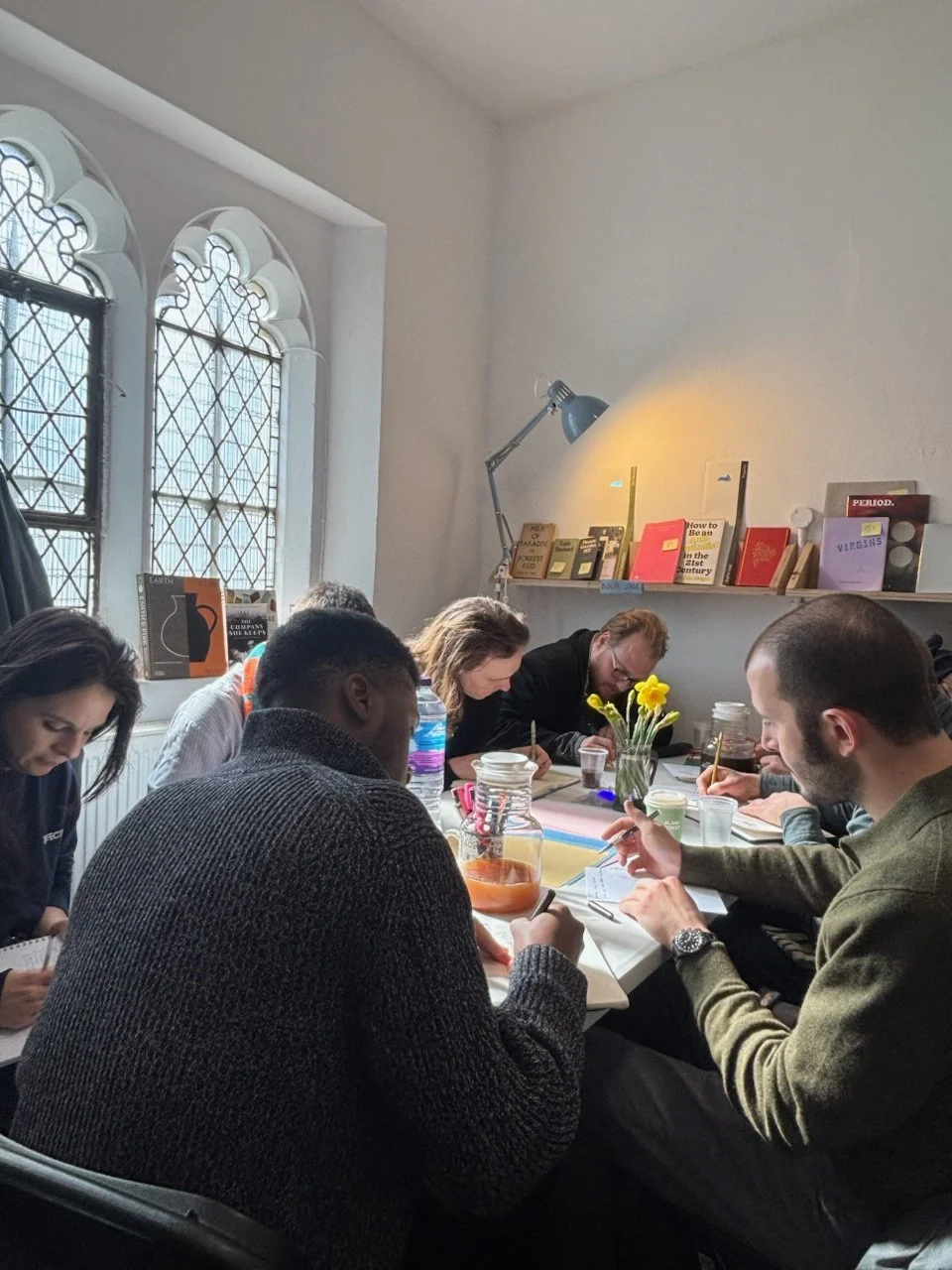
Fig.2 Bleet!’s first writing workshop at The Writers’Room, March 2025.
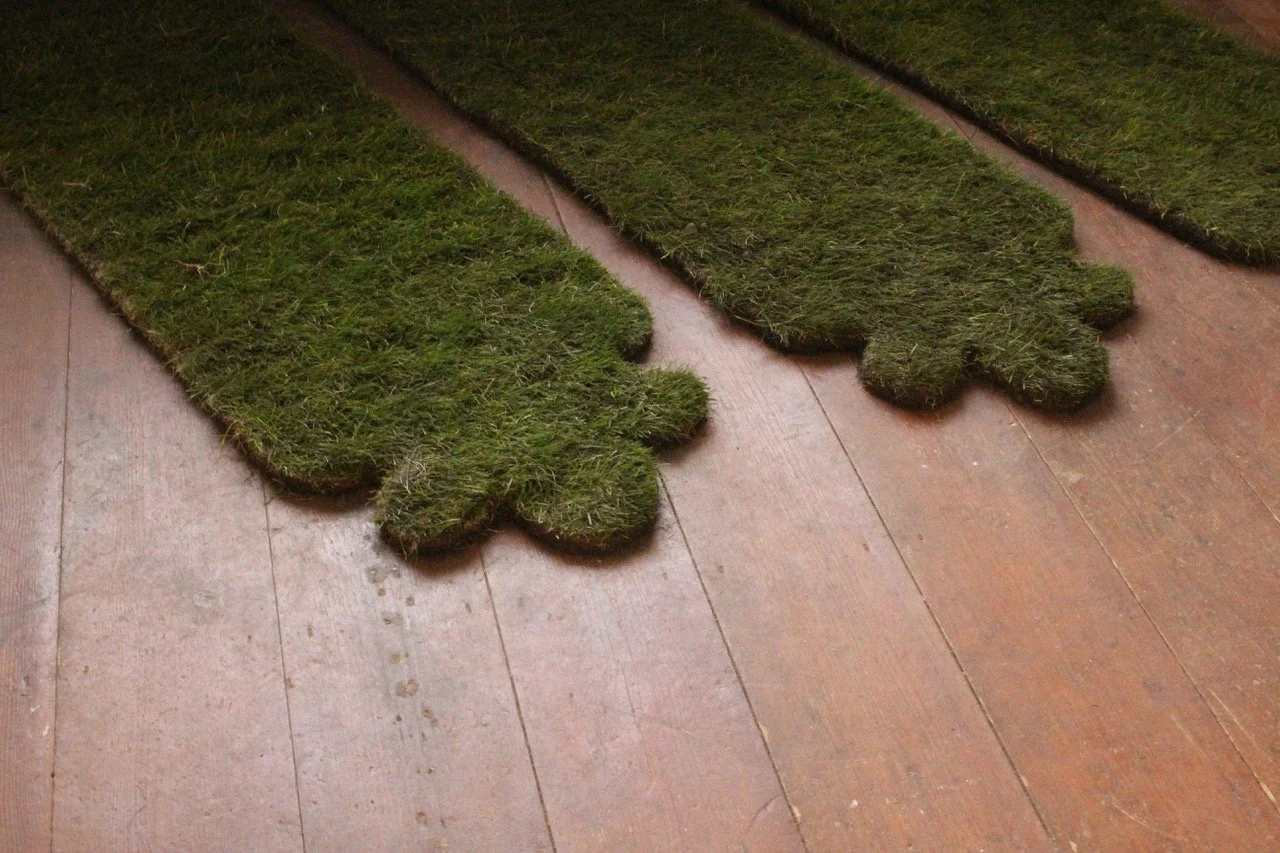

Fig.3 and 4 Lily Petch’s exhibition, February 2025; a direct response to the architecture and history of the site, with grass shadows, cut exact to the room’s windows, which audiences could touch.
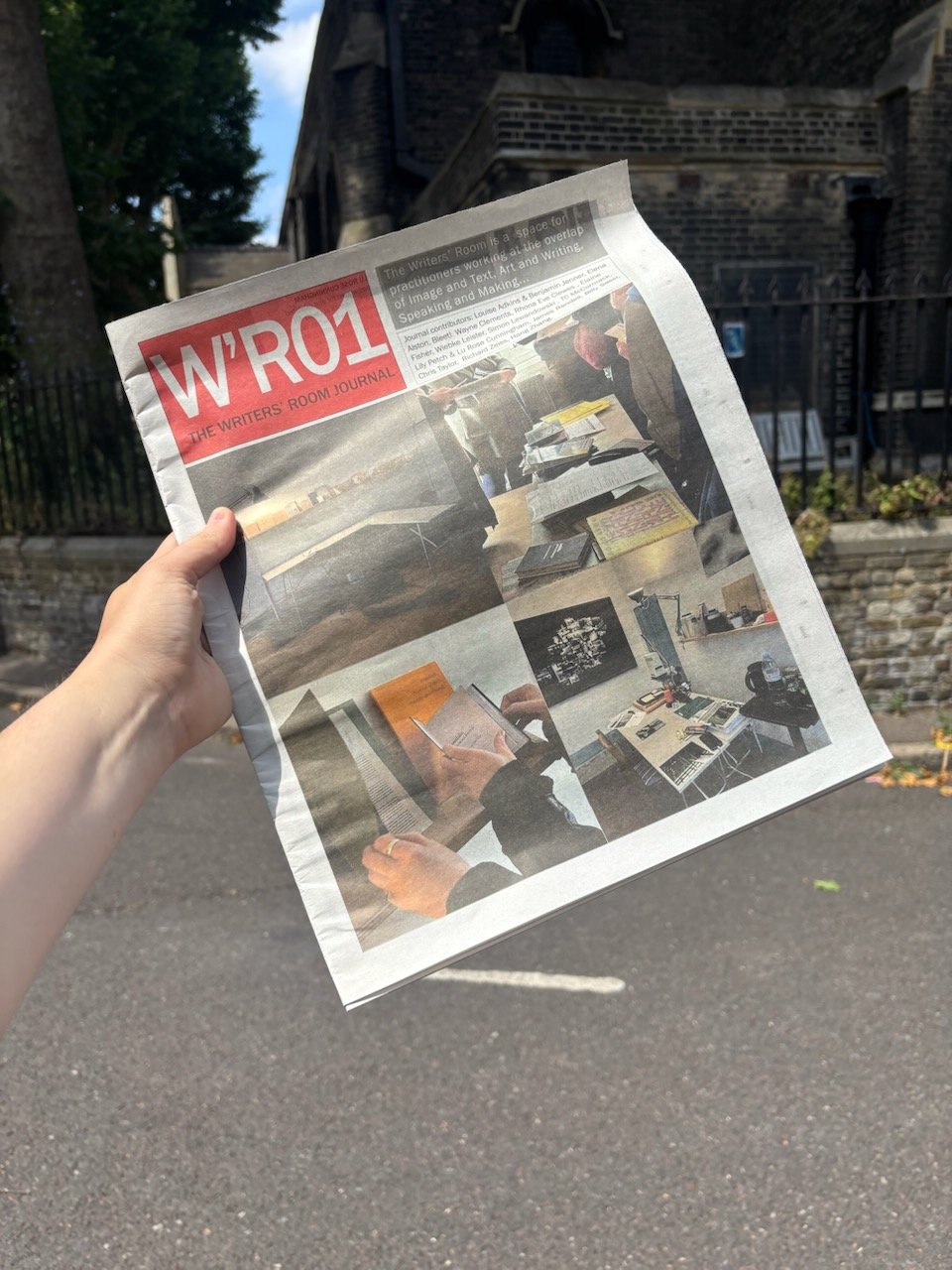
Fig.5 The Writers’ Room first newspaper contributors’ anthology, released summer 2025.
Sarah MariA LillIG
Writer and poet
Blogs
Ethics in the digital age: Curating in virtual spaces
#digitalcurating
To cite: Lillig, Sarah Maria. “Ethics in the digital age. Curating in virtual spaces.” Curatorial Ethics Network (blog). November 3, 2025. https://www.curatorialethicsnetwork.org/blog
Ethics in the digital age
Curating in virtual spaces
Introduction
To speak of curating today is to speak of mediation in its most expanded form. The act of selecting, framing and interpreting no longer unfolds solely within the white cube or the museum, but within interfaces, algorithms and distributed networks. As curators have moved from the gallery floor to the digital dashboard, the ethical frameworks that once guided material practice have become increasingly porous. What does it mean to exercise care, authorship and responsibility when the object of that care is neither singular nor stable, but endlessly replicable?
This essay considers how curatorial ethics might be reimagined within virtual and digital environments. It does not treat the digital merely as a tool, but as a condition that shapes perception, visibility and value. Drawing on examples from current practice and from initiatives such as Rhizome’s Webrecorder, as well as the writings of Christiane Paul and Sabine Henzler, it argues that digital curation requires not only technical literacy but a heightened awareness of the infrastructures that underpin our cultural memory. Ethics, in this context, becomes not a fixed code but a dynamic form of attentiveness: a way of holding space for the immaterial and ensuring that access does not come at the expense of integrity.
I. The Curator in the Cloud
The contemporary curator no longer stands before the object but before an interface. Screens have replaced plinths, and platforms have become the new architectures of display. What was once the tactile handling of artworks has turned into a choreography of code, metadata and networked visibility. This shift has altered not only the logistics of exhibition-making but also the ethics that underpin it.
Curating in virtual spaces calls for new modes of care and accountability, a rethinking of what it means to hold something in trust when that something exists as data rather than matter. The digital turn in curatorial practice has undeniably expanded reach and immediacy. It promises access, participation and connection beyond geography. Yet that promise is rarely neutral. Every platform carries its own hierarchies of visibility, algorithms of recommendation and economies of attention. The ethical question, therefore, is not only how to show art online, but how responsibly to situate it within systems that are both commercial and extractive.
II. Accessibility and the Illusion of Openness
Virtual exhibitions are often celebrated as inherently democratic. They appear to dissolve the boundaries of geography, inviting anyone with an internet connection to engage. Yet this rhetoric of openness conceals a more complex reality. Digital access presupposes stable connectivity, functioning hardware and a degree of digital literacy that cannot be universally assumed. The result is a new form of exclusion, one that replaces architectural thresholds with infrastructural ones.
True accessibility must extend beyond technical availability. It demands attention to design, translation and context. An online exhibition may be available to all, yet remain legible only to those fluent in the languages and codes of contemporary art. To curate ethically in the digital realm requires a balance between conceptual rigour and clarity, allowing entry without erasing complexity. Accessibility becomes an act of cultural translation, not merely a technological provision.
In this sense, curatorial ethics begins where universal access ends. The curator’s task is not to flatten meaning for the sake of reach but to provide interpretive bridges, to ensure that the virtual remains porous without becoming homogenised. As theorist Sabine Henzler reminds us in Curating Digital Heritage (2021), the ethics of accessibility lie not in simplification but in invitation: an openness that respects the integrity of both the work and its audience.
III. Digital Sovereignty and the Right to Context
In digital environments, authorship and ownership become fluid, easily detached from their original settings. Images circulate freely, often stripped of the frameworks that once anchored their meaning. The curator’s task is no longer confined to mediation but extends to safeguarding context. To share is to expose, and every act of exposure entails responsibility.
The work of Lawrence Weiner offers a lucid precedent for thinking through this tension. His declarative sentences, installed on walls, printed in books or projected in public spaces, exist as instructions that may be enacted anywhere. They exemplify how meaning depends not only on content but on place, form and intent. Weiner understood circulation as both opportunity and risk, a transfer of agency that demands care. His practice demonstrates that dissemination and integrity are not opposites but parallel concerns, and that curators working online inherit the same ethical obligation to preserve conditions of context.
Emerging technologies such as blockchain appear to restore provenance and decentralisecontrol, but they also reproduce asymmetries of access embedded in the systems they aim to reform. Ethical curation in virtual spaces requires navigating such contradictions without assuming that technical tools can replace human discernment. The curator remains a mediator between visibility and vulnerability, between the desire to share and the duty to protect.
IV. Caring for the Intangible
Preservation in the digital realm is a paradox. The very technologies that allow art to be disseminated also render it fragile, dependent on servers, file formats and interfaces destined for obsolescence. The challenge lies not in preventing disappearance but in understanding how to accompany it. Projects such as Rhizome’s Webrecorder, first released publicly in 2016 by the New York-based organisation devoted to born-digital preservation, reveal how conservation itself can become creative. Rather than freezing a work as a static record, Webrecorder captures the experience of digital art as it unfolds in real time, maintaining its interactivity and temporal character. This model shifts preservation from a defensive act to an interpretive one. To curate online, then, is to acknowledge the temporality of the medium, to care for what is ephemeral without imposing permanence as a universal standard.
Such questions of stewardship extend to inheritance. When artworks are stored in the cloud, who ensures their continuity when platforms dissolve or ownership changes hands? The curator’s ethical horizon must encompass not only the present exhibition but also its afterlife, both material and conceptual. Caring for the intangible thus becomes a practice of anticipation, documentation and narrative continuity.
V. Curating as Critical Infrastructure
To curate ethically in digital space is to think infrastructurally. Every hyperlink, algorithm and data trail forms part of the curatorial frame. The challenge lies in making these invisible architectures visible without collapsing their generative openness. Ethics becomes an ongoing negotiation rather than a codified principle. It demands humility, transparency and a willingness to let the virtual remain indeterminate.
As Christiane Paul observes in Digital Art (2023), the curator in the digital age is both archivist and systems designer, mapping not only artworks but the structures that sustain them. The digital exhibition is not a static container but a network of relations, social, technical and affective. Understanding these relations is central to any ethical framework, for they determine how cultural meaning is distributed and who has access to it.
The ethical curator thus becomes a kind of critical cartographer, tracing the boundaries between art, code and community. To curate online is not only to display but to design visibility itself, to decide what is foregrounded, what is concealed and what circulates. In doing so, curators help construct what might be called critical digital heritage, a living record of how culture is mediated, shared and transformed under technological conditions.
VI. Conclusion
Curating in virtual spaces does not absolve the curator of ethical responsibility; it amplifies it. The disappearance of the physical object does not signal an end to care, but rather a transformation of its terms. Ethics in the digital age invites a redefinition of authorship as collaboration, preservation as participation and access as an act of translation.
To curate online is to operate within infrastructures that are as political and economic as they are aesthetic. The task is to navigate these systems with awareness, to build frameworks of visibility that neither exploit nor obscure. Ethical curating does not depend on technological novelty but on attentiveness: a sensitivity to context, to fragility and to the unseen labour that sustains the digital realm.
Recent discussions within the Curatorial Ethics Network (2025) emphasise that ethical practice today must extend beyond exhibition-making to include infrastructural awareness. Responsibility resides not only in the framing of artworks but in the maintenance of the systems that make those artworks visible. This broader horizon reframes the curator as both caretaker and participant in the technological ecologies that define contemporary culture.
Ultimately, curating in the cloud is less about mastering tools than about cultivating judgment. It requires the same patience, precision and empathy once reserved for handling fragile artefacts. In this new terrain, ethics becomes a creative intelligence: the measure of how thoughtfully we construct meaning together when matter itself has turned to data.
References
Curatorial Ethics Network (2025). Available at: www.curatorialethicsnetwork.org
Henzler, Sabine. Curating Digital Heritage. Berlin: Transcript Verlag, 2021.
Parikka, Jussi. A Geology of Media. Minneapolis: University of Minnesota Press, 2015.
Paul, Christiane. Digital Art. 4th ed. London: Thames & Hudson, 2023.
Rhizome. “Rhizome Releases First Public Version of Webrecorder.” Rhizome Blog, 9 August 2016. https://rhizome.org/editorial/2016/aug/09/webrecorder-public-release/
Weiner, Lawrence. Statements. New York: Primary Information, 1968.
SillA simone
Writer, educator and
contemporary
photographer
Blogs
Outsider artists: Ethical reflections in socially engaged practices
#sociallyengagedpractice
To cite: Simone, Silla. “Outsider Artists. Ethical Reflections in Socially Engaged Practices.” Curatorial Ethics Network (blog). September 4, 2025. https://www.curatorialethicsnetwork.org/blog

Outsider artists
Ethical reflections in
socially engaged practices
Silla Simone
Introduction
Why should we discuss the ethics in socially engaged practices?
In recent decades, many artists have moved beyond solo practice in the white cube to work involving the audience in socially engaged approaches and to address social issues directly. These initiatives are both recognised for their social reformist goals and criticised by several scholars (1) for their direct engagement with socio-economically challenged communities. Despite altruistic intentions, many are led by outsider artists, raising questions about representation, power and artistic freedom.
Different methods and degrees of artistic control further complicate the discourse. Artist roles vary by practice, as collaborator, facilitator, educator and curator. They gather funds, define the project’s framework, and connect the projects to institutional contexts in which they are legitimised as ‘works of art’. For some artists, the work is synonymous with action; for others, it produces physical art objects.
Dismissing socially engaged practices would deprive communities of their potential benefits, while proceeding with established, but insufficiently examined conventions could perpetuate problematic impacts on those the artist seeks to empower.
Definite answers to the ethical concerns are needed to mitigate future harm and to ensure that the practices are conducted sustainably, bringing value for the communities they aim to aid. Clearer distinctions between harmful and beneficial engagement help to optimise the strategies and the use of resources for the future artists, art critics and affiliated stakeholders commissioning, funding, contextualising and promoting socially engaged practices.
In addition to reviewing the existing ethical critiques, this paper identifies gaps in the literature, highlighting areas where further research is needed. The paper takes the form of a discourse analysis, it examines effect[ivenes]s of participatory artmaking in socially challenged communities. In doing so, the paper asks: What key ethical concerns arise in the current discourse on outsider-led socially engaged practice? To what extent are the concerns justified, and what are their limitations?
Terminology
Mapping the discourse around participatory practices is complicated by the variety of terms used to describe them, such as community-based practices, and art-in-the-public-interest model, introduced by Arlene Raven (2). Since the 1960s, such practices have also been retrospectively referred to as new genre public art, a term coined by Suzanne Lacy to distinguish between solo-artist-made public art, and projects involving a long-term engagement with a site’s community (3).
Claire Bishop employs relational art and social collaboration to describe dialogically and collaboratively created projects. Tom Finkelpearl contests the latter for implying co-authorship and equal roles, instead preferring participatory or relational, reserving socially cooperative for projects designed by an artist (4). Grant Kester introduces the term dialogical aesthetics, drawing from Mikhail Bakhtin’s concept of a dialogical art practice. To Kester, the dialogical projects unfold through a process of performative interaction (5). Similarly, Suzi Gablik calls the arts rooted in communication with ‘the other’ connective aesthetics (6). Other related terms include interventionist art, collaborative art and social sculpture, latter coined by Joseph Beuys (7).
In this paper, I use socially engaged practices as an umbrella term for participatory art initiated by artists within socially challenged communities. While broad, it captures the shared core purpose of these diverse approaches.
Limitations
This paper focuses on the artist’s direct engagement with communities and excludes several related ethical concerns. These include reproductions of site-specific works (e.g. questions of authorship, ownership, copyright and re-contextualisation), third-party influences from funders and institutions, and the art critique frameworks applied to socially engaged art. These factors are closely tied to the ethics of socially engaged practices and have been discussed by several scholars, warranting further investigation beyond this paper.
Critical perspectives
Exercising power
Socially engaged practices, sprung from the political art of the 1960s8, have consistently involved civilians in the creation of art. These exchanges, as Grant Kester points out, typically rely on a representational relationship in which the artist, typically entering an unfamiliar community as an outsider, speaks ‘through’, ‘with’, ‘about’, or ‘on behalf of’ others, becoming a channel for their experiences (9).
Equipped with cultural and financial resources to transform the community’s condition, the artist is in a position of power with artistic freedom providing an alibi to transgress cultural, racial and socio-economic boundaries, to a position of lesser privilege. Kester claims that, like a social worker, the artist believes in the universality of the discourses they employ in the process, allowing them to claim a moral or pedagogical authority in social domains, without the actual competences to answer complex ethical questions being questioned (10).
“FOR COMMUNITY ARTISTS THE AESTHETIC PLAYS THE SAME ROLE THAT SCIENCE DOES FOR REFORMERS OR RELIGION FOR EVANGELICALS, ALLOWING THEM TO TRANSCEND THE SPECIFICITY OF THEIR OWN SOCIAL AND CULTURAL POSITION AND SANCTIONING THEIR INTERVENTION IN A GIVEN COMMUNITY”(11).
Kester points out that for the audiences, these types of breaches are difficult to examine. The institutional authority of the artist, along with their access to media channels, can legitimise the project and create an illusion of harmony between the parties even when such does not exist. He asks, how artists negotiate between the demands of a given community struggle and a sceptical, self-reflexive attitude towards coherent forms of identity (12).
In line with Kester, Miwon Kwon argues that engaging ‘real’ people can install new forms of urban primitivism over neglected minorities. In the process, the ‘other’ becomes re-objectified for the sake of authentic artmaking (13). She points out that while the art can provide greater visibility to marginalised groups’ issues, it can also work as a means to extract the social and historical dimensions out of places to replace missing public social funding or cater to the artist’s ambitions (14).
The concerns raised by Kester and Kwon are particularly evident in the socially engaged projects involving prisons. Nicole R. Fleetwood argues that while these collaborations foster new relational practices, and often expand social and professional artistic networks benefiting inmates beyond their incarceration, the projects also turn on power dynamics in which the participants are the subject matter, even objects of art (15).
Furthermore, the notion of informed consent is trivialised in the incarceration context. Many projects shy away from expressing systemic critique and are dependent on enduring justification of imprisonment, thus becoming a tool for the prison to manage and control populations (16).
Like Kester, Fleetwood is concerned about artists’ credentials. Whereas researchers must go through a review protocol, she points out that artist proposal evaluations are often arbitrary or non-existent. Moreover, artists interested in working with inmates often lack training in working in prisons (17).
Interestingly, although prison art programmes have roots in the late 1960s and early 1970s, participatory projects facilitated in prisons are absent from the writings examined in this paper (18). Contributions discussing such projects, often under terms outsider art and art therapy, are instead typically found within the disciplines of psychology, education, and criminology (19). I argue that prison settings would offer a favourable environment for analysing the impact of different socially engaged practices. In their highly controlled conditions, characterised by repetitive daily routines and limited individual autonomy, observing and measuring individual outcomes is significantly easier than in the more variable conditions of everyday life outside a prison complex.
On empathy
Rather than following an artist-defined vision, Grant Kester advocates for a socially engaged practice model relying on the artist’s ability to listen and interact with others. Dialogical aesthetics, according to Kester, are defined by, for one, speech acts and dialogue, and two, intersubjective ethics and identity formation (20). This framework underscores the artist’s vulnerability, openness toward and willingness to depend on their collaborators, where ’artists-ness’ is synonymous with an ability to catalyse understanding, mediate exchange, sustain critical reflection and be empathetic (21).
While Kester’s makes use of empathy to disarm the artist of their authority, he also identifies a few issues within this approach. Although empathetic identification facilitates a reciprocal exchange, allows the artist to think outside their own experience and establishes compassionate relationships, it can also obscure social differences between the artist and their collaborators. Kester argues that the artist’s authority is partially established in the identification. Their past experiences are equated with those of the community, granting the artist a moral mandate to speak on behalf of others (22). This way, empathetic identification can encourage an exploitation and ‘vicarious possession’, using the other's culture for parading one’s fluency with difference (23).
While many of scholars share Kester’s concerns regarding the outsider artist, a more trusting view sees the community to be initially in the centre of practice. According to Suzanne Lacy, a beneficial and responsible intervention involves considering the artist’s intentions; the integrity is based on an integration of the artist’s ideas with those of the community. Lacy’s position emphasises the artist’s willingness to exercise empathy, as well as their expressions of responsibility (such as sustained connection beyond the projects end), as signs of ethically sound practice (24).
Mary Jane Jacob and Suzi Gablik associate solo practice with the modernist Western ideal of self- expression and even narcissism, that encourages distancing and deprecation of the ’other’. Empathic listening, an act attributed to the less self-involved community artist, makes room for the other and decentralises the ego-self, while a solo practitioner’s affirmation of individuality and invulnerability leads to deadening of empathy (25).
“THIS WORK DEALS WITH AUDIENCE FIRST: THE ARTIST BRINGS INDIVIDUALS INTO THE PROCESS FROM THE START, THUS REDEFINING THE RELATIONSHIP BETWEEN ARTIST AND AUDIENCE, AUDIENCE AND THE WORK OF ART” (26).
While these writers express an optimistic stance, they overlook the self-sensoring empathy can lead to: a reluctance to be open about less admirable aspects of the community and their social issues. Hal Foster, by contrast, argues that fixating on the ‘otherness’ is always imbricated with one’s subconscious, and might lead to further detachment from the other. While self-reflexivity prevents artists from making assumptions, it also allows assumptions to be made, as the self-othering can easily turn into self-absorption, where ‘ethnographic self-fashioning’ becomes a practice of philosophical narcissism. Foster calls this trend of a confessional testimony a ‘pseudoethnographic report’(27). In parallel, Miwon Kwon warns against self-reflexivity potentially turning into subjective indulgence (28). Despite the concerns raised by Kwon and Foster, I argue that open self-reflexivity—whether motivated by self-indulgence or a sense of responsibility—should be encouraged. When an artist’s position, methods, and motivations are made visible, such transparency enables informed and critical engagement with the practice.
Complexities of communities
Since a community’s limits are difficult to define, how should one determine the right to speak on behalf of others? Kester describes dialogical art to be a power trade-off, whereby, by surrendering some creative authority, the artist ‘buys the right’ to speak on behalf of the community (29). Elsewhere, Kwon notes that the community’s portrayal might become overly simplified in the process of artmaking, when individual differences are absorbed into the artist’s notions (30). To Kwon, Suzanne Lacy’s project Full Circle, is an example of such overgeneralised ’mythic unity’. In its efforts to honour individuals in the city of Chicago, the project resulted in the representation of a hundred women’s unified community that merely existed within the boundaries Lacy’s imagined concept; “But whatever the individual differences, all were subsumed in the end by the artist’s search for a common denominator that celebrated an abstract gender unity, delimited in this case by a set of service-oriented characteristics that were in effect naturalized as innate attributes of women in general,“ Kwon writes (31).
In response to these concerns regarding the outsider artist, some within the critical discourse have proposed that insider status should be a prerequisite for practice, to ensure an authentic representation stemming from ‘real’ experience.
This assumption is directly critiqued by Foster, to whom the belief in the ‘other’ with authentic access to primal psychic and social processes from which the outsider artist is blocked, is a ‘primitivist fantasy’(32). Although acknowledging ’belonging’ might be useful in some cases, this potential is not a given (33). To him, socially engaged artists’ common assumptions: that artistic change happens outside mainstream settings; that the ‘insider' is the main source of resistance to dominant culture; and that insider artists have automatic access to these communities unlike outsider artists with limited access, together lead to the danger of ideological patronage (34).
In parallel, Kester calls the demand for an insider ‘the fetishization of authenticity’. Challenging the claim that an integral connection would grant the ethical mandate to speak on a community’s behalf, Kester asks how to define integral community membership in the first place. Pointing out that communities are made up of differing identities, the insider is, on that account, still inevitably speaking on behalf of others and carries the risk of inflicting harm on the community. Thus, the insider artist runs into similar problems as the outsider, inevitably shining light on certain aspects while leaving others in the shadows. From here, Kester derives that rejecting any form of practice involving an outsider artist is counterproductive (35).
Kwon supplements these remarks by pointing out that advocating a local artist closes off important ways in which artistic intervention can critique the very concept of community (36). While Kwon’s claim is presumptuous towards the insider artist’s shortcomings, it is safe to say that an insider artist’s possibilities to conduct such critique are certainly challenged by personal alliances and close proximity to the subject of the critique, factors that do not necessarily concern an outsider.
The outsider-insider question becomes even more complex when considering the varying goals of the socially engaged practice. As Shannon Jackson notes, many projects seek to enforce social bonds, while others seek to disrupt them (37). Where some critical frameworks ask whether an artistic vision enables or neutralises community voices, others start by questioning the very idea of a community (38).
The manifold discourse overlooks the possible problems of subjectivity in individual involvements within the community. The starting position of an outsider is more examiner-like due to the lack of these affiliations, but undergoing an empathic process of assimilation, evens out the differences and might just as well lead to biases and self-censoring.
As a solution, Kester suggests that each artist-community interaction should be addressed as a specific case, where the analysis is not based on a priori calculation of the artist's ‘right’ to work with the other but instead assesses the artist's capacity to treat differences critically and self-reflexively within the practice (39).
While Kester’s idea for context-specific evaluations leaves a door open for the outsider artist, it suffers from the lack framework that defines relations between community conditions, artist motivations,6intention, working methods, outcomes and other relevant factors, to guide the artist in their self-reflection. Additionally, his approach is centred around reactive critique happening after the fact, rather than pre-emptively, which is where such assessments are most needed.
Another factor obscuring assessment, as Kester notes, is that the coherence of a community is the product of changing and uncertain processes of identification (40). This means that, likewise, the status of an insider artist is not permanent, but subject to the same flux.
The case of the Bronx-based artist John Ahearn offers a compelling illustration of this instability. Chosen for the Percent for Art commission at the 44th Precinct police station in the South Bronx, Ahearn was selected by a panel including several non-art representatives and had already interacted with the local community for several years before his commission. The artist, who lived four blocks away from the immediate neighbourhood, and involved the community in the making of his cast sculptures, was still, at the works’ reveal, rejected by its members and accused of racism. Ahearn’s casts, depicting local people he met on the streets, were meant to elevate the status of those most socially challenged. Despite the intentions, the locals accused the sculptures of enforcing ill stereotypes, portraying the subjects as ugly and stemming from a white outsider’s perspective, which quite soon led to the removal of the works.
The definition of ‘geographical and social proximity’ was not enough to make the artist part of the community, even though it played a part in both parties’ shared identity. The case of Ahearn’s rejected project reveals a critical gap in the discourses cited in this chapter: in considering the insider-outsider artist dichotomy, how involved must the artist be, and which denominators should the artist have, to qualify as an `insider´? How many shared attributes are enough?
Kwon remarks that the artist’s assimilation coincides with the artwork’s integration with the site. The assimilation is presumed to be a prerequisite for the ability to legitimately speak as a representative of the community. This unity functions as a criterion for judging the artistic authenticity and ethical fitness of the artwork (41). But who is to judge the extent of the assimilation? Certainly, art critics have tried, while, again, looking at the said community from the outside, typically with less personal insight than that gathered by the artist in their efforts to engage. The belonging alone does not guarantee a fruitful outcome, which is why evaluations on the ethical fitness of socially engaged practices should be made elsewhere, in intentions and impacts, rather than based on assimilation.
Freedom of artistic expression
Before the rejection of Ahearn’s work in South Bronx, the community had embraced his earlier casts, which suggests that the issue was not simply lack of assimilation. In an interview with Tom Finkelpearl, Ahearn suggests that the ill reaction stemmed from the project’s affiliation with a city initiative, its public rather than private nature (42), suggesting that the reception of the work, may depend less on the artist than on the broader socio-political or institutional contexts. Perhaps focusing on the outsider- insider paradigm is not as useful as paying attention to the participants’ sense of ownership towards the work created, while imposing a project onto a community that does not feel the need for it will likely lead to its rejection.
Miwon Kwon argues that the desires of a particular community are not generic, nor can they be declared in advance by an outsider. According to her, the sense of identification should arise from the investment of time and energy the community invests in the project’s creation. She furthermore stresses the importance of the community’s ability be validated or affirmatively pictured through the work (43).
While Kwon’s idea of the community commitment is a useful strategy for building communal approval, her expectations regarding validation raise several concerns about artistic freedom. First, if a socially engaged project must always be affirming to its participants, it risks becoming a tool for therapeutic self-empowerment, akin to an advertisement, rather than a work of art.
Second, expecting an artwork to offer validation assumes a unified community response and imposes a homogenised group identity, ignoring individual perspectives. Third, Kwon’s demands limit the range of expressions and practices available to socially engaged artists. By favouring approaches that involve a certain degree of inclusion in the creation of the project, they exclude practices and expressions that rely on the artist exercising greater influence. Should socially engaged artists not enjoy the same aesthetic autonomy as solo artists?
Claire Bishop calls the attitude Kwon advocates ‘an ethics of authorial renunciation’ in which all forms of authorship are equated with authority (44). Bishop notes that the criticism on working methods and the democracy of collaboration tends to overlook the visual, conceptual and experiential accomplishments, and art itself becomes less important than the methods of its creation (45). When the artist’s ’self-sacrifice’ is celebrated, it follows that artists are expected to give up their authorial privileges and let the participants speak through them (46). This insistence on sensitivity and consensual dialogue turns into repressiveness, where artistic disruption, intervention and over-identifications are seen as ‘unethical’ and against the norm (47). To Bishop, this imperative is supported in most of the theoretical writing on socially engaged practices, e.g. in dialogical aesthetics, lacking commitment to visual aesthetics, resembling the intellectual trends associated with identity politics. Bishop rejects the idea that socially engaged art should not offend or upset its audience and argues that discomfort and frustration can be crucial to the aesthetic impact and are essential to gaining new perspectives (48).
Joining Bishop’s criticism on dialogical aesthetics, Mikkel Bolt Rasmussen points out their reliance on dialogue leading to empathy. According to him, putting much emphasis on mutual understanding and shared perspective downscales criticality, evading confrontational forms of artistic practice that make processes of exclusion visible. Art that becomes socially reparatory activity addressing very specific problems to highlight or solve them, Rasmussen calls ‘the art of modest proposals’(49).
Bishop further argues that many artists whose works do not refrain from the uncomfortable have close relationships to avant-garde theatre, performance, or architectural theory, rather than activism striving for social change. These artists think of the aesthetic and the social/political together, rather than letting these aspects be absorbed into the ethical (50).
Calling out the tendency towards saviour mentality and self-censorship, Bishop seems to have both more faith in the participants’ capabilities to choose and vouch for themselves and more concern for the artist’s individuality, artistic freedom and artworks’ ability to make a tangible difference. “An over-solicitousness that judges in advance what people are capable of coping with can be just as insidious as intending to offend them” (51), she writes.
With these points in mind, it is worth asking whether the perception of a community as ‘the other’ partly stems from a mindset that frames it as a group to be uplifted, validated, or helped on a journey towards artistic expression, an attitude which re-enforces the starting position; the impoverished narratives told through socially engaged practices. Although Bishop makes a strong case in her call for artistic freedom, the position of power the artist holds does open an avenue for transgression. Kester casts light on such an occasion in a case example discussing Alfredo Jaar’s commission, One of Two Things I Know About Them, staged at the Whitechapel Gallery in London in 1992. Commenting on the cultural and economic conditions of Bangladeshi workers, Jaar commissioned photographs of young Bangladeshi women, which he combined with racist and sexist descriptions, detracted from an interview with an East Indian factory owner. The irony of the installation was not evident to the subjects, who demanded a removal of the works (52).
Had Jaar exhibited the photographs without the texts, the work would have appeared to be harmonious with the self-image of the community at the expense of losing its edge. If we examine the socially engaged practices through the ideals set by Kester and Kwon, the aesthetic of consensual dialogue, Jaar’s exhibition evidently failed. Still, one might ask, if the practices are to bring about a larger societal change, the scope of an audience must be rethought to reach and speak to those outside the said community participating in the making of the work. These two audiences are not necessarily persuaded through the same strategies or ‘aesthetic’.
This brings us to an interesting point: How much credit do we give to the professional expertise of a socially engaged artist in understanding how to reach different audiences? Should a socially engaged artist go against the community’s wishes when the artist sees it advantageous to the goals of a project, or risk being reduced to a mere display of suffering?
Nato Thompson highlights the role of affect in the production of meaning in socially engaged practices, pointing out the difference between how things make one think and how they make one feel. Understanding this aspect would help understand how the artwork functions politically and socially (53).
To Thompson, socially engaged practice is not a term descriptive enough to account for its flexibility, which, according to him, is a sign of its interest in producing effects and affects in the world rather than focusing on the form itself (54).
“DETERMINING WHICH FORMS OF SOCIAL ENGAGEMENT TRULY LEAD TOWARDS SOCIAL JUSTICE IS A CONSTANT SOURCE OF DEBATE. KNOWING THIS, IN ITSELF, IS USEFUL” (55).
As Thompson points out, a focus on the work's social approach and impact, as opposed to its aesthetics, helps to unpack it into words (56).
“A FORM OF ANALYSIS THAT CAN ACCOUNT FOR THIS BROAD SPECTRUM OF DIFFERENCE (WHILE OBVIOUSLY DIFFICULT) WILL AT LEAST PROVIDE A FRAMEWORK FOR INTERPRETING SOCIAL PHENOMENA FROM AN HONEST POSITION BASED IN REALITY” (57).
While Bishop and Rasmussen stress aesthetic agency, and Thompson brings attention to affect and social impact, these positions also open space to consider different media’s ethical conditions in socially engaged practices. As Alfredo Jaar’s case illustrates, the tensions between representation and the works’ impact on the two types of audiences become particularly visible in photography. Due to its straightforward nature to capture that-which-has-been in front of the camera, the photograph carries an inbuilt truth-claim and is often assumed ‘reliable’.
Socially engaged photography, according to one of the most prominent practitioners in this field, UK-based artist Anthony Luvera, only began to gain recognition as a distinct term in the early 2000s (58), which explains its absence in the discourses examined in this paper. Although the discipline’s methods largely align with other participatory practices, the medium’s indexicality introduces particular challenges around representation, publicity and consent. The potential for inflicting harm on those photographed, as well as benefits unattainable to other but lens-based media, complicates its use in socio-political art contexts and warrants attention in future discourse. As such, photography cuts to the core of questions of representation: how do different audiences interpret the artwork, and to what extent the artist should be governed by those interpretations?
Conclusion
This paper has examined the ethical tensions surrounding outsider-led socially engaged practices by analysing key arguments within the existing discourse. The study identified four central areas of ethical concerns: the artist’s authority, the impact of empathy, the flux of identity, and the boundaries between aesthetics and artistic freedom. Writers such as Kester, Kwon, Foster, Bishop, and others offer competing views on how artists should engage with communities, revealing a discourse marked by both scepticism and cautious optimism.
The discourse suggests that while ethical scrutiny is necessary, insistence on insider status, validation, or harmony can restrict artistic freedom and reduce the potential of critical artistic interventions. At the same time, artistic autonomy carries the risk of reinforcing harmful dynamics particularly when existing power imbalances are not recognised. This paper doesn’t endorse a one-size-fits-all position over another but recognises the need for a critical framework to guide context-specific evaluation of socially engaged practices. Here, the artist’s intentions and the outcomes experienced by all parties involved are if great importance.
The discourse analysis proved useful in mapping the multi-faceted and fragmented debate, though the absence of a unified terminology, along with limited empirical evidence of the results the socially engaged practices have achieved, posed challenges. The study draws primarily from theoretical literature, which, while rich in conceptual framing, could benefit from deeper integration with evidence gathered from specific practices’ impacts on the involved communities.
I found that much of the existing critique is directed at not the practitioners but the art critics evaluating the practices from a second-hand position. While these contributions show trust in the art world’s ability to self-govern, the real-time decisions faced by artists demand guidance for planning their upcoming projects. I suggest that the same critical tools offered to critics be adapted for the artists themselves—those most in need of reflective structures during the development and delivery of socially engaged work.
I conclude that ethical discourse on socially engaged art requires ongoing reflection and transparency. This paper contributes to the discourse by connecting the arguments of some of the leading scholars and indicating areas in need of development. These insights are not only relevant to artists and critics but also to curators, commissioners, and funders seeking to support practices that are both socially responsible and artistically autonomous.
Footnotes
(1) Grant Kester, Conversation Pieces: Community and Communication in Modern Art (Berkeley: University of California Press, 2013), 140; Miwon Kwon, One Place After Another: Site-Specific Art and Locational Identity (Cambridge, MA: MIT Press, 2002), 95; Hal Foster, “The Artist as Ethnographer?” in Traffic in Culture: Refiguring Art and Anthropology, ed. George E. Marcus and Fred R. Myers (Berkeley: University of California Press, 1996), 302–303, https://doi-org.ez.statsbiblioteket.dk/10.1525/9780520354920.
(2) Kwon, One Place After Another, 61.
(3) Suzanne Lacy, Mapping the Terrain: New Genre Public Art (Seattle, WA: Bay Press, 1995), 19; Kwon, One Place After Another, 82.
(4) Tom Finkelpearl, What We Made: Conversations on Art and Social Cooperation (Durham: Duke University Press, 2013), 4–6, https://doi.org/10.1215/9780822395515.
(5) Kester, Conversation Pieces, 10.
(6) Gablik, “Connective Aesthetics,” in Mapping the Terrain, 84.
(7) Mikkel Bolt Rasmussen, “A Note on Socially Engaged Art Criticism,” The Nordic Journal of Aesthetics 25, no. 53 (2017): 62, https://tidsskrift.dk/nja/article/view/26406/23216.
(8) Kwon, One Place After Another, 82.
(9) Kester, Conversation Pieces, 140, 147.
(10) Kester, Conversation Pieces, 137, 139–140.
(11) Kester, Conversation Pieces, 137, 139.
(12) Kester, Conversation Pieces, 130, 137, 149.
(13) Kwon, One Place After Another, 138.
(14) Miwon Kwon, "One Place after Another: Notes on Site Specificity", October, no. 80 (Spring 1997): 105, https://doi.org/10.2307/778809.
(15) Nicole R. Fleetwood, Marking Time: Art in the Age of Mass Incarceration. (Cambridge, MA and London, England: Harvard University Press, 2020), 7, 155, https://doi-org.ez.statsbiblioteket.dk/10.4159/9780674250925.
(16) Fleetwood, Marking Time, 7, 153–155, 163.
(17) Fleetwood, Marking Time, 162.
(18) Fleetwood, Marking Time, 163.
(19) Fleetwood, Marking Time, 7.
(20) Kester, Conversation Pieces, 108, 118.
(21) Kester, Conversation Pieces, 110, 118.
(22) Kester, Conversation Pieces, 149.
(23) Kester, Conversation Pieces, 150.
(24) Lacy, Mapping the Terrain, 33–34, 39.
(25) Mary Jane Jacob, “An Unfashionable Audience,” and Suzi Gablik, “Connective Aesthetics,” in Mapping the Terrain, 50, 80.
(26) Jacob, “An Unfashionable Audience,” 54.
(27) Foster, “The Artist as Ethnographer?”, 304.
(28) Kwon, One Place After Another, 51.
(29) Kester, Conversation Pieces, 149.
(30) Kwon, One Place After Another, 119.
(31) Kwon, One Place After Another, 119.
(32) Foster, “The Artist as Ethnographer?”, 303.
(33) Foster, “The Artist as Ethnographer?”, 303.
(34) Foster, “The Artist as Ethnographer?”, 302–303.
(35) Kester, Conversation Pieces, 130.
(36) Kwon, One Place After Another, 147.
(37) Jackson, Social Works, 13–14.
(38) Jackson, Social Works, 44.
(39) Kester, Conversation Pieces, 130–131.
(40) Kester, Conversation Pieces, 147.
(41) Kwon, One Place After Another, 95.
(42) Tom Finkelpearl, “John Ahearn on the Bronx Bronzes and Happier Tales,” in Dialogues in Public Art (Cambridge,MA: MIT Press, 2000), 91–92.
(43) Kwon, One Place After Another, 95-96.
(44) Claire Bishop, Artificial Hells: Participatory Art and the Politics of Spectatorship (London: Verso, 2012), 22, 25,https://www-fulcrum-org.ez.statsbiblioteket.dk/concern/monographs/rx913q57p.
(45) Bishop, Artificial Hells, 22.
(46) Bishop, “The Social Turn,” 178–183.
(47) Bishop, Artificial Hells, 25.
(48) Bishop, “The Social Turn,” 178–183.
(49) Rasmussen, “A Note on Socially Engaged Art Criticism,” 69–71.
(50) Bishop, “The Social Turn,”178–183.
(51) Bishop, Artificial Hells, 26.
(52) Kester, Conversation Pieces, 149.
(53) Nato Thompson, ed., Living as Form: Socially Engaged Art from 1991–2011 (New York: Creative Time Books,Cambridge, MA and London: The MIT Press, 2012), 32, https://monoskop.org/images/1/16/Thompson_Nato_ed_Living_as_Form_Socially_Engaged_Art_From_1911-2011_2012.pdf.
(54) Thompson, Living as Form, 32.
(55) Thompson, Living as Form, 32.
(56) Thompson, Living as Form, 24.
(57) Thompson, Living as Form, 32.
(58) Gary Bratchford and Anthony Luvera, “What We See When Invited to Look Differently: Critical Reflections on Socially Engaged Photography,” Photography and Culture 17, no. 4 (2024): 298, https://doi.org/10.1080/17514517.2024.2412462.
References
Bishop, Claire. Artificial Hells: Participatory Art and the Politics of Spectatorship. London: Verso, 2012. https://www-fulcrum-org.ez.statsbiblioteket.dk/concern/monographs/rx913q57p.———. “The Social Turn: Collaboration and Its Discontents.” Artforum International 44, no. 6 (February 2006):178–183. https://www.artforum.com/features/the-social-turn-collaboration-and-its-discontents-173361/.
Bratchford, Gary, and Anthony Luvera. “What We See When Invited to Look Differently: Critical Reflections on Socially Engaged Photography.” Photography and Culture 17, no. 4 (2024): 298. https://doi.org/10.1080/17514517.2024.2412462.
Finkelpearl, Tom. What We Made: Conversations on Art and Social Cooperation. Durham: Duke University Press, 2013. https://doi.org/10.1215/9780822395515.———. “John Ahearn on the Bronx Bronzes and Happier Tales.” In Dialogues in Public Art, 91–92. Cambridge, MA: MIT Press, 2000.
Fleetwood, Nicole R. Marking Time: Art in the Age of Mass Incarceration. Cambridge, MA and London: Harvard University Press, 2020. https://doi-org.ez.statsbiblioteket.dk/10.4159/9780674250925.
Gablik, Suzi. “Connective Aesthetics.” In Mapping the Terrain: New Genre Public Art, edited by Suzanne Lacy, 80. Seattle, WA: Bay Press, 1995.
Jacob, Mary Jane. “An Unfashionable Audience.” In Mapping the Terrain: New Genre Public Art, edited by Suzanne Lacy, 50. Seattle, WA: Bay Press, 1995.
Jackson, Shannon. Social Works: Performing Art, Supporting Publics. 1st ed. London: Routledge, 2011. https://doi-org.ez.statsbiblioteket.dk/10.4324/9780203852897.
Kester, Grant. Conversation Pieces: Community and Communication in Modern Art. Berkeley: University of California Press, 2013.
Kwon, Miwon. One Place After Another: Site-Specific Art and Locational Identity. Cambridge, MA: MIT Press, 2002. ———. “One Place after Another: Notes on Site Specificity.” October, no. 80 (Spring 1997): 85–110. https://doi.org/10.2307/778809.
Lacy, Suzanne, ed. Mapping the Terrain: New Genre Public Art. Seattle, WA: Bay Press, 1995.
Rasmussen, Mikkel Bolt. “A Note on Socially Engaged Art Criticism.” The Nordic Journal of Aesthetics 25, no. 53 (2017): 62. https://tidsskrift.dk/nja/article/view/26406/23216.
Thompson, Nato, ed. Living as Form: Socially Engaged Art from 1991–2011. New York: Creative Time Books; Cambridge, MA and London: MIT Press, 2012. https://monoskop.org/images/1/16/Thompson_Nato_ed_Living_as_Form_Socially_Engaged_Art_From_1911-2011_2012.pdf. 13
Fig.1 An example of “outsider art” titled 'Touching Lari's face', from series Soldiers of Odin & the Stranger’ by Silla Simone. Published in The Book: Soldiers of Odin & the Stranger 2018, Sammakko.
SUZANA MILEVSKA
Curator and Theorist
Blogs
“Kalokagathian curators” as cross-racial allies
#curatorialpositionality
To cite: Milevska, Suzana. “Kalokagathian curators as cross-racial allies for complex needs.” Curatorial Ethics Network (blog). October 1, 2025. https://www.curatorialethicsnetwork.org/blog
“Kalokagathian curators”
as cross-racial allies for
Complex Needs
Suzana Milevska
The lack of understanding of the urgency of the ethical component of the curatorial profession is at the core of this text. Too many projects, despite their intentions, end up self-centered and socially tone-deaf. In my curatorial practice, I have frequently witnessed projects by individuals and institutions that have not met and fulfilled their promises. Particularly, this is the case of many participatory art projects that promised social transformation but failed to accomplish their promise due to the obstacles resulting from the complex neoliberal context (1). These failed ethical promises motivated me to coin the term kalokagathian curator, with which I call for “reuniting” aesthetic and ethical values under the umbrella of the curatorial profession (2).
Kalokagathia originates from the Ancient Greek καλὸς κἀγαθός. The word kalokagathia is derived from two adjectives: kalós (beautiful) and agathós (honest, good, noble, courageous, worthy of admiration). This Ancient Greek ideal of harmony between artistic action and the noble and good human personality is documented in Plato’s teaching on the balance between bodily, moral, and spiritual values (and is also present in other ancient texts). For example, in Plato’s dialogue Lysis, the relationship between beauty and goodness is established with an emphasis on both categories as positive human values. Socrates says: “Now I maintain that the good is [the] beautiful. What do you think? (λέγω γὰρ τἀγαθὸν καλὸν εἶναι· σὺ δ’ οὐκ οἴει)” (3).
Unfortunately, the balance between aesthetic and ethical values has long been disvalued and suppressed, mostly by the prevailing universalist, modernist, and formalist aesthetics’ arguments and myths. Recently, I was excited to discover the Curatorial Ethics Network (CEN) initiative, as it focuses on raising awareness of the urgent need for societal transformations and advocates for accessibility, decoloniality, and inclusion of disenfranchised artists and communities in the otherwise elitist and hierarchical art world. These and similar concerns resonate with my ideas about the accessibility and inclusion of various communities in the art scene and point to similar tenets embedded in the concepts of “becoming-curator” (4) and “kalokagathian curating.”
However, I want to point out that a certain tautology is concealed in the name Curatorial Ethics Network. The etymology of the term curator (Lat. curare – to care) already encompasses an important aspect of ethical conduct. By default, curating entails an ethical dimension, and caring for objects or persons, so it’s an act of care, whether for others or for oneself, both of which imply basic ethical principles. By the same token, there is an intrinsic ambivalence at the center of the term “curatorial ethics” because culturally bounded and determined ethical principles hinder and defy any claim to universality.
For this contribution to the CEN blog, I was motivated by an online AAMC conference I attended in 2021. I particularly appreciated the workshop On Becoming and Being a Cross-Racial Ally, led by Kenneth V. Hardy (5). His introduction—focused on curators collaborating in solidarity with artists and colleagues from different ethnic or racial communities—resonated deeply and clarified many of the issues I have encountered in my own work(6).
Throughout my cross-disciplinary research and curatorial practice, much of which I have dedicated to projects by Roma artists, I have come across different strategies through which Roma artists bear witness to their communities and address questions of sociopolitical and economic status, representation, identity, and transindividuality. Similar to Hardy’s suggestions, I had to develop my own basic principles of communication, based on respecting different cultural and social backgrounds while dismantling the deep cultural hierarchies embedded through education and culture.
My thesis and arguments stem from my long-term curatorial practice of working with Romani artists (e.g., Call the Witness, 2010–2011; Roma Protocols, 2011; To One’s Name, 2013; Rewriting the Protocols: Naming, Renaming and Profiling, online exhibition, https://www.romarchive.eu/en/visual-arts/subsection-rewriting-protocols/rewriting-protocols-naming-renaming-and-profiling/), as well as from various theoretical sources. One of the most challenging aspects of these projects was developing a research methodology, vocabulary, and solidarity strategy that would enable allies from other ethnic backgrounds to overcome societal hierarchies rooted in systemic racism. One ongoing challenge is the problematic label “Roma Art,” which has long-term implications and often results in expectations of stereotypical imagery based on the assumption that there is something essentially characteristic of art created by Roma artists.
Some of the most expected—and unexpected—places where one could look for contradictions are:
• the project’s concept;
• grant applications;
• budget structures and excel spreadsheets;
• internal communication ethics and external communication protocols;
• codes of conduct (including how participants are addressed, and how lists of names and name tags are compiled).
To sum up, the kalokagathian curator is assumed to be an active societal agent who contributes to cross-referential understandings of art and to rapprochement among different artistic, cultural, ethnic, class, gender, and sexual communities. Most importantly, this role contributes to the improvement of society in general by building bridges between aesthetics and ethics, despite divergent cultural customs, principles, and rules. Such a curatorial practice does not require a particular figure to master the intricate balance implied in kalokagathia, nor does it require a platform from which to impose harmony between aesthetic and ethical values. It simply requires from anyone who ventures onto this noble path a form of social practice grounded in shared learning and doing—one that rejects top-down managerialism.
Footnotes
(1) Suzana Milevska (2016) “‘Infelicitous’ Participatory Acts on the Neoliberal Stage.” (2016) p/art/icipate: Kultur aktiv gestalten 07 (October) Accessed January 23, 2016. http://www.p-art-icipate.net/cms/infelicitous-participatory-acts-on-the- neoliberal-stage/
(2) Suzana Milevska (2020) “The Return to Kalokagathia: Curating as Leverage in the Ongoing Dialogues between Aesthetics and Ethics.” Philosophies 5, Edited by Jean-Paul Martinon, no. 4: 29. https://doi.org/10.3390/philosophies5040029.
(3) Ibid,.
(4) Suzana Milevska (2013) “Becoming-Curator.’ In The Curatorial -A Philosophy of Curating. Edited By Jean-Paul Martinon, London: Bloomsbury Academic, 2013, 65-73.
(5) “On Becoming and Being a Cross-Racial Ally” (2021) A Workshop with Kenneth V. Hardy, PhD, Clinical & Organizational Consultant, Eikenberg Institute for Relationships, 30 April, 2021. Art Curators Conference AAMC, April 29-30, 2021, online.
(6) Kenneth V Hardy (2023) Racial Trauma: Clinical Strategies and Techniques for Healing Invisible Wounds. New York City: W. W. Norton & Company
References
Hardy, K. V. (2023) Racial Trauma: Clinical Strategies and Techniques for Healing Invisible Wounds. New York City: W. W. Norton & Company
Milevska, S. (2013) “Becoming-Curator.’ In The Curatorial -A Philosophy of Curating. Edited by Jean-Paul Martinon, London: Bloomsbury Academic, 2013, 65-73.
Milevska, S. (2016) “‘Infelicitous’ Participatory Acts on the Neoliberal Stage.” (2016) p/art/icipate: Kultur aktiv gestalten 07 (October) Accessed January 23, 2016. http://www.p-art-icipate.net/cms/infelicitous-participatory-acts-on-the- neoliberal-stage/
Milevska, S. (2020) “The Return to Kalokagathia: Curating as Leverage in the Ongoing Dialogues between Aesthetics and Ethics.” In Philosophies 5, Edited by Jean-Paul Martinon, no. 4: 29. https://doi.org/10.3390/philosophies5040029.
Curator
Blogs
How feminism made me quit community curating: Gender, care, and personal values
#feministcurating
To cite: Tupaj, Weronika. “How feminism made me quit community curating. Gender, care, and personal values.” Curatorial Ethics Network (blog). November 5, 2025. https://www.curatorialethicsnetwork.org/blog
Weronika Tupaj
How feminism made me quit
community curating
Gender, care, and personal values
We Author: Weronika Tupaj
I was a fresh graduate - enthusiastic, passionate, and determined to change or at least improve my slice of the world. I worked tirelessly, pushed myself outside my comfort zone, and dealt with rejection after rejection after rejection to finally break into community art curating. But once I made it there, I only lasted two years. How did the dream I worked so hard for become a dead end I would work equally hard to escape?
My first contact with community curating was by accident. In my first year of university, I signed up for an extracurricular project - co-curating an exhibition for the city museum. What started as just a way to make friends turned into a mission. I was working with international students – a population often excluded from arts and heritage programming – to have their views and voices included in an exhibition at a major museum. As years went by, I had an increasing number of similar projects under my belt. Each came with excitement of inviting a different group of people into the world they had limited or no access to before.
My Master’s curatorial project, the largest and most complex one I had ever done, was, of course, also with the local community. It was incredibly exciting, but with excitement came fear and tiredness. I was inexperienced and unpaid. I didn’t know how to do many of the things I needed to do – from securing a public planning permit to calculating how much tea and crisps to buy for the workshops. I carried responsibility for a complex and evolving project with over 100 people participating in different ways and sometimes with different motivations. When our exhibition finally launched, I was exhausted but happy and proud like never before. I was ready to keep going and getting that successful project high over and over again.
After a long and painful post-graduation job hunt, I finally got my first paid internship at a learning department of a small arts organisation. When this one ran out, I moved on to community building and advocacy through art. Alongside and in between, there were freelance gigs, self-started projects, and teaching opportunities. My days went by planning events, buying art supplies, ordering pizzas, serving teas, installing exhibitions, hosting launches, reassuring participants their art wasn’t ugly, and always lending a listening ear whenever someone needed to offload a problem. Many people I worked with were in some way vulnerable or excluded from the mainstream art world. I had immigrants, refugees, and people experiencing ill health, discrimination, and deprivation. Holding safe, creative space for them felt so rewarding. I came home from events buzzing with satisfaction of once again helping someone access something they wouldn’t find elsewhere. Yet with time, the emotional high started wearing off. Instead, I was more and more tired.
In this role, I couldn’t be tired. I needed infectious enthusiasm to draw people in. I needed patience to stay kind as other commitments and personality clashes kept getting in the way. I needed focus and compassion to listen and show I care. But with dozens of similar stories heard over time, I cared less and less. What started as a mission and passion became a tedious job. Job I wasn’t always equipped to do – no one ever taught me how to react when people share complex problems, break down, or become hostile. I didn’t know how to deal with such extreme (but frequent) cases, but at the same time, I didn’t want it to be my responsibility. After all, I was an emerging curator, not a social worker or a therapist with rigorous training and access to a formalised support system.
While navigating these conversations was too difficult, other parts of the job were too easy. Setting up tables, sharpening pencils, and having small talk with participants felt the same on day 500 as it did on day 1. Intellectual fulfilment is important to me, and I was getting little of it from the tasks that made up most of my work. It’s only temporary, I was telling myself, I will soon have something more responsible and stimulating to do. But with no staff development budgets, human resources expertise, or clear progression paths all over the sector, it wasn’t clear how, when, and whether at all that would happen. I felt stuck in a never-ending cycle of what felt like doing life admin and running errands for strangers.
With lack of progression in tasks, came lack of progression in pay. Everything was part-time, fixed-term, zero-hour. I was working three regular jobs at the same time, plus freelance gigs that could fall through anytime and leave me with reduced income. To prepare for this eventuality, I spent significant portion of my personal time going to industry events, posting on social media, and trying to befriend people from the sector – all in hopes to create a network I can rely on when current contracts dry up. Despite these efforts backed by a very long CV from years of working multiple jobs, I often got rejected from more secure roles and advised to work for free to get more experience. Data shows such multi-jobbing and turning personal activities into network-building is the rule rather than exception in the arts, regardless of level of experience (1). I kept meeting more experienced practitioners who still worked customer service side jobs, flat shared, had no emergency savings, and financially relied on their parents or partners. And then, it hit me.
I always thought I was too smart for gender pay gap. I am educated, have no issues talking about money, and will stand up for myself when I think I’m not treated right. Yet I found myself in an underpaid, overworked sector that mostly employs women. And the things I did in the sector – running errands, organising food, listening, comforting, cleaning up literal and emotional messes – are what women are often expected to do at the expense of their personal development, leisure time, and financial independence. The tiredness and overwhelm I first experienced during my Master’s project seemed built into the sector. The same way they are built into women’s existence under patriarchy and late capitalism.
I often think about how lucky I have been, in comparison to so many other women, to move abroad on my own, study, pursue my dream career, and earn my own salary. Every day, I am grateful for the opportunity to opt out of the traditional mother, caregiver, and homemaker roles. It frightened me to realise I was effectively doing these roles at work. Women’s rights and gender equality are and have always been very important to me. When I noticed so many things about my career went against these values, I felt like I was taking the privileges (rights?) handed over to me by previous generations of feminists and throwing them out of the window.
There is little data on working conditions in community art, but what can be pulled from surveys on the whole arts sector paints a bleak picture of gender-based gaps in pay, progression, and security. In most creative industries, it is mostly men who perform creative roles, while women often remain confined to facilitatory and administrative positions (2). Stereotypically feminine traits associated with these jobs (and with community art practice) – being nurturing, ‘nice’, consensus-oriented and focused on fostering others’ creativity rather than one’s own - are often turned against women to deny them progression to senior leadership roles (3). This inequality is reflected in gender pay gap across the sector (4) and in the fact that women are far more likely to work unpaid internships (5). It is no surprise, then, that community and participatory art work mostly performed by women often is perceived as less valuable and pays lower than other segments of the arts (6). In addition to low pay, practitioners often carry the emotional load of responsibility for vulnerable participants – sometimes also in their personal time (7). The research on other art areas found women were significantly more likely to lose their creative jobs in times of uncertainty (8). In an undervalued, feminised niche of the sector well known for precarious working conditions and workers’ exploitation, this means a lifetime of exhaustion and destitution. A life I don’t want for myself and deserve better than.
On my last day at the community centre, someone approached me looking for advice. Their question wasn’t within the remit of my role, but wanting to help, I came up with some ideas. When it turned out they already tried my suggestions and I couldn’t think of anything else, they told me to f… off. That tragicomic situation was a poignant end to my career in the community art sector.
My new job is a full-time, permanent role at a funding body. One of my tasks is to ensure our grantees comply with governance, reporting, and fair work requirements. This authoritative role suits and fulfils me much more than any of the caring, nurturing roles I had before. I sometimes miss the hustle and bustle of community centres, the buzz of going home after a successful event, the satisfaction of helping the most vulnerable people. But where I am now, I don’t have to accept exploitation and compromise on my values.
Footnotes
(1) Bridget Conor, Rosalind Gill, Stephanie Taylor, ‘Gender and creative labour’, The Sociological Review, volume 63 issue 1, pp. 1-22 (8).
(2) Sarah Baker, David Hesmondhalgh, ‘Sex, Gender and Work Segregation in the Cultural Industries’, The Sociological Review, vol. 63 issue 1 (2015).
(3) Ibid.
(4) Scottish Trade Unions Congress, Freelance and Forgotten: A Report on Worker Exploitation in Scotland’s Creative Industries (2025), pp. 27-29.
(5) Orian Brook, Dave O’Brien, Mark Taylor, ‘“There’s no way that you get paid to do the arts”: unpaid labour across the cultural and creative life course’, Sociological Research Online, volume 25 issue 4, pp. 571-588 (579).
(6) Freelance and Forgotten…
(7) Eleonora Belfiore, ‘Who cares? At what price? The hidden costs of socially engaged arts labour and the moral failure of cultural policy’, European Journal of Cultural Studies, volume 25 issue 1 (2021).
(8) Bridget Conor, Rosalind Gill, Stephanie Taylor, ‘Gender and creative labour’, The Sociological Review, volume 63 issue 1, pp. 1-22 (6).
References
Baker, S, Hesmondhalgh, D. 2015. ‘Sex, Gender and Work Segregation in the Cultural Industries’, The Sociological Review, 63 (1). Available from: https://journals.sagepub.com/doi/10.1111/1467-954X.12238 (accessed on 4 November 2025).
Belfiore, E. 2021. ‘Who cares? At what price? The hidden costs of socially engaged arts labour and the moral failure of cultural policy’, European Journal of Cultural Studies, 25 (1). Available from: https://journals.sagepub.com/doi/full/10.1177/1367549420982863#core-bibr14-1367549420982863-1 (accessed on 3 November 2025).
Brook, O., O’Brien, D., Taylor, M., ‘“There’s no way that you get paid to do the arts”: unpaid labour across the cultural and creative life course’, Sociological Research Online, 25 (4), (571-588).
Conor, B., Gill, R.,Taylor, S. (2015). Gender and creative labour. The Sociological Review, 63 (1), (1-22).
Folbre, N. 2014. Who Cares? A Feminist Critique of the Care Economy. New York (Rosa Luxemburg Stiftung).
Frölich R. 2004, ‘Feminine and feminist values in communication professions’, in de Bruin M. and Ross K. (eds), Gender and Newsroom Cultures: Identities at Work, Cresskill, NJ: Hampton Press (64-77).
Scottish Trade Unions Congress. 2025. Freelance and Forgotten: A Report on Worker Exploitation in Scotland’s Creative Industries. Available from: freelance-and-forgotten-a-report-on-worker-exploitation-in-scotlands-creative-industries.pdf (accessed on 3 November 2025).
Fig.1 Cleaning in preparation for a community art project in Garnethill Park. Glasgow, July 2022. Photograph by Kiki Zheng.