A Reflection on The NewBridge ‘Open’ Open: Curating as Support, Learning as Practice
Author: Dan Goodman
Introduction
I often half-joke that I’m not really into art, at least not in the ways it’s often professionalised, commodified, or aestheticised. I say it partly to break down barriers, especially when working with those who might typically feel excluded or intimidated by contemporary art discourse. At the same time, I recognise it’s a contradictory statement coming from someone who works as an artist, art curator, arts producer and arts facilitator, and teaches or has taught art history, art practice, and art theory at university. This tension highlights my want to shift away from traditional, object-focused curating and move toward a practice that is about relationships, collective work, and creating supportive spaces. A curatorial practice that is less about filling space and more about holding it.
This ethos shaped my approach as part of the Programme Committee at The NewBridge Project from February 2024 to October 2025, where I had the pleasure of working alongside other committee members Holly Argent, Ellie Armon Azoulay, Kaan K, Shelly Knotts, Seymour Mace and Programme Director, Frances Stacey. During this period, I led the development and delivery of The NewBridge ‘Open’ Open, a process-led group exhibition co-curated with over 120 artists and collaborators. While I held responsibility for shaping the project’s overall design and direction, coordinating logistics, and facilitating relationships, the project was sustained by a collective ethos. Committee members contributed to early discussions, offered feedback throughout, and supported install days, helping to facilitate the process with artists. I was also supported by NewBridge staff, whose infrastructural care and coordination were essential, as well as by regular collaborators Eve Cromwell and Jenny McNamara, who played an important role in the project’s development through our work on Now That’s What I Call Art and in supporting the facilitation of the installation alongside the artists.
Jenny Alderson also played an important role in facilitating the installation alongside artists, but cardinally through her commission to design and build Making Space (Figure 1.), a sculptural-architectural artwork conceived as the infrastructural core of the exhibition. Making Space was designed not as a discrete artwork but as a structure intended to hold, support, and gather other artworks. Built from an assemblage of textures and materials drawn from NewBridge’s building and its surrounding environment of Shieldfield, it presented a distinctive, layered aesthetic — surfaces of rough timber, painted boards, and everyday architectural elements such as fence panels, window blinds, and areas of pebble dash incorporated into the sculpture. Its presence offered an alternative to object-centred exhibition design, proposing instead a shared framework through which artistic practices could interact.
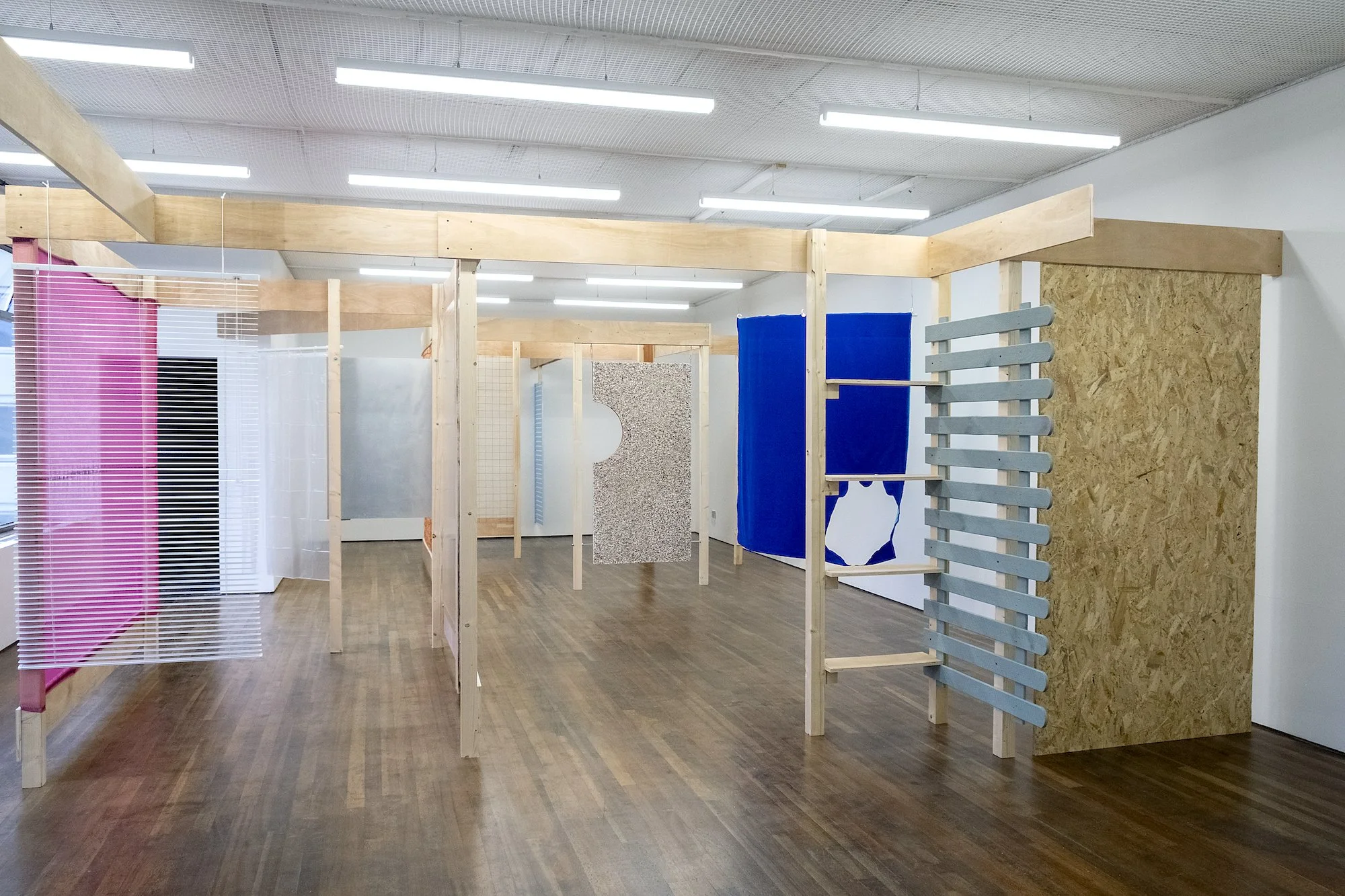
Figure 1.MAKING SPACE. Photo credit: Euan Lynn
The exhibition’s co-curation unfolded through an open, first-come, first-served process in which artists installed their own work iteratively. This openness referred to the method rather than to universal access: the invitation was extended specifically to NewBridge members and its wider community networks, hence the project’s framing as an “‘open’ open.” The first group placed their pieces in, on, or around Making Space, and each subsequent group installed their works in relation to what had already accrued. To support this, every install slot was accompanied by a small group of helpers formed of myself, NewBridge staff, Programme Committee members, McNamara, Cromwell, and Alderson who acted as additional “hands” and “eyes,” assisting artists while also helping them navigate the material realities of the structure. Exhibiting artists likewise helped one another, forming impromptu pairs and teams that discussed and negotiated positions of artwork within the exhibition.

Figure 2. NB Open 'Open' Sept-Nov 2024. Photo credit: Matt Denham.
As Making Space was composed of varied surfaces with different permissible points of attachment — some boards could be screwed into; others were protected at Alderson’s request — each installation required a degree of resourcefulness. These constraints meant no one could rely on a conventional hierarchy of display, nor assume priority over a particular wall or sight-line. Instead, artists had to work with the limitations of the structure and the decisions of those who came before them. This produced a levelling effect: the room’s hierarchy flattened as placement became a matter of shared problem-solving and responsiveness to the evolving ecology of the exhibition. As the structure accumulated artworks, the show grew organically through these layered acts of placement, negotiation, and adjacency.
These material constraints did not simply structure display; they redistributed responsibility. Because no single surface could be assumed as neutral or dominant, each act of placement required attentiveness to what was already present and to those who would come after. Care, here, was not an attitude layered onto the exhibition, but a condition produced through spatial negotiation.
Through this process, the ‘Open’ Open became a living demonstration of a curatorial approach that is relational, evolving and infrastructural. In this, the ‘Open’ Open aligned my practice with a broader history of curatorial approaches which foreground support, collaboration and infrastructural thinking.

Figure 3. Detail of adjacent works sharing a surface within Making Space.
1. Lineages of Support: Curating as Infrastructural Practice
The ‘Open’ Open became a site to test these ideas in practice: an exhibition built not around objects, but around shared learning, interaction, and distributed authorship. In this context, my role operated less as author and more as facilitator and listener — someone concerned with holding space, organising conditions, and attending to the social and material infrastructures that allow a project to take shape.
This shift aligns with a lineage of curatorial experimentation exemplified by Per Hüttner’s I Am a Curator (Chisenhale Gallery, 2003), a project that radically redistributed curatorial agency by inviting different groups of participants to curate the exhibition each day. The artwork in the show was housed by a modular display system designed by Céline Condorelli and Gavin Wade as part of their ongoing Support Structure project — these were a series of movable walls and adaptable architectural components that allowed the gallery to be spatially reconfigured. Their structure did more than provide a practical solution: it rendered visible the usually unseen infrastructures — material, organisational, and affective — that hold exhibitions together. In I Am a Curator, curating surfaced not as expertise or authorship, but as the live work of negotiation and responsiveness. This approach was formative for my own thinking; it suggested that exhibitions could function as relational infrastructures shaped collectively over time, rather than fixed and imposed in advance.
The direct involvement of Wade and Condorelli in I Am A Curator also forged a conceptual thread that extends into the ‘Open’ Open. Their Support Structure project proposes that the most meaningful parts of cultural production are often the ones that remain unseen: the scaffolding, labour, and affective work that hold collective processes together. Like Support Structure’s mobile walls, Making Space provided both a physical framework and a conceptual one: a shared site where artists could situate, negotiate, and reconfigure their works in relation to one another.
In this sense, Making Space did not simply echo I Am a Curator — it extended its ethos by operating flexible, relational display structures within a more distributed and collectively authored environment. Whereas I Am a Curator distributed curatorial agency through a reconfigurable exhibition system, Making Space embedded that reconfigurability within the artwork’s own infrastructural form, obliging each participant to negotiate materially and spatially with an already-evolving field of relations.
Its varied surfaces, differential attachment points, and layered textures demanded resourcefulness and interdependence, prompting artists to collaborate, problem-solve, and adjust their intentions in relation to the evolving structure. In doing so, Making Space transformed the logic of modular, infrastructural support into a live, communal methodology: a framework through which authorship became shared, decision-making iterative, and curatorial agency dispersed across many hands. It offered not just the possibility of reconfiguration, but the necessity of it — rendering the exhibition an unfolding social process.
2. Curating Collectively
Instead of issuing a traditional ‘open call’, I made an ‘open invitation’. This was framed across the website announcement, social media, and the mail out to NewBridge members to emphasise participation over selection. The invitation made clear that there would be no curatorial panel, no thematic brief, and no hierarchy of authorship. This small linguistic shift prioritised presence over selection and participation over hierarchy. There was no evaluative filter; anyone interested could take part. Contributors signed up on a first-come, first-served basis and were grouped into cohorts of around eight people, each allocated shared time and space in the gallery. These groups worked collectively during their slots, installing work in response to what had come before and to one another. In doing so, the exhibition began to take shape through situated interactions rather than predetermined structures. This collective approach extended beyond the artist cohorts and into the wider ecology of NewBridge’s programmes, as outlined below, with each contribution inflecting the exhibition through different forms of relation and shared practice.
For the Shieldfield Youth Programme — a creative group for young people run by Dwellbeing Shieldfield and NewBridge — myself and Izaac Gledhill, NewBridge Youth Programme Producer, offered a choice between printmaking and ceramics. They chose ceramics, drawn perhaps to the tactility and messiness of clay, so we organised a hands-on workshop in The Ceramics Room, run by Stephen Brown and Angharad Creissen. We later worked with the young people to collectively curate their pieces into the ‘Open’ Open.
A similar process unfolded with Memory Café, coordinated by Jill Holder at Forum Cafe in partnership with NewBridge. As a long-running programme where Shieldfield residents meet to make artwork and share stories, the Memory Café holds its own informal archive held by Jill. For the ‘Open’ Open, she brought a small selection of these works, and together we chose a handful to display. Their inclusion offered a modest glimpse into the rhythms and relationships that sustain the Memory Café, allowing these social practices to sit alongside, rather than outside, the exhibition.
Another strand of practice emerged through the development of an ‘Open’ Open book list, created with Maya Wallis, NewBridge Bookshop and Reading Room Producer. Myself and Maya assembled a selection of texts that echoed the exhibition’s themes and processes. The list became both a companion and an extension to the show, reflecting the learning that shaped it.
The exhibition also provided a low-stakes public moment for For Solidarity, a project led by Hannah Kirkham and developed in collaboration with the Solidarity Economy Association. For Solidarity operates as a networked platform that maps and connects organisations, initiatives, and individuals across the North East working toward social justice, ecological sustainability, and alternative economic practices. Rather than a formal presentation, it offered Hannah space to test how the project’s often-invisible relational work might be shared in a gallery context. We included a small selection of illustrations by Jim Spendlove, illustrator and NewBridge studio holder, originally made to document aspects of For Solidarity’s networks.
Finally, the exhibition texts and handout were produced in-house by Niall Greaves and George Stewart of the NewBridge Print Studio. Though modest in scale, their work exemplified the project’s reliance on NewBridge’s existing infrastructures — its people, skills, and shared resources.
Taken together, these contributions were not treated as outreach or peripheral additions but as integral strands of the exhibition’s formation. Each introduced a different set of relations, decisions, and shared practices, contributing to an exhibition that grew from the interconnections of its community. By refusing exclusivity and embracing contingency, the ‘Open’ Open reflected the wider ethos of NewBridge: a space built on trust, reciprocity, and mutual recognition, where programming grows from relationships rather than fixed agendas.
These varied forms of participation meant that the exhibition was produced through multiple, intersecting practices rather than through a single curatorial line — an ecology of contributions that enables reflection about ideas of space, relation, and belonging.
3. A Methodological Shift
Drawing on Dave Beech’s (2020) argument for redefining the exhibition as a social configuration rather than a container for autonomous objects, I approached the project not simply as a space in which artworks might be shown, but as a social form — a way of organising people, materials, and encounters. This understanding resonated strongly with the ethos of The NewBridge Project and with my ongoing research into artist-run initiatives, where exhibitions frequently emerge from shared labour, relationships, and the everyday rhythms of organisational life.
My embedded position within NewBridge — as a Programme Committee member, former Collective Studio participant, freelancer and regular ‘hot-desker’ — reinforced this orientation. I was not curating from a distance but from within the very network I was working alongside. This proximity shaped a methodology rooted in attentiveness, informality, and care: a practice of belonging-in-action that remained open to contingency, responsive to circumstance, and committed to holding space for others.
Within this framework, the activities of NewBridge members, communities, and programmes were not peripheral to the exhibition; they constituted it. Their ongoing practices served as both artistic contributions and relational infrastructures, shaping the exhibition through the ordinary work of making, meeting, discussing, and supporting one another. In this way, the exhibition became an extension of NewBridge’s existing social and organisational relations rather than a separate or imposed curatorial construct.
The sense of co-ownership that developed echoed Guibernau’s (2001) understanding of belonging as something generated through shared practices and mutual recognition. The collective acts of assembling, writing, talking, and installing fostered a feeling of “us-ness” that exceeded the boundaries of the exhibition and became a social process in its own right. Massey’s (2005) articulation of space as “a product of interrelations” is helpful here: by working with NewBridge’s existing infrastructures rather than imposing an external curatorial frame, the exhibition allowed these interrelations — dense, situated, and sometimes messy — to surface and become part of its form.
This methodological orientation required a shift in my role. My work moved fluidly between facilitation, technical support, administration, and participation — forms of labour often undervalued within curatorial discourse, yet essential to the ethical and practical grounding of the project. To curate, in this context, was to coordinate, to care, and to stay responsive to an evolving constellation of relations. It was an approach that relied not on authorial control but on the ability to sense, support, and extend the existing conditions from which the exhibition emerged.
4. Responsive Structure
Rather than composing a conventional exhibition with predetermined works, themes, and hierarchies, the project Was a responsive system shaped by those who showed up and what they brought. The curatorial logic was not to direct, but to facilitate; not to fix, but to remain attentive to what was already unfolding within NewBridge’s organisational ecosystem. This responsiveness was enacted spatially as much as socially. These iterative curatorial decisions did not produce disorder, but a form of collective attunement, in which space stayed available to others and accountable to shared presence.
In this sense, my role became intentionally hybrid, a combination of facilitator, technician, administrator, and collaborator. This fluidity reflected a broader ethic of artist-run infrastructure, where traditional divisions between roles collapse, and curating becomes embedded in the same shared labour. For example, I often shifted from helping to arrange and install artworks to making cups of tea and coffee, treating these acts as equally curatorial because they sustained the collective process.
This redistribution of authorship was made visibly and structurally explicit. A full list of contributors — including exhibiting artists, support staff, facilitators, and collaborators — was published in the exhibition text and displayed prominently on the gallery wall. To name everyone was to map the network, to recognise that what held the exhibition together was not a singular curatorial vision, but a constellation of co-created value.
In this sense, Guibernau’s (2001) conceptualisation of belonging as emotional attachment to a collective project is particularly useful, especially her emphasis on recognition and the symbolic practices through which collective identities are produced. The act of inclusion — of naming and recognising each contributor — not only acknowledged the labour and presence of all involved but also helped to constitute the exhibition’s collective subject, constructing a shared narrative grounded in care rather than authority. Through this gesture, the exhibition functioned as a mechanism for generating belonging: not simply a platform for showcasing finished works, but a living record of shared process, mutual recognition, and collective authorship.
Each artist cohort entered a gallery already shaped by what came before and, in turn, left traces for the next. Although the exhibition ultimately reached a moment of completion, its significance lay less in any final configuration than in the processes through which it unfolded. The exhibition functioned as a chain of encounters, where artworks, people, and materials collectively produced the “place” of the gallery over time. Curating, in this context, meant sustaining the conditions for this to happen. Drawing on Massey’s understanding of space as something formed through ongoing relations rather than as a static container, the gallery was held in a state of deliberate openness. This unfinished quality was not merely practical; it expressed a curatorial commitment to treating space as alive — continually reshaped by those who entered and by the relationships that emerged there.
In a more conventional setting, curating often operates as a final act: a sealing of possibilities into form. Here, however, it became an extended dialogue, continually reconfigured by the energies, contributions, and limitations of a shared context. Value was not located solely within individual artworks, but in the collective capacity to adapt, care, and coordinate — to make process itself visible as both method and meaning.
5. Learning in Public
The exhibition’s form and ethos were shaped by Listening and Learning: A Social Impact Report (Heslop et al, 2024), commissioned by NewBridge, with contributions from staff, members, and community partners. Developed independently of the ‘Open’ Open but unfolding alongside it, the report’s publication coincided with the exhibition’s run and mirrored it in several key ways: both foregrounded process over outcome, assembled knowledge from multiple voices rather than a singular authorial position, and understood learning as situated, relational, and ongoing. The report positions NewBridge not as a programme-led institution but as an embedded ecology of learning, grounded in lived experience, interdependence, and the cultivation of individual and collective agency. Within this framing, learning is not conceived as a supplementary outcome but as something produced through doing, making, hosting, and spending time together in shared space.
The ‘Open’ Open extended this orientation by treating the exhibition not as a finished form but as a processual structure for shared learning. Artists entered a space that was continually in flux, shaped by what others had done before them. Installing work became an exercise in responsiveness: to the material constraints of Making Space, to the decisions of earlier cohorts, and to the presence of unknown future collaborators. My role moved similarly across tasks; adjusting lights, sanding a rough edge of Making Space, making tea, or helping someone devise a workaround for hanging their piece on a surface that couldn’t be drilled. These mundane acts were integral to the curatorial method because they sustained the conditions for others to work. Many artists, too, stayed beyond their slots to help others install, demonstrating how learning emerged through shared labour rather than formal instruction.
The exhibition text acknowledged this distributed labour by listing everyone involved — artists, facilitators, programme staff, and collaborators. This was not a symbolic gesture but a recognition of how the exhibition came into being: through many small acts of coordination, care, and shared attention.
Learning here was not framed as improvement or attainment, but as responsiveness: to each other, to space, and to what emerged in the moment. Rather than reducing knowledge to outcomes, the exhibition understood it as co-produced in the gaps, in the offers, and in the interdependencies that formed between people, materials, and space. This resonates with Céline Condorelli’s (2009) conception of support structures not as metaphors but as working conditions — the literal and relational scaffolds that allow practice to unfold. Making Space operated as one such scaffold, but so did informal chats, shared tools, and the acts of hospitality that held the process together.
In this context, curating became a matter of trusting others and making space for them, often without knowing who those others might be. Many artists placed their work to the edge of a surface as to leave intentional gaps as gestures of speculative care that anticipated an unknown future contributor. Through these acts, the exhibition operated as a form of learning in public: not through structured pedagogy but through improvisation, mutual attention, and collective responsiveness. What was curated, then, was not simply a sequence of works, but the spatial and relational conditions for collective becoming.

Figure 4. NB Open 'Open' Sept-Nov 2024. Photo credit: Matt Denham.
Conclusion: Staying With the Incomplete
The ‘Open’ Open offered a space to reimagine what curating becomes when certainty is set aside. Rather than a coherent display authored through a singular vision, the exhibition functioned as a living framework for learning in public — a site where care, maintenance, and provisionality shaped how value was produced. In drawing on Guibernau’s notion of belonging, Massey’s relational understanding of space, and Condorelli’s conception of support structures, the project foregrounded curating as an infrastructural and relational practice: an activity concerned less with directing meaning than with enabling the conditions through which meaning might emerge collectively.
Working in this way surfaced the ambiguities intrinsic to open, decentralised forms of exhibition-making. The absence of a fixed structure, theme, or endpoint invited trust, negotiation, and responsiveness from everyone involved. Rather than guaranteeing coherence, the process exposed the uncertainties that accompany shared authorship and collective work. My role, therefore, was not to resolve these tensions but to attend to them — to hold the space in which multiple approaches, intentions, and temporalities could coexist without being forced into alignment.
The project sits within a wider lineage of curatorial experimentation that treats exhibitions as social infrastructures rather than static arrangements. Per Hüttner’s I Am a Curator demonstrated that curatorial agency can be distributed, while Condorelli and Wade’s Support Structures foregrounded the material and organisational scaffolding that makes such distribution possible. The ‘Open’ Open extends these precedents into the context of an artist-run organisation embedded within a local community, showing how curatorial work can emerge from — and remain accountable to — the relationships and practices that sustain it.
What arose was not a singular exhibition but a method: a way of working in which the curator hosts rather than directs, in which artists anticipate and care for collaborators they may never meet, and in which learning is grounded in shared maintenance and attention. The exhibition’s incompleteness was not a limitation but a principle. It created space for encounter, for co-learning, and for the kinds of value that cannot be predetermined. To curate in this sense is to accept that exhibitions are not final statements but ongoing negotiations. It is to approach space as relational, authorship as shared, and completion as provisional. Curating in this sense is, ultimately, to ask:
How do we hold space for one another while accepting incompleteness as a condition of collective practice rather than a problem to be solved?
All views expressed in this article are the author’s own.
References
Beech, D. (2020) Redefining the Exhibition. [online] Available at: [insert URL] [Accessed: date].
Condorelli, C., Wade, R. and Rendell, J. (2009) Support Structures. Berlin: Sternberg Press.
Guibernau, M. (2001) Belonging: Solidarity and Division in Modern Societies. Cambridge: Polity Press.
Heslop, J.,Richter, P., Coffield, E., Huggan, R., McKay, K., Stacey, F., and Stenning A. (2024) Listening and Learning – The NewBridge Project: A Social Impact Report. Newcastle upon Tyne: The NewBridge Project.
Massey, D. (2005) For Space. London: Sage.
