News
Explore the latest news regarding contemporary art, curation and the wider arts ecosystem...
If you would like to list an exhibition, event, or a news-worthy item, please email contact@curatorialethicsnetwork.org
*There is a small fee for non-CEN member listings. Please email us for details.
News
✳︎
News ✳︎
EVENT

CEN Member Laura Leuzzi announces a new event ‘Hosts and Ghosts #2 Performance Art and Activism’ - 19th March 2026.
Aberdeen (Innovation Station, Room N342, Sir Ian Wood Building, RGU Campus & kooperator.space, Aberdeen City Center).
This one-day event, funded by SGSAH Extended Training Allowance, explores performance art and activism from practice-based and theoretical perspectives. Themes and methodologies will include but will not be limited to participatory art, psychogeography, re-enactments and mixed media and mixed reality performance
Since the 1960s performance art has provided a key platform for artists, curators, and theoreticians to explore, engage with, and investigate tools in relation to social, political and humanitarian issues. Over the afternoon of the discussions and evening live performances, this SGSAH event will explore the challenges of performance art and activism, and discuss case studies, practices, strategies, and approaches in the context of contemporary practice-based research.
This training event will be structured in two sessions: a half-day, interactive, conference-type session at Robert Gordon University, starting at 12 PM, that will include presentations, discussions and workshops; and a performance evening, starting at 7 PM at kooperator.space in Aberdeen.
Speakers and performers will include artists, curators, practitioners, and theoreticians from Gray’s School of Art, including Dr Laura Leuzzi, Dr Jon Blackwood, and Dr Maja Zećo, and guest performance artist, Greig Burgoyne (University of Creative Arts - Canterbury), who are all currently engaged in performance practice and activism from different theoretical and practical standpoints. The programme will include contributions by Morgan Black, Andrei Chugunov, Emily Clarkson, Zhiyang Ding, Carrie Foulkes, Miriam Foy, and Lise Olsen.
Keynote will be delivered by Joseph DeLappe, Professor of Games and Tactical Media at Abertay University in Dundee. DeLappe is a pioneer of new media and hybrid performance – internationally acclaimed for his performances on pacifism, drone warfare and firearm violence.
The event will be hosted by the SPARK* Research Center, RGU. If you are a PhD student based in Scotland and you want to attend the event, please email l.leuzzi@rgu.ac.uk by 16 March 2026 to pre-register to the event.
Publication
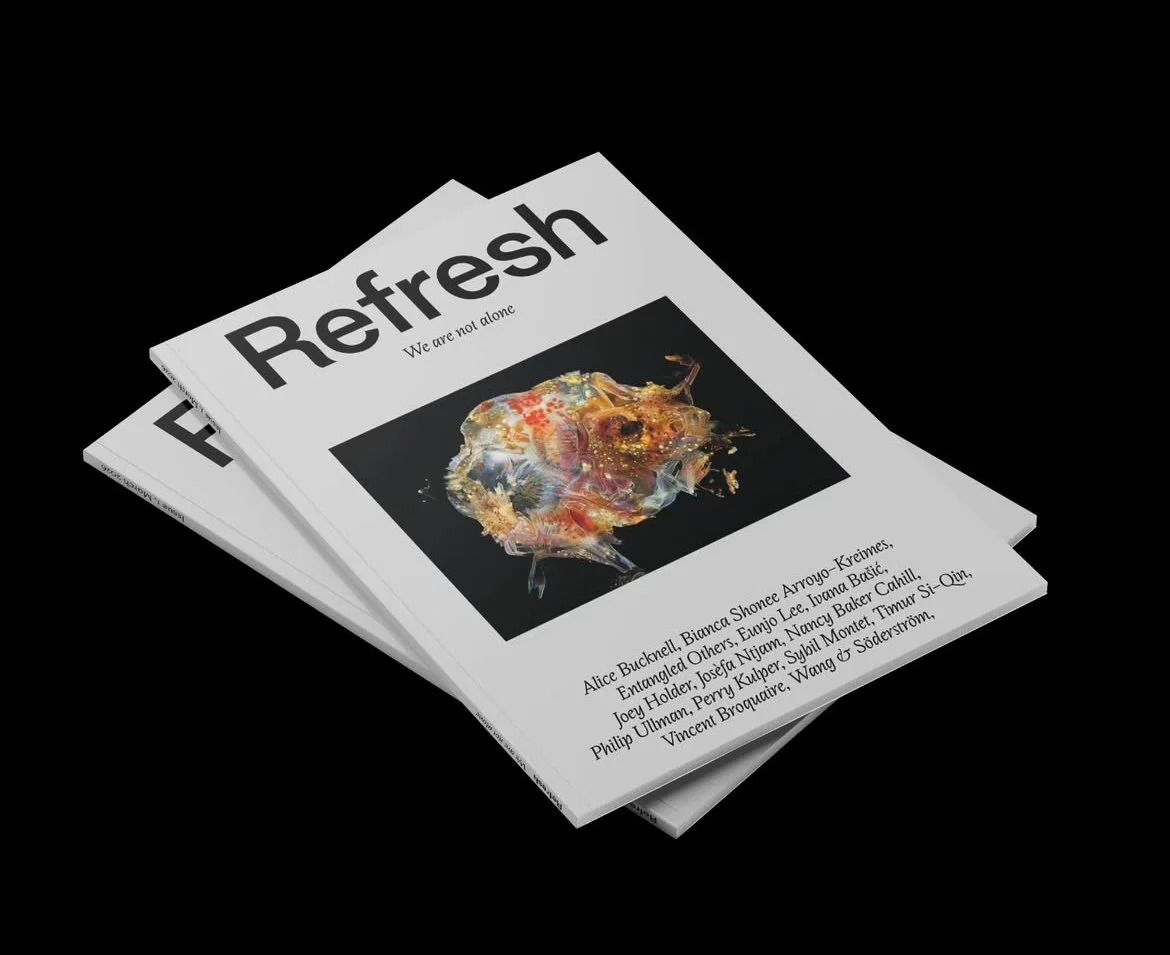
CEN member Philippe Riss-Schmidt, Founder and Editor-In-Chief, announces that Refresh, Issue #1 is now available worldwide.
‘Humanity’s long monologue wit itself may finally be over. This issue asks what comes after human exceptionalism - after the delusion, after the damage.
We ask whether art can serve as a diplomat to a natural world we’ve alienated, and then we venture beyond the looking glass into a “post-nature” where the biological and the artificial are already entwined.
An international avant-garde art magazine redefining new ways of seeing for a world that has already ruptured. Whether you’re ready or not.”
Artists: Alice Bucknell, Bianca Shonee Arroyo-Kreimes, Entangled Others, Eunjo Leem Ivana Bašić, Joey Holder, Josèfa Ntjam, Nancy Baker-ahill, Philip Ullman,, Perry Kulper, Sybil Montet, Timur Si-Qin, Vincent Broquaire, and Wang & Söderström.
Exhibition
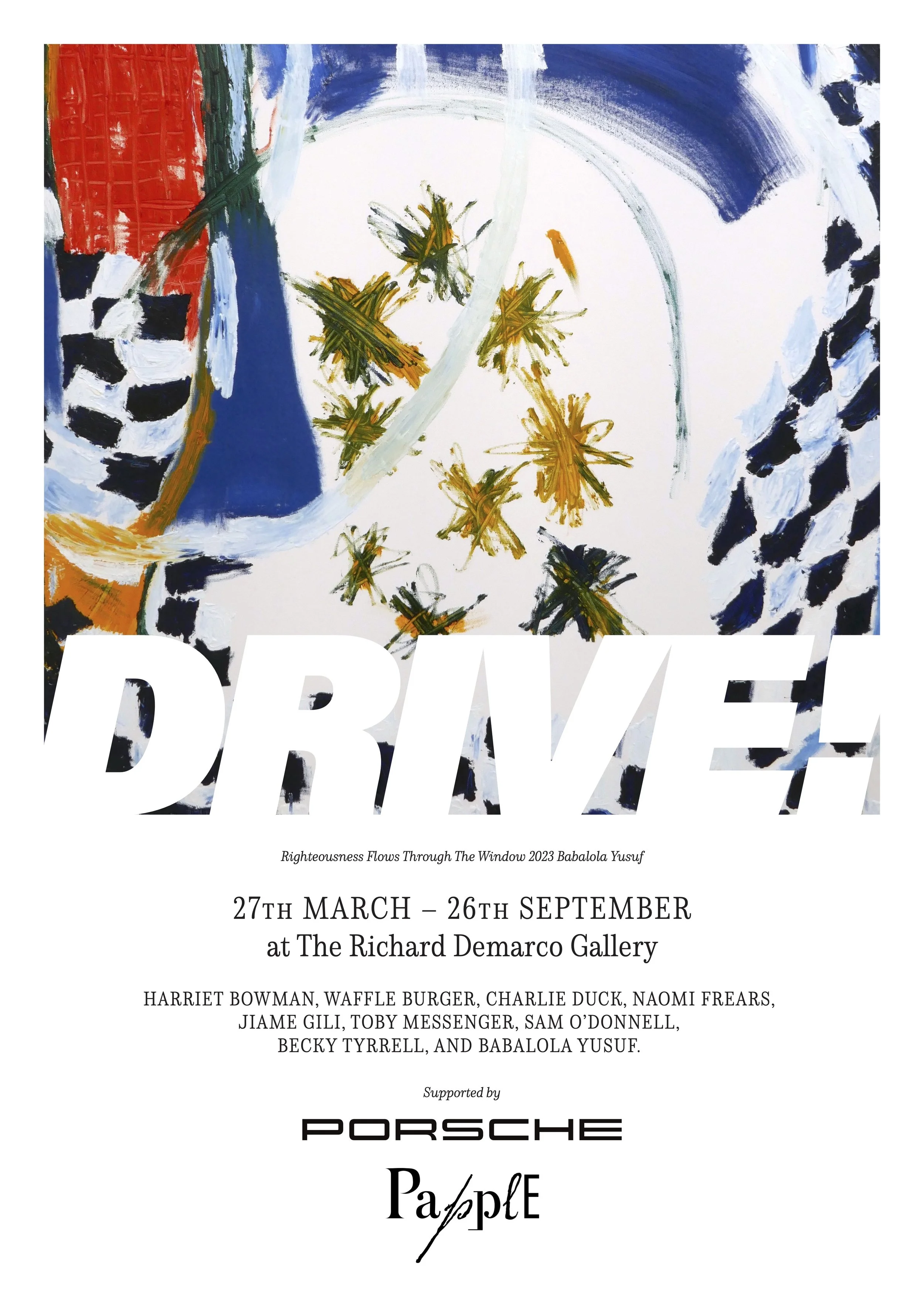
CEN Member Siobhan McLaughlin latest curatorial project, exhibition Drive!, opens on 27th March at 3pm at the Richard Demarco Gallery at Papple Steading in East Lothian.
A group show combining archival materials from the Papple Collection with contemporary artists looking at the automotive theme in fresh ways. Since its inception, the automotive industry has encouraged invention and imagination to push the limits of what is possible. DRIVE! celebrates this invention: the skill and precision of racing driver champions, the creativity of customisation and the energy and vitality of driving culture.
Positioning archival photographs with contemporary sculpture, painting and video works, DRIVE! will look afresh at the themes which encompass automotive culture. Original photography of Jim Clark, son of a sheep farmer from Fife who went on to become an acclaimed world champion racing driver, will sit alongside painted symbols of speed and power in the work of Jiame Gili. Go!, a painting by Sam O’Donnell of the car as a domestic space for lightness will sit next to Waffle Burger’s Burning Car series looking at cars in gaming culture.
Harriet Bowman’s doughnut rings of fused glass, residue from smashed car windows, swept from roadsides, are placed alongside Naomi Frears’ films Cars and Girls, a kind of car park choreography film that celebrates different types of movement and the behaviour of women in cars. Becky Tyrell’s photography documenting banger racing culture in the SW of England will be displayed with Babalola Yusuf’s painterly investigation into the archetypal symbols of racing. Playful ceramic car multiples by Charlie Duck are positioned nose to tail in a traffic jam, while Toby Messenger’s life-size motorbike, a work born in part from nostalgia, leans in the middle of the space. The combination of contemporary art with archival material will both celebrate the history of driving culture and expand it. As the first major exhibition at the Richard Demarco gallery at Papple Steading, DRIVE! will reflect the interest in built heritage and new visions, relishing innovations of the past with fresh and multifaceted ideas for the future.
Re-defining the typical perspective of both the automotive industry and the rural farmstead, DRIVE! at Papple Steading encompasses the ethos behind the Porsche design philosophy. We are grateful for Porsche’s support and their values of innovation that are inherent in this exhibition hosted at a beautifully restored historic farm steading.
Professional
CEN member Siobhan McLaughlin has been awarded the Hugo Burge Foundation x Royal Scottish Academy Visual Art Residency.
HBF x Royal Scottish Academy Visual Art Residency
“As part of RSA200: Celebrating Together, we are delighted to announce Siobhan McLaughlin as the recipient of the Hugo Burge Foundation x Royal Scottish Academy Visual Art Residency.
This four-week fully funded residency at the Hugo Burge Foundation was open to Academicians and artists associated with the Royal Scottish Academy, inviting the selected artist to respond to Elizabeth Blackadder’s Self Portrait with Cat, 1976.
During her time at the Foundation, Siobhan will ‘live’ with this chosen work, displayed within her private studio space, and develop a creative response through her own practice. The residency offers a unique opportunity to engage deeply with the history and legacy of the RSA while exploring new artistic directions in an inspiring environment.”
EVENT
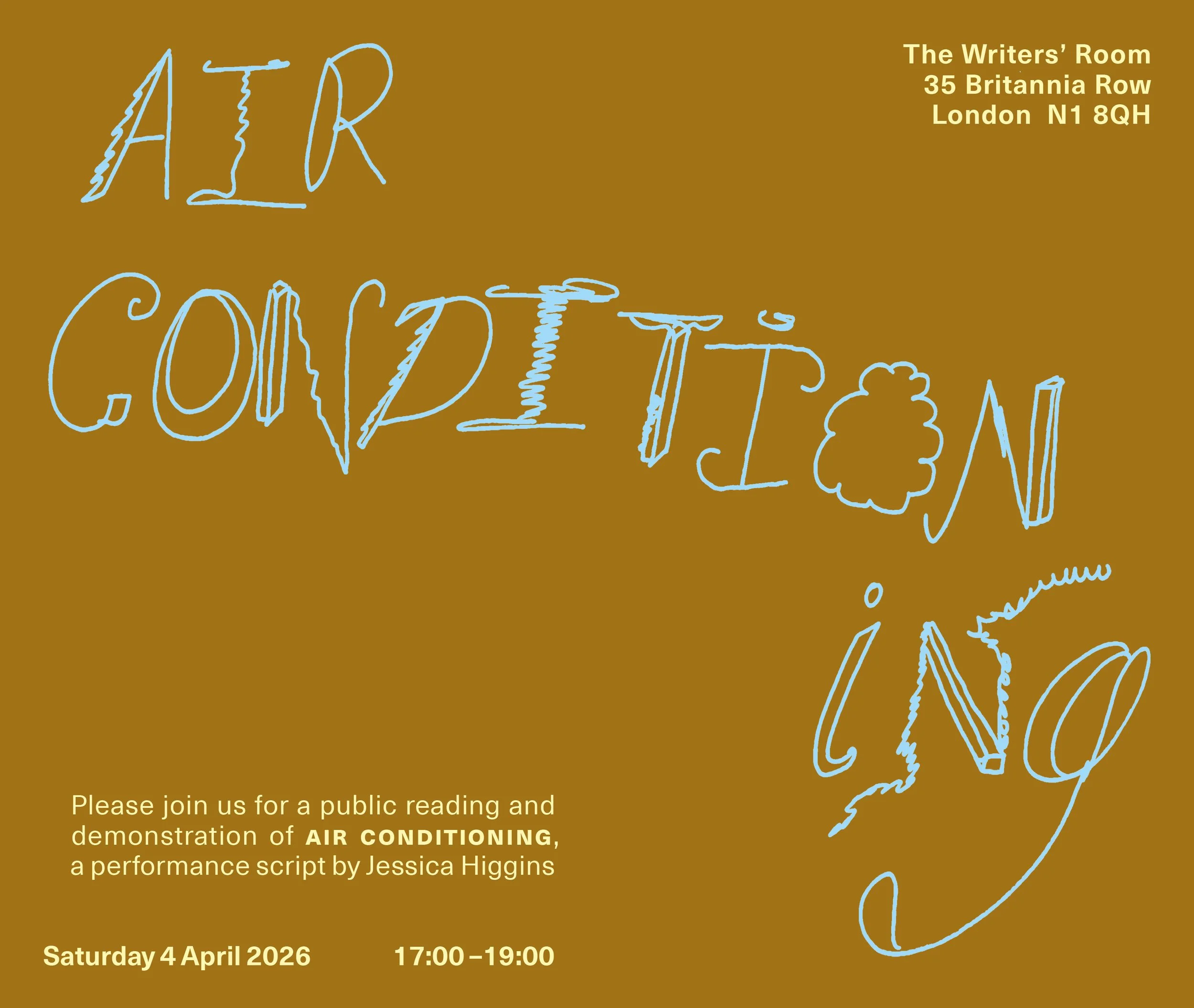
CEN member Lu Cunningham announces that The Writers’ Room has moved to a new space, and to celebrate this they will begin the Spring with an event on Saturday 4th April with writer and artist Jessica Higgins!
'AIR CONDITIONING'
Saturday 4th April, 5-7pm
Britannia Row, Islington, London, N1 8QH
So now we might imagine the woman waiting for her mojito. She’s back at the bar under the faulty air conditioning. The feint buzz of something stuck in its mechanism ricochets quietly around the room. She feels the artificial air sneaking under her blouse. It spreads across her body and licks her skin. She quite likes it here, actually. A private little performance, just for me, she says. Like an I, sneaking in the periphery of my vision, she notes. She thinks about making conversation with the bartender. She might explain the funny thing that happens when the ambiance hiccups and its points of contact get too close. She might explain the ways the cool breeze tickles the hairs in her ear like a whisper.
Please join us for a public reading and demonstration of AIR CONDITIONING, a new performance script developed by Jessica Higgins while in residence at The Writer’s Room.
AIR CONDITIONING continues an interest in the performed qualities of ‘usefulness’, where the fiction of the script is taken literally — as a written text for a play, film or broadcast. Taking a speculative slant, the complicated ‘auto’ of the narrated first, second or third person seeks its manifestation in atmospheric control systems, water ingress, condensation bricks and an unfortunate and a yet-to-be-named organism.
The performance will begin somewhere around 17:30 and last for roughly half an hour. It will be bookended by a display of working materials installed throughout the space. Refreshments will be provided. Please note that the event will be recorded. Please let a team member know if you do not wish to feature in any documentation.
---
Jessica Higgins is an artist and writer working at the intersections of text, performance and the moving image. Paying particular attention to language as a relational material, she uses methods of (auto)biography, fictioning and vocal experimentation, alongside collage, diagramming and prop making to produce textual narratives which are brought to bear in live performances, films and publications. She has shown her work at Cafe Oto (London); Fluxus Museum (Paros); 20 Albert Road (Glasgow); Radiophrenia (Glasgow); Castlefield Gallery (Manchester); Edinburgh Art Festival; Glasgow Film Festival; LUX’ Artist Moving Image Festival; Supernormal Festival; David Dale Gallery (Glasgow); The Bower (London) and Glasgow International Festival. Her writing has been published by The Grass is Green in the Fields for You; MAP Magazine; Tenderbooks, Counterflows Festival, Nothing Personal, TACO! and Publication Studio London.
Art fair
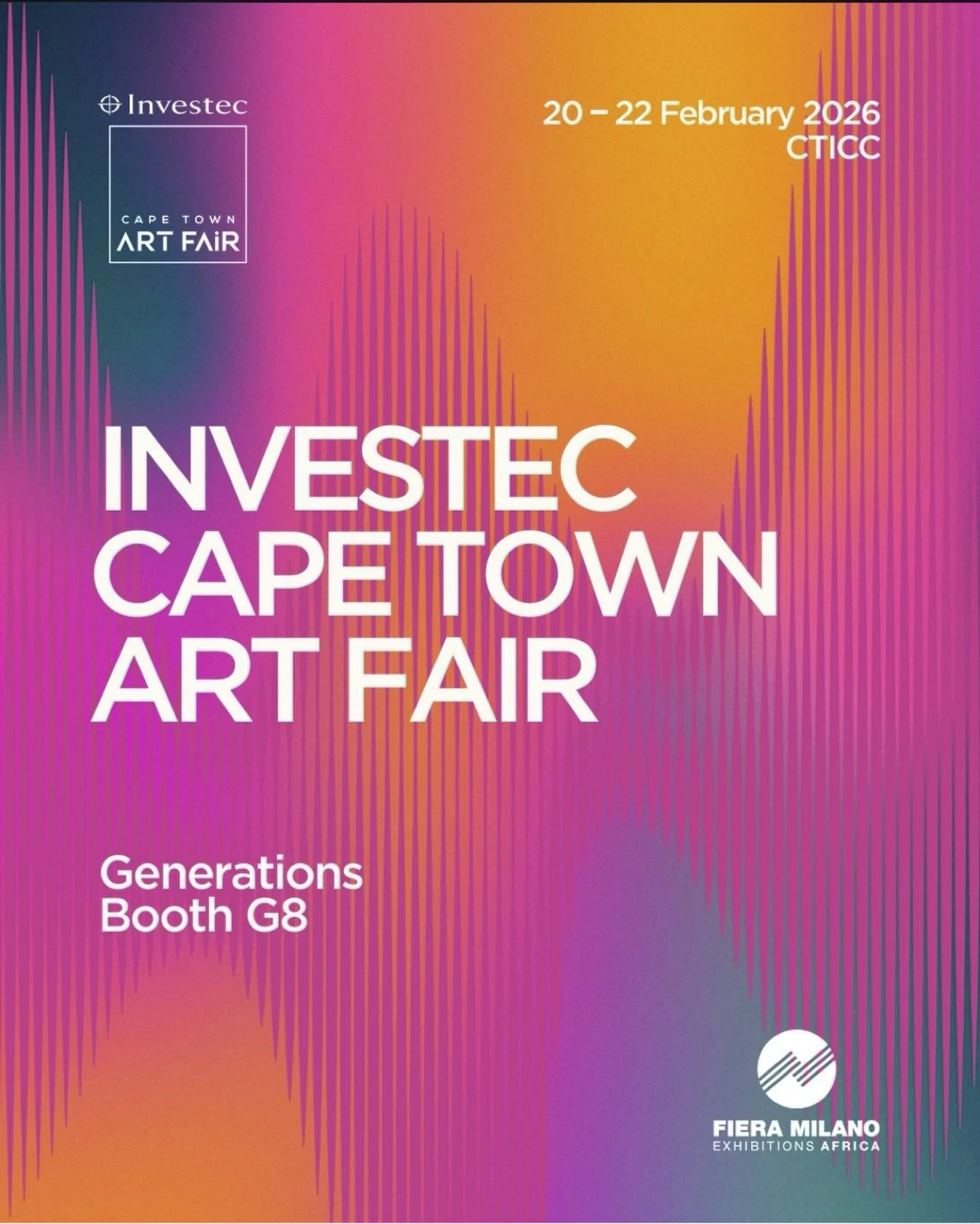
ETHIOPIA'S THE SPACE ETHIOPIA PRESENTS DAGIM ABEBE (CEN Member) AND ENGADGET LEGESE AT INVESTEC CAPE TOWN ART FAIR 2026
The Investec Cape Town Art Fair, the largest and most influential contemporary art fair on the African continent, returns to the CTICC from 20–22 February 2026. For its 13th edition, the fair adopts the resonant curatorial theme “Listen” an invitation to engage deeply with art as a site of dialogue, memory, and resistance.
Among the 126 exhibitors from 34 cities worldwide, The Space Ethiopia makes a distinctive contribution from Addis Ababa. The gallery participates in the fair’s curated Generations section, helmed by curator Tandazani Dhlakama under the title “Call and Response”. This section foregrounds intergenerational artistic dialogue, pairing emerging and established voices to reveal the threads that connect contemporary practice across time.
Booth G8 | Generations
At Booth G8, The Space Ethiopia presents a focused two-artist exhibition that bridges Addis Ababa and the diaspora.
Dagim Abebe offers his work interrogates the relationship between memory and the built environment, how Addis Ababa’s evolving urban landscape, settlements, and public spaces shape individual and collective identity. Through painting and mixed media, Dagim renders the city not as a backdrop, but as a living participant in the formation of self.
The gallery also presents Engdaget Legese, a German-based Ethiopian artist whose practice developed from his ongoing investigation into weaving as both process and philosophy. His works with offset and rest canvas sourced from art supply stores, transforming discarded materials into strips that are woven, layered, and assembled. The resulting works resist easy classification; they exist as painting, sculpture, object, and installation, united by the artists distinct language of abstract expression. Engdaget’s inclusion speaks directly to the “Call and Response” framework of the Generations section. His disaporan perspective working in Germany while maintaining deep ties to Ethiopia; enters into dialogue. With Dagim’s more interior, place-bound practice. Together, the two artists map a contemporary Ethiopian experience that is simultaneously local and transnational, material and metaphysical.
About The Space Ethiopia
Based in Addis Ababa, The Space Ethiopia is a contemporary art gallery dedicated to advancing Ethiopian artists within both local and international contexts. Its participation at Investec Cape Town Art Fair 2026 marks a significant moment for Ethiopian representation on the continent’s premier art platform.
Fair Information:
Investec Cape Town Art Fair 2026
📍 CTICC, Cape Town
📅 20–22 February 2026
🔗 Official fair website: https://www.investeccapetownartfair.co.za/
The Space Ethiopia
📍 Booth G8, Generations section
Workshop
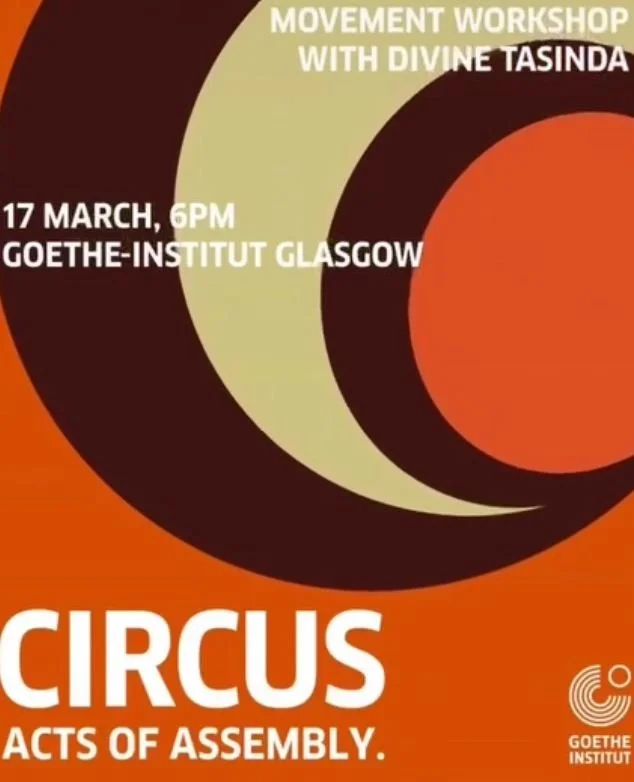
CAT DUNN (CEN Member) announces her latest curatorial project…
CIRCUS: ACTS OF ASSEMBLY. Movement Workshop with Divine Tasinda
A welcoming movement workshop led by Divine Tasinda, open to all bodies and abilities. CIRCUS opens with a soft movement workshop led by Divine Tasinda, infusing the Goethe-Institut with movement, warmth, and embodied knowledge. This grounding, expansive opening situates CIRCUS as a transformative, embodied, translocal space — one shaped from the outset by global majority practices of repair, care, and movement.
The workshop centres access and welcome. It is particularly open to marginalised communities, including LGBTQIA+ participants and people on low incomes, while all other groups are warmly invited. The session is suitable for all abilities and levels of movement experience.
Please note: due to stairs to the entrance and within the building, the venue is unfortunately not wheelchair accessible.
Divine Tasinda is an international multidisciplinary artist. Born in Congo raised in Scotland. Divine specialises with dance, fashion, and music. Founder / director of Three60 company and House of KUNGI. Divine's movement is influenced by African traditional dance and street dance, specialising in hip-hop , Afro, dancehall , experimental and variation of other styles within street Dance and technical style such as contemporary.
CIRCUS is a new interdisciplinary programming strand at the Goethe-Institut Glasgow, launching in 2026. A circus can be a meeting point of artistic practices and an expression of the extraordinary capacities of human and non‑human bodies and spirits. It is also a space, typically circular, appearing as a temporary or permanent structure, an ephemeral addition to the urban fabric, or a hybrid zone between indoors and outdoors. Takings its cue from our ring-shaped address at Park Circus in Glasgow's West End, the programme aims to open our heritage venue as a place for creative production, for gathering, and for dialogue between creative communities in Scotland and Germany. All CIRCUS events in 2026 are curated by Dr Cat Dunn.
Conference
Call for submissions
Performing European Publics
(4-5 June 2026)
What does it mean to perform Europe—and to perform in Europe—today? What are the political stakes of such performances? Performing European Publics (4-5 June 2026) invites researchers from Theatre & Performance Studies, Politics, and allied fields to critically reflect on how performance, publicness, and the idea of Europe itself intersect, collide, and transform across diverse cultural and political terrains. European nations today face, in varying guises, democratic ‘backsliding’ or the rise of ‘illiberal’ democracy, encroaching authoritarianism and erosion of civil liberties, the gathering strength of ethno-nationalist and identitarian populist movements, and a polarised, fragmented, even ‘post-truth’ public sphere. This conference asks how performances—embodied or digital actions, in physical or virtual public space, that establish a performer-spectator relation—and performatives—utterances that do what they state—shape this political terrain, and how the concepts and practices of performance, broadly construed, might help us to navigate it. The conference invites delegates working on and in a range of European contexts to consider performances in public space as street-level acts of political theorising, at once locally intelligible and potentially mobile.
CEN member Ned McConnell, Head of Visual Arts at De La Ware Pavilion, announces the opening of two new exhibitions.
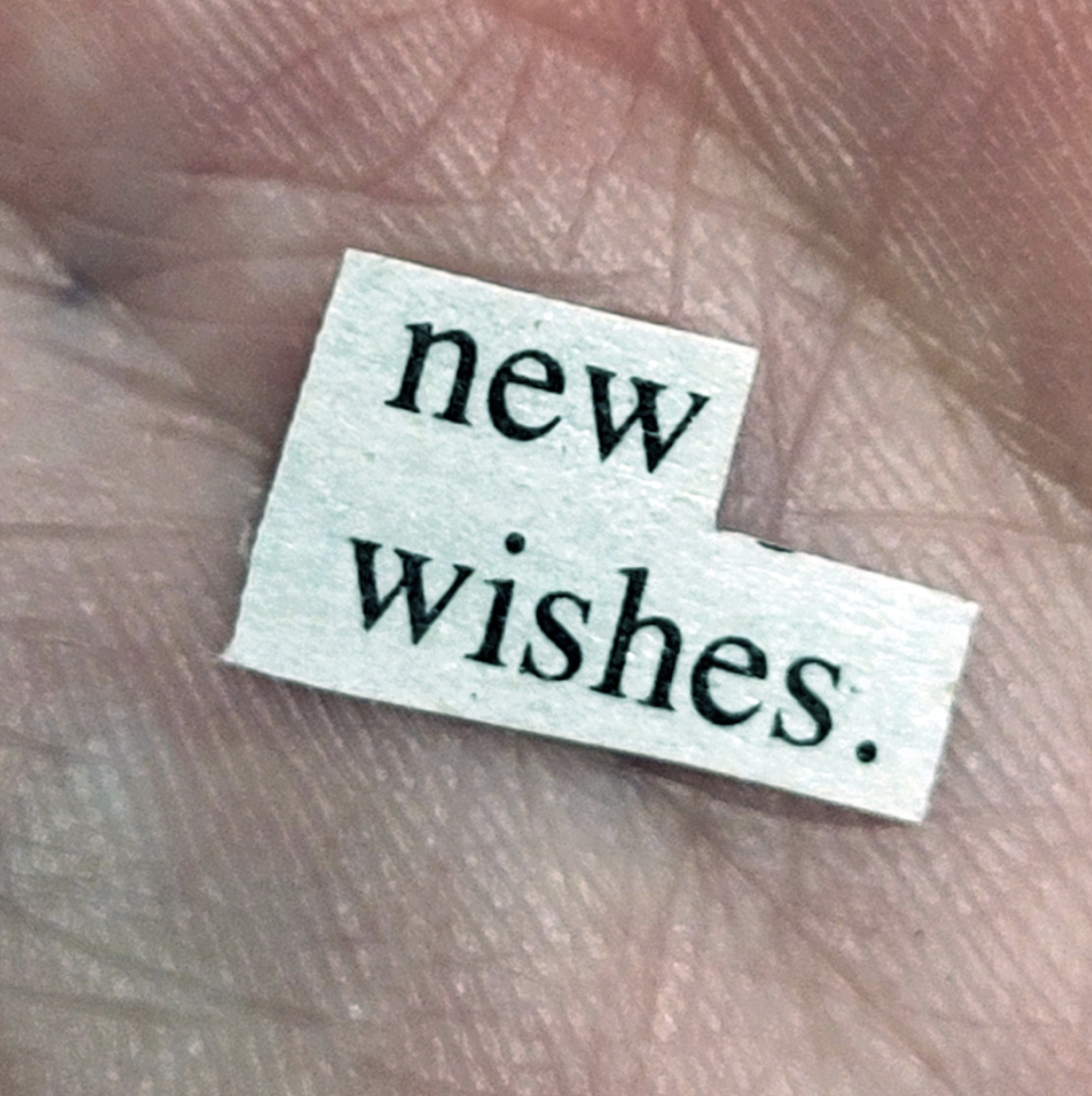
Jenine Marsh: new wishes.
Open: 14 February – 31 May 2026
Ground floor gallery
De La Warr Pavilion, England.
De La Warr Pavilion is delighted to announce new wishes., the first solo institutional presentation in the UK by Canadian artist Jenine Marsh, opening in Spring 2026 in the Ground floor gallery.
Jenine Marsh (b. 1984, Calgary, Alberta, Canada) is an artist who uses sculpture and installation to explore themes of agency, mortality and value. Coins and other paraphernalia of exchange and contact are central to her practice, subjected to processes of destruction and transformation that cultivate illicit and intimate responses to the shared conditions of end-stage capitalism.
For new wishes., Marsh will transform the Ground floor gallery into a civic landscape centred on a large-scale fountain in a state of transition. The fountain will appear under construction, out of service or in decay, conceived in dialogue with the Pavilion’s modernist architecture and its role as a civic space. Coins and taxidermy pigeons will appear throughout the gallery and within the fountain itself. The pigeons act as quiet messengers of urban life, evoking movement, neglect, and the traces of human presence, while the coins gather as points of contact, carrying the weight of both hope and exchange. Together, these elements form a space that moves between stillness and change, linking the everyday act of wishing to the material conditions of life.
Marsh approaches this gesture as a ritual of belief, exchange and sacrifice, while exposing its contradictions within contemporary systems of value. Through acts of reconfiguration and transformation, she reimagines coin-wishing as a quiet expression of speculation—evoking a present suspended between what is wished for and what is left behind. Fragments of urban detritus such as receipts, junk mail and newspapers will be embedded within the structure, echoing the accumulation of waste in our shared environments. Out of this debris, coins will emerge as focal elements,appearing squished, folded or pierced. The coins used in the exhibition are bronze counterfeits cast through a lost-wax process and electroplated to resemble circulated currency. As altered copies, they unsettle familiar ideas of worth and disrupt the ways coins perform economic value, suggesting that value itself is always performed. These transformations strip the coins of monetary function while allowing them to register human gestures and experiences, revealing what our material remains hold about us.
About Jenine Marsh
Jenine Marsh has exhibited her sculpture and installation work widely in galleries and institutions such as the Kitchener-Waterloo Art Gallery, Ontario (2025), the Buffalo Institute for Contemporary Art, New York (2025); the Goldfarb Art Gallery, Toronto (2024); Ensemble, New York (2024); Prairie, Chicago (2024); Ashley, Berlin (2024); the Morris and Helen Belkin Art Gallery, Vancouver (2024); Gianni Manhattan, Vienna (2023); Union Pacific, London (2023); Cooper Cole, Toronto (2023); Joe Project, Montreal (2023); Night Gallery, Los Angeles (2022); Essex Flowers, New York (2020); Franz Kaka, Toronto (2019); Centre Clark,Montreal (2019); Palais de Tokyo, Paris (2019), Entrée Gallery, Bergen (2018), and Lulu, Mexico City (2015). She has served as artist in residence at the Banff Centre for the Arts (2009, 2010, and 2022), at AiR Bergen at USF Verftet, Bergen (2018); Rupert, Vilnius (2017); and the Vermont Studio Center, Johnson VT (2011).
Marsh’s work has received funding from the Canada Council for the Arts, Partners in Art, the Chalmers Arts Fellowship, the Toronto Arts Council, and the Ontario Arts Council. Jenine received her BFA from the Alberta University of the Arts in 2007, and her MFA from the University of Guelph in 2013. She is currently a doctoral candidate at York University.
Image: Jenine Marsh, new wishes., 2025. Courtesy of the artist and Cooper Cole, To
Sayan Chanda: How Many Fires, How Many Suns, How Many Dawns?
Open: 14 February – 31 May 2026
First floor gallery
De La Warr Pavilion, England.
De La Warr Pavilion is delighted to announce a major new commission by Kolkata-born artist Sayan Chanda titled How Many Fires, How Many Suns, How Many Dawns?, opening in Spring 2026 in the First floor gallery.
Sayan Chanda (b. 1989, Kolkata; lives and works in London) reimagines votive objects, folk divinities, and mythic narratives as hybrid, ambiguous forms through the lens of identity and postcolonial theory. Working intuitively with fibre and clay through weaving, stitching, quilting, dyeing and hand-building, he creates spaces where stories, figures and rituals exist untethered from place, culture or period. His practice often turns to female and subaltern deities whose presence endures through communal rituals that have survived in domestic settings or been obscured by patriarchal retellings.
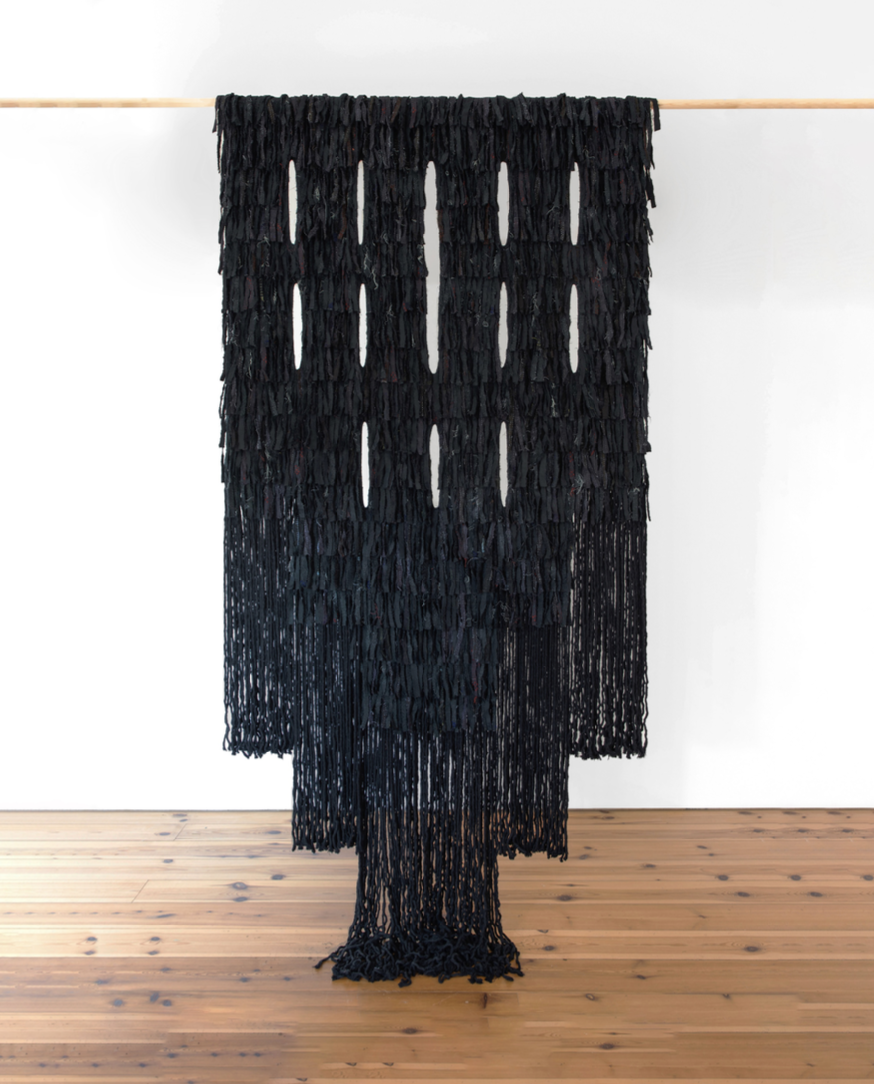
At the centre of the exhibition is Bonbibi, the forest goddess of the Sundarbans, reimagined as a figure that belongs to no single community or faith. Traditionally worshipped by both Muslim and Hindu communities as a protector, she has in recent times been reshaped to fit orthodox Hindu practices. Chanda presents her as a syncretic figure, unbound by rigid definitions. She appears as an expanse of vintage Kantha quilts, hand-stitched by women in their homes from materials drawn from daily life. For Chanda, Kantha is an archive of women’s labour, shaped by necessity,memory and quiet resistance. Through it, Bonbibi becomes a figure of both protection and resilience, rooted in the everyday gestures of care.
Two figures will stand beside Bonbibi, represented in the form of woven and stitched textiles, and will act as both guardians and warnings. Interacting with these works, a still body of water will reflect the environment and reveal glimpses of the deities, holding both calm and a sense of potential change.
Scattered across the space will be small ceramic animals and sculptural forms that recall the roots of mangrove trees. Their metallic surfaces will shift between clarity and ambiguity, and some creatures will appear part-human, part-animal, suggesting the connections between humans, animals and the natural world.
The title How Many Fires, How Many Suns, How Many Dawns? comes from an invocation in the Rig Veda , an ancient Sanskrit text that forms part of the oldest Hindu scriptures. It is commonly translated as: “How many fires are there, how many suns, how many dawns, how many waters? I address you, O ancestors, not in rivalry; I ask you, sages, in order to know the truth.” The phrase calls upon ancestral spirits to understand the multiplicity of the universe. It can also be read as a reflection on unity and the ways that all things are connected.
Through this commission, Chanda will continue his exploration of forgotten myths and ancestral figures as a way to consider care, resilience and belonging. By returning to these stories, he will create a space beyond fixed forms of worship or recognition, where deities and histories exist in a porous, shifting terrain.
About Sayan Chanda
Chanda received his bachelor’s degree in textile design from the National Institute of Design, India, in 2013 and an MFA from the University of Arts,London, in 2021. His work has been exhibited widely in shows internationally,including: The 6th Kochi Muziris Biennale, Kochi (2025, forthcoming); Cample Line, Scotland (2025); Green Art Gallery, Dubai (2024); British Textile Biennial(2023); Jhaveri Contemporary, Mumbai (2022); Commonage Projects, London (2022); Saatchi Gallery, London (2021); South London Gallery, London (2021)and Nature Morte, New Delhi (2021). He has been selected for The Artsy Vanguard 2026.
Images: Sayan Chanda, Who Dwells Within Trees , 2025, vintage quilt, cotton,285x120cm. Photo credit Mike Bolam, Cample Line copy.
Exhibition
Conference
Call for submissions
Performing European Publics
(4-5 June 2026)
What does it mean to perform Europe—and to perform in Europe—today? What are the political stakes of such performances? Performing European Publics (4-5 June 2026) invites researchers from Theatre & Performance Studies, Politics, and allied fields to critically reflect on how performance, publicness, and the idea of Europe itself intersect, collide, and transform across diverse cultural and political terrains. European nations today face, in varying guises, democratic ‘backsliding’ or the rise of ‘illiberal’ democracy, encroaching authoritarianism and erosion of civil liberties, the gathering strength of ethno-nationalist and identitarian populist movements, and a polarised, fragmented, even ‘post-truth’ public sphere. This conference asks how performances—embodied or digital actions, in physical or virtual public space, that establish a performer-spectator relation—and performatives—utterances that do what they state—shape this political terrain, and how the concepts and practices of performance, broadly construed, might help us to navigate it. The conference invites delegates working on and in a range of European contexts to consider performances in public space as street-level acts of political theorising, at once locally intelligible and potentially mobile.
Screening
CEN member Dr Cat Dunn recently co-curated a second event titled 'The Slave’s Lament’ as part of the longer-term programme Decolonising the Highlands.
Screening and Q&A with artist, Graham Fagen.
This screening took place on 30th January 2026 at Timespan, Helmsdale, Scotland.
The screening of The Slave’s Lament, was followed by an open and participatory conversation with artist Graham Fagen. The event was created as a welcoming starting point for anyone interested in Scottish history, culture and how the past continues to shape life in the Highlands today. Participants were invited to explore Scotland’s deep entanglement with the transatlantic slave trade and its continuing cultural and economic legacies, with a particular focus on the Highlands.
This was the second event of Decolonising the Highlands,a longer-term programme co-curated with Dr Cat Dunn that was shaped collaboratively with local communities. The screening and discussion lay the groundwork for that process, creating shared understanding and inviting local voices to reflect together on what comes next.
About the Film The Slave Lament
Written in 1792, The Slave’s Lament is Robert Burns’ only work that communicated the appalling realities of the transatlantic slave trade. Despite being more than 200 years old, the song brings the social, political and human tragedies of today into sharp focus.
In this contemporary interpretation, artist Graham Fagen brought together the Scottish Ensemble and reggae singer Ghetto Priest. By connecting Burns’ words with Jamaican reggae, the work links Scottish and Caribbean histories and highlights how seemingly distant musical cultures are deeply entangled. The result was a powerful and moving piece that invites reflection on shared histories of suffering, resistance, and humanity.
The Slave’s Lament’ was Robert Burns’ only work to empathise with the appalling hurt of the displaced, the trafficked, and the enslaved. A beautiful lyric written over two hundred years ago, it is a narrative that remains entirely contemporary as we think of current tragedies unfolding on borders and in hinterland locations.
About Dr Cat Dunn
Dr. Cat Dunn is a Black woman whose curatorial practice is shaped by the intersections of migration, memory, and identity. Her work interrogates how Blackness is perceived, performed, and preserved across diasporic landscapes, paying close attention to the ways histories—both personal and collective—are carried on bodies, embedded in objects, and inscribed into spaces. Grounded in Caribbean thought and attuned to the tensions of displacement, she curates exhibitions that challenge static notions of identity, embracing instead its multiplicity and fluidity. She is particularly drawn to how the colonial past continues to shape the present, how heritage can be reclaimed, and how visual culture serves simultaneously as a tool of resistance and an archive of survival. Through this practice, Dr. Dunn creates spaces where overlooked narratives are centred, Black voices are amplified, and audiences are invited to question received ideas of belonging. Scotland, with its layered histories of empire and migration, offers a particularly
About Timespan
Timespan is a museum and cultural institution in Helmsdale (North East Highlands, Scotland)dedicated to using culture as a catalyst for political, social, cultural, and environmental change at both local and global levels. Timespan’s holistic approach integrates a local history museum, contemporary art gallery, archive, geology and herb gardens, shop, and café, with the ambition of fostering a more equitable, inclusive, diverse, andsustainable future.
Situated in a region shaped by historic injustices, categorised as rural and remote, and underserved by cultural services, Timespan serves as a vital cultural hub, engaging over 20,000 individuals annually and reaching an online audience of 110,000. Timespan’s impact and significance were recognised with a shortlisting for the Art Fund Museum of the Year Award in 2021. While rooted in the local, Timespan addresses global issues through a holistic approach spanning arts, heritage, digital technologies, education, wellbeing and community building.
About Graham Fagen
Graham Fagen (b. 1966) is a Scottish artist based in Glasgow, working across video, installation, sculpture, photography, and text. He studied sculpture at The Glasgow School of Art (BA) and Art & Architecture at the Kent Institute of Art and Design (MA), and is Professor of Fine Art at Duncan of Jordanstone College of Art & Design, University of Dundee.
Fagen’s work explores history, culture, and identity, often addressing Scotland, the transatlantic slave trade, war, poetry, and popular song. In 2015, he represented Scotland at the 56th Venice Biennale. He has exhibited widely at institutions including Tate Britain, the Victoria & Albert Museum, the Institute of Contemporary Arts, Busan Biennale (South Korea), and Artpace, San Antonio (USA).
His work is held in major collections including Tate, Arts Council Collection, V&A Museum, National Galleries of Scotland, and international collections across Europe, North America, and Asia.
Images:Graham Fagen The Slave’s Lament (single screen). Originally produced for Scotland + Venice 2015, commissioned and curated by Hospitalfield, Arbroath. Composer: Sally Beamish.
Professional
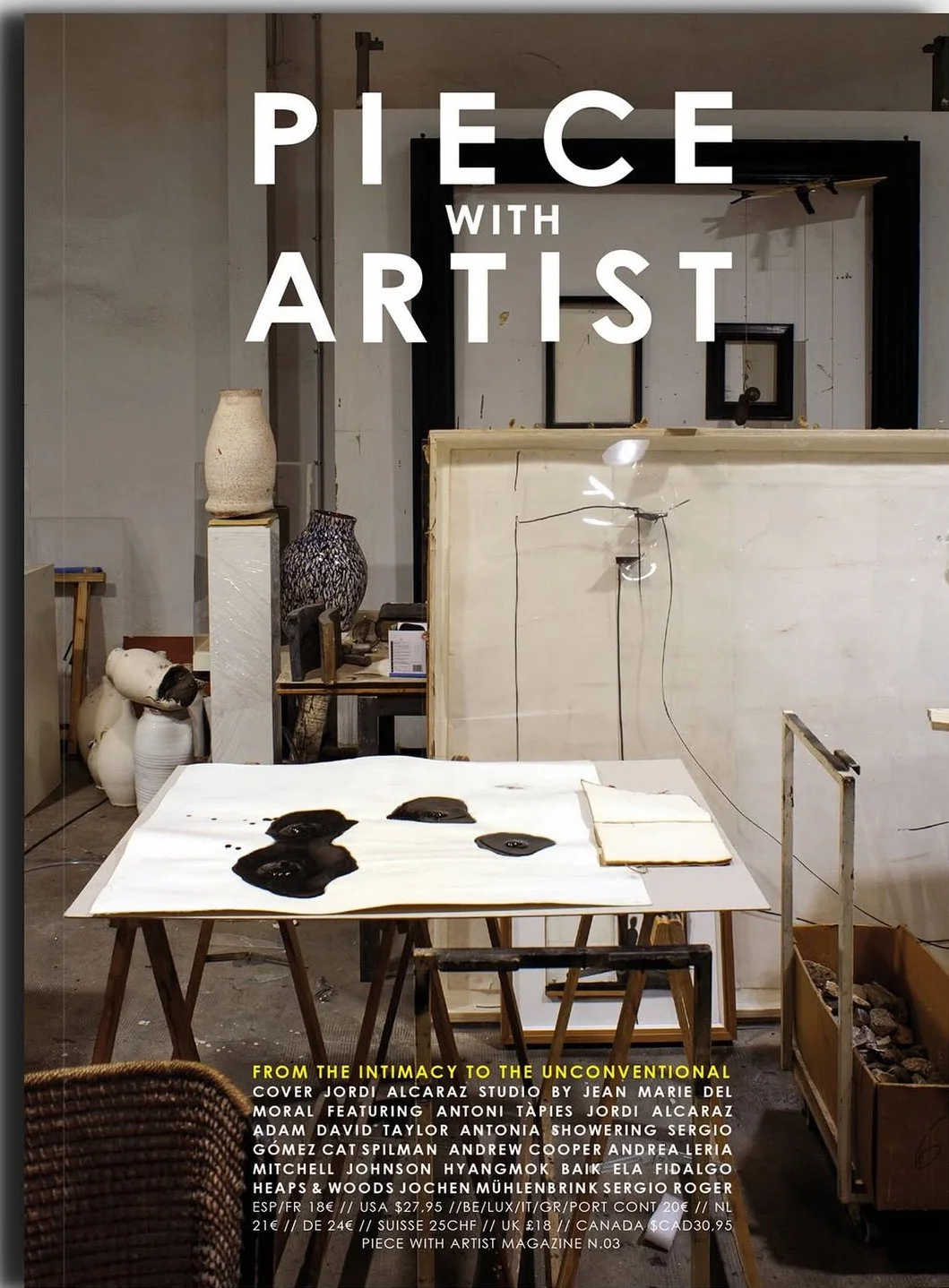
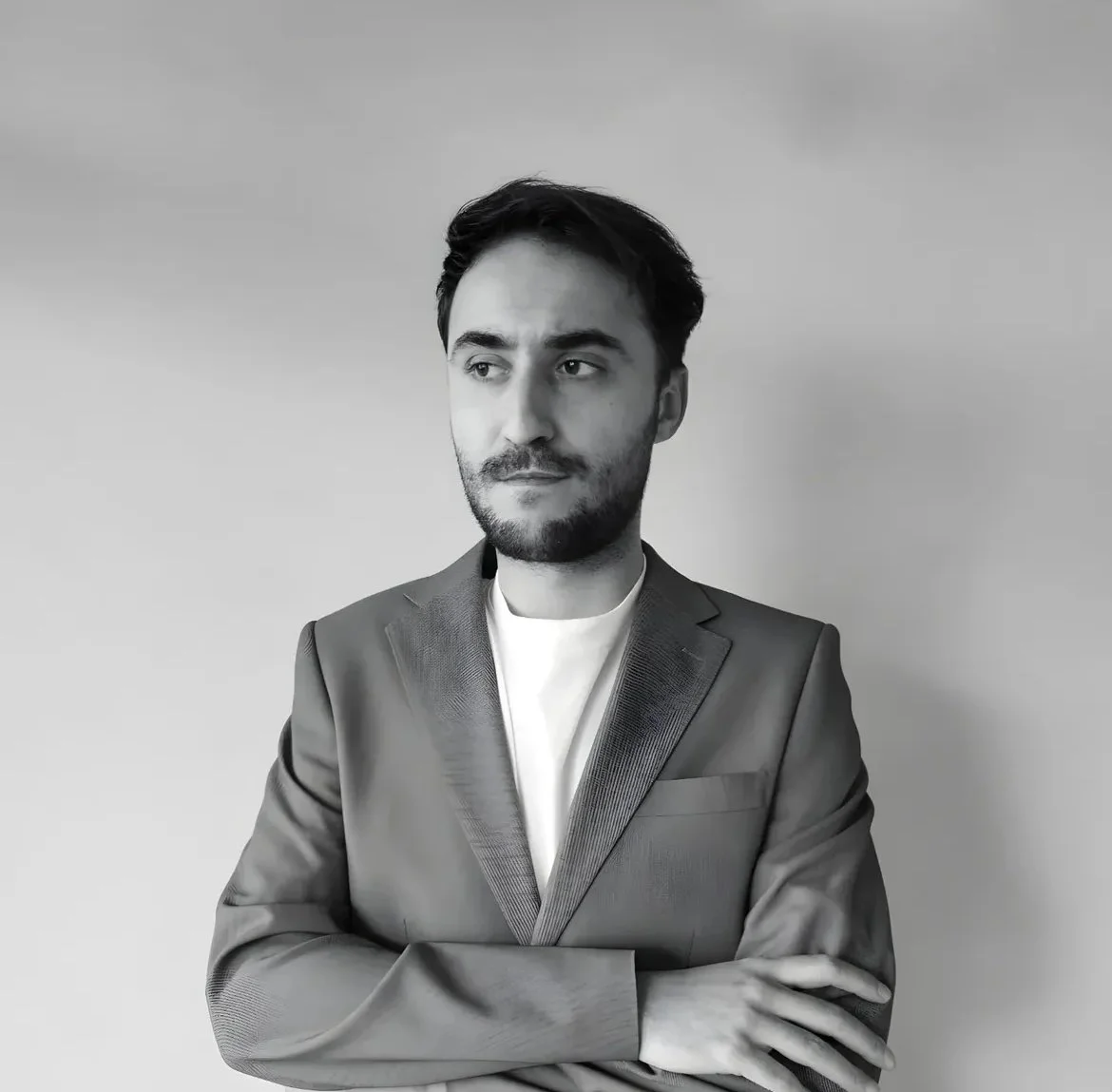
CEN member Suso Barciela appointed Editor-In-Chief of Piece With Artist (www.piecewithartist.com)
About Suso Barciela
Suso Barciela (Seville, 1995) is the director of the magazine Piece With Artist. He is also a critic, curator, and art advisor specializing in contemporary art.
His career integrates theoretical reflection and curatorial practice with an analytical approach, based on the premise that art is a field of ideas, tensions, and meanings that transcends the aesthetic. Through writing and curating, he examines how art is produced and circulates within institutional, media, and commercial systems.
His critical voice extends through collaborations with various national and international publications, such as the Barcelona-based platform A*DESK, the New York magazine New Visionary Magazine, Plataforma PAC, and New Art Project Magazine from London. Furthermore, he is the founder and editor of the blog El Espacio Aparte, where he provides critical analysis and advice for new collectors.
Beyond writing, his work is articulated through professional networks such as the Curatorial Ethics Network (CEN) and as a member of the prestigious AMCA – Madrid Association of Art Critics, a recognition of his work and dedication in the sector.
His education, a degree in Art History from the University of Seville and a specialization in Art Criticism, supports work driven by the conviction that art is a catalyst for social transformation and critical reflection.
About Piece With Artist magazine
From the intimate to the unconventional. Artists with their work and studio interiors Magazine. Interviews, work and photographs of a wide variety of artists with their work, their studios, lifestyle and some secrets of their work. Our experience and curatorial approach is governed by a personal photographic aesthetic and texts with an intimate look about the artist, their work and their environment, so that they connect our audience with emotional and sensory stories designed to inspire.
Exhibition
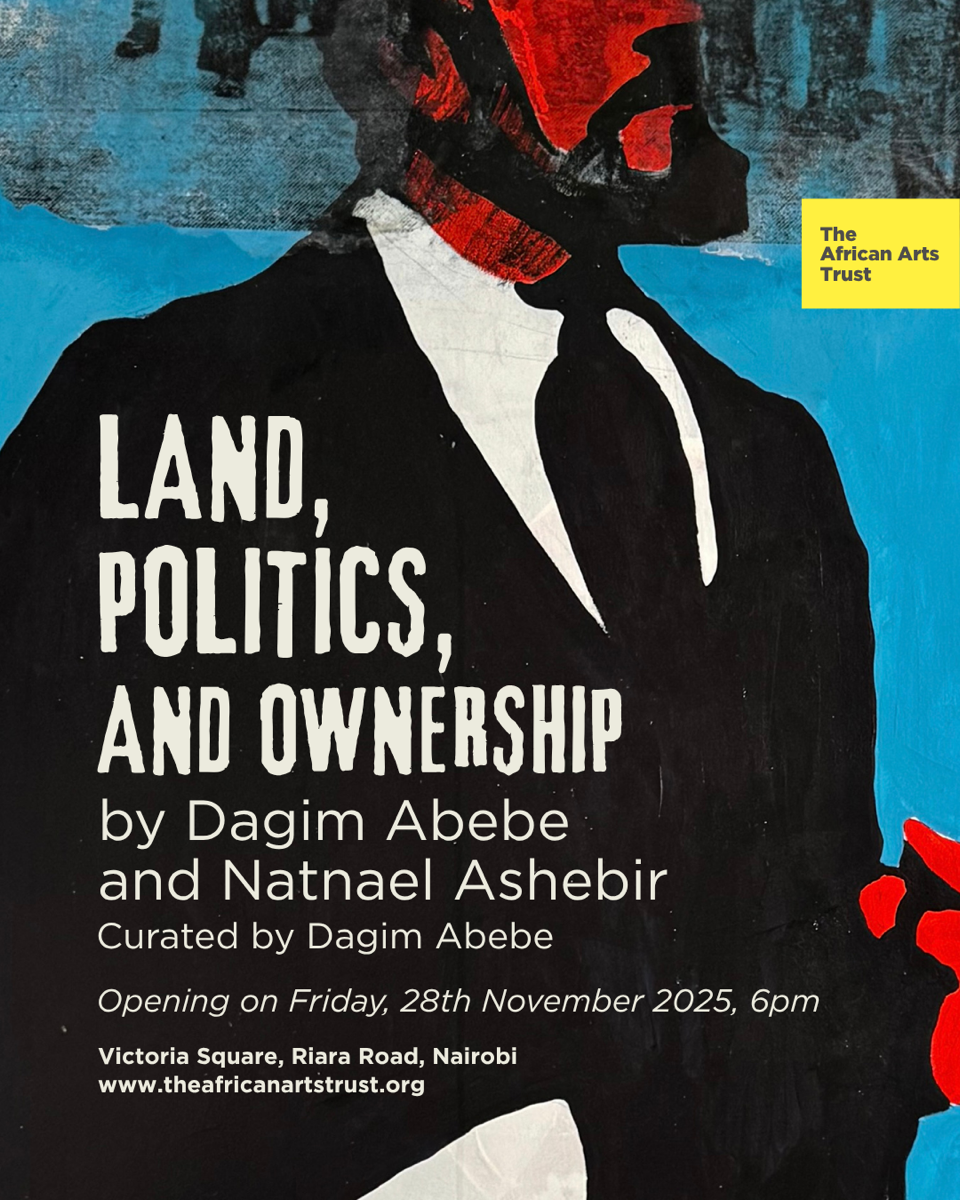
CEN members Dagim Abebe and Natnael Ashebir announce an exhibition.
Dagim Abebe and Natnael Ashebir:
Land, Politics, and Ownership.
Open: 28th November 2025 - 28th February 2026, The African Arts Trust Gallery, Nairobi, Kenya.
An interdisciplinary exhibition by curator and artist and curator Dagim Abebe and artist Natnael Ashebir, offers a rigorous and timely examination of contemporary Addis Ababa through the lens of land, power, and memory. Now on view at The African Arts Trust (TAAT) Gallery, the exhibition runs until February 28, 2026 and positions urban transformation as a deeply political and human one.
At its core, the project interrogates the realities of urban displacement in a rapidly changing city. Addis Ababa’s ongoing redevelopment, often framed by state and market actors as modernization and progress has profoundly altered the social fabric of the city. Dagim and Natnael focus on how contested land ownership and large-scale development projects uproot communities, sever long-standing ties to place, and destabilize cultural continuity. Their work insists that displacement is emotional, social, and historical.
A defining strength of the exhibition lies in its confrontation between official narratives and lived experience. Government archives, planning documents, and institutional imagery present the city as a site of orderly progress and economic ambition. In contrast, personal memories, oral histories, and intimate visual gestures reveal stories of loss, resistance, adaptation, and survival. By placing these narratives in direct dialogue, the artists challenge the authority of the archive itself, asking whose histories are legitimized and whose are systematically erased.
The exhibition also foregrounds the politics of space, making visible how access to land is inseparable from power. Dagim and Natnael examine how state institutions, legal frameworks, and market forces collectively shape urban belonging. Land emerges not only as property or territory, but as a symbolic and contested site where questions of citizenship, vulnerability, and social hierarchy are negotiated. In this framing, urban space becomes an arena of struggle one that determines who is seen, who is displaced, and who is allowed to remain.
Memory and identity form the emotional and conceptual backbone of the project. As neighborhoods are demolished or transformed beyond recognition, memory becomes a crucial tool of resilience. The artists explore how identity persists through storytelling, daily routines, and intimate spatial practices, even as physical structures disappear. These acts of remembrance resist the erasure imposed by redevelopment, asserting that histories do not vanish simply because buildings do.
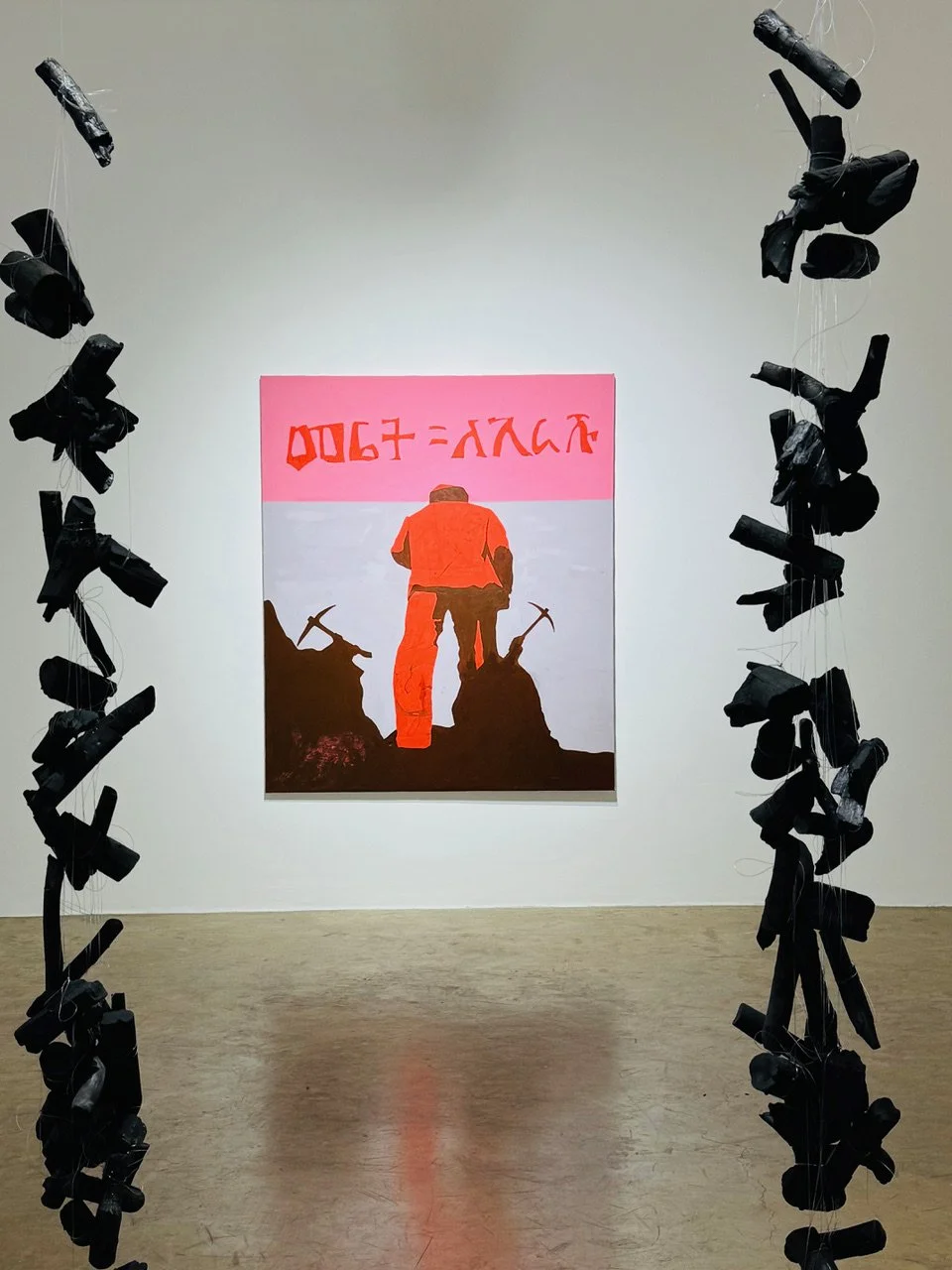
Materially, Land, Politics, and Ownership is grounded in a multidisciplinary practice that reinforces its conceptual concerns. Dagim and Natnael employ charcoal, soil, archival photographs, collage, and printmaking techniques such as image transfer and silkscreen. Materials drawn directly from the land anchor the works in physical reality, while layered archival imagery collapses past and present, emphasizing that displacement in Addis Ababa is not a new phenomenon but a recurring condition. The tactile nature of the work underscores the bodily and environmental dimensions of urban change.
Importantly, the project extends beyond aesthetic inquiry into the realm of ethical and political reflection. It asks viewers to critically consider the consequences of urban development and to confront the power dynamics that determine land tenure and spatial access. Rather than offering simplistic solutions, the exhibition creates space for sustained engagement with the rights of communities navigating uncertainty in rapidly transforming cities.
Land, Politics, and Ownership stands as both a compelling artistic investigation and a form of advocacy. By centering marginalized experiences and questioning dominant frameworks of progress, Dagim and Natnael insist on a more accountable, human-centered understanding of urban transformation. The exhibition ultimately challenges audiences to reconsider how cities are built and at whose expense.
Images: Courtesy of the artists.
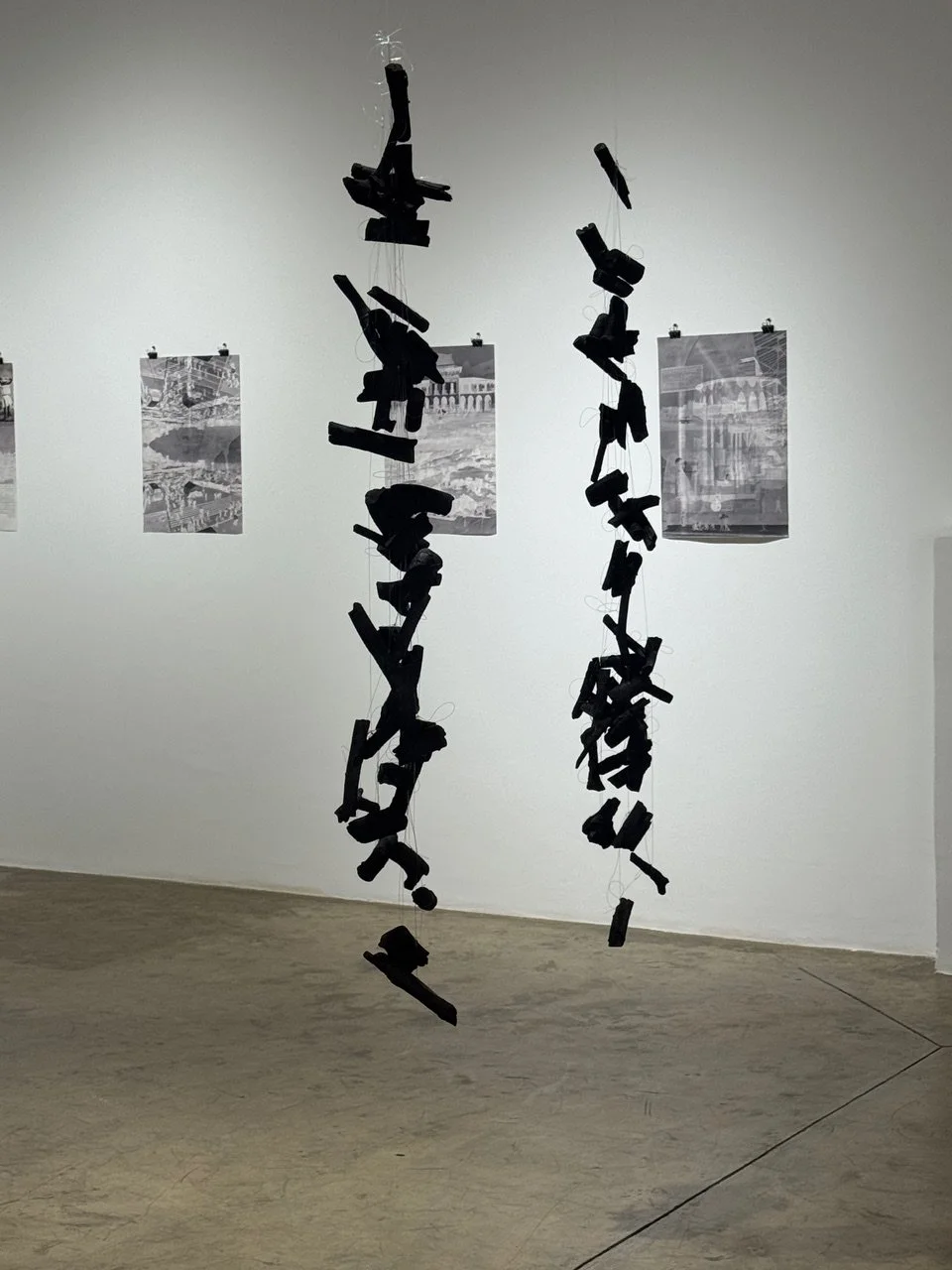
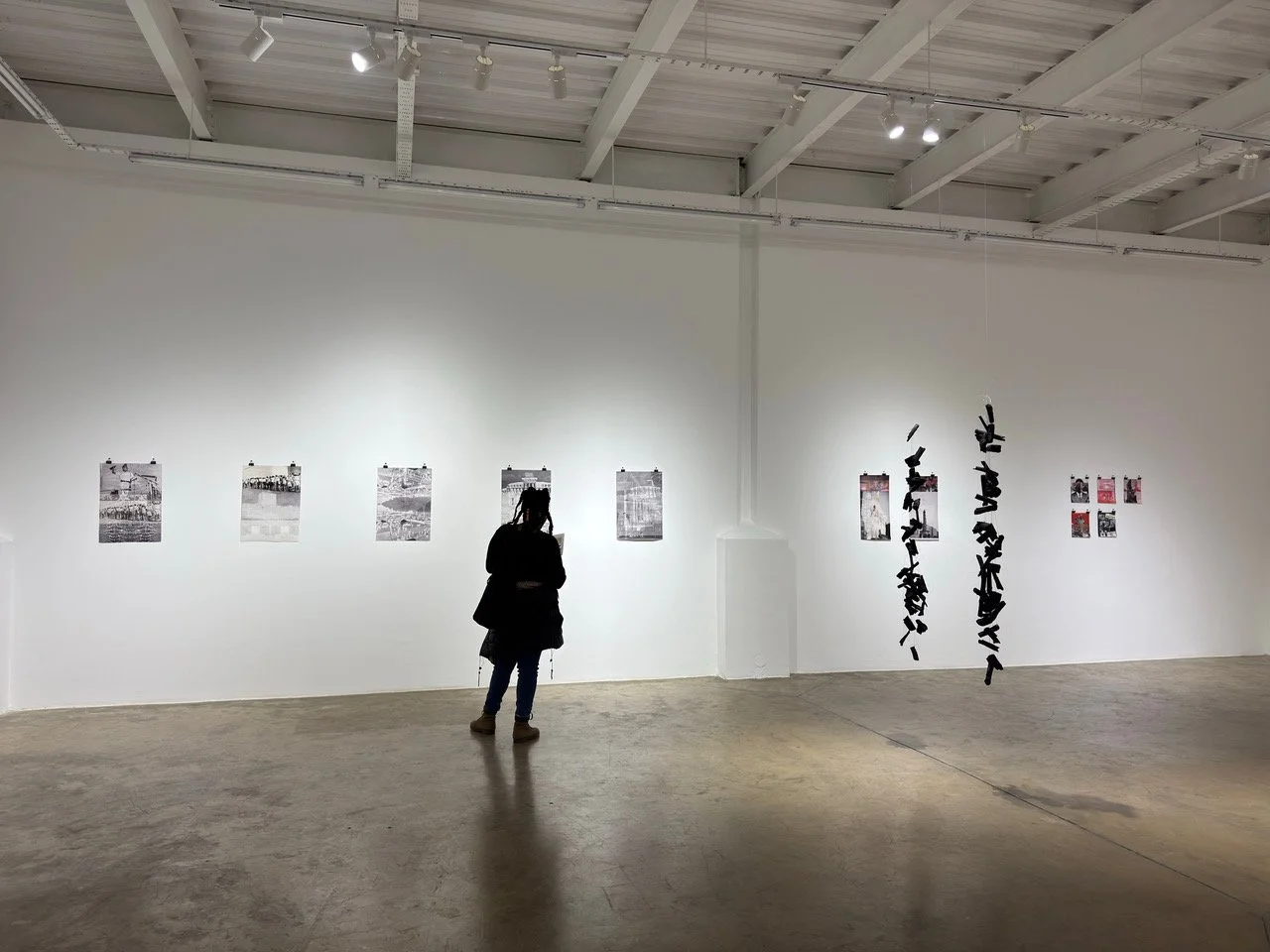
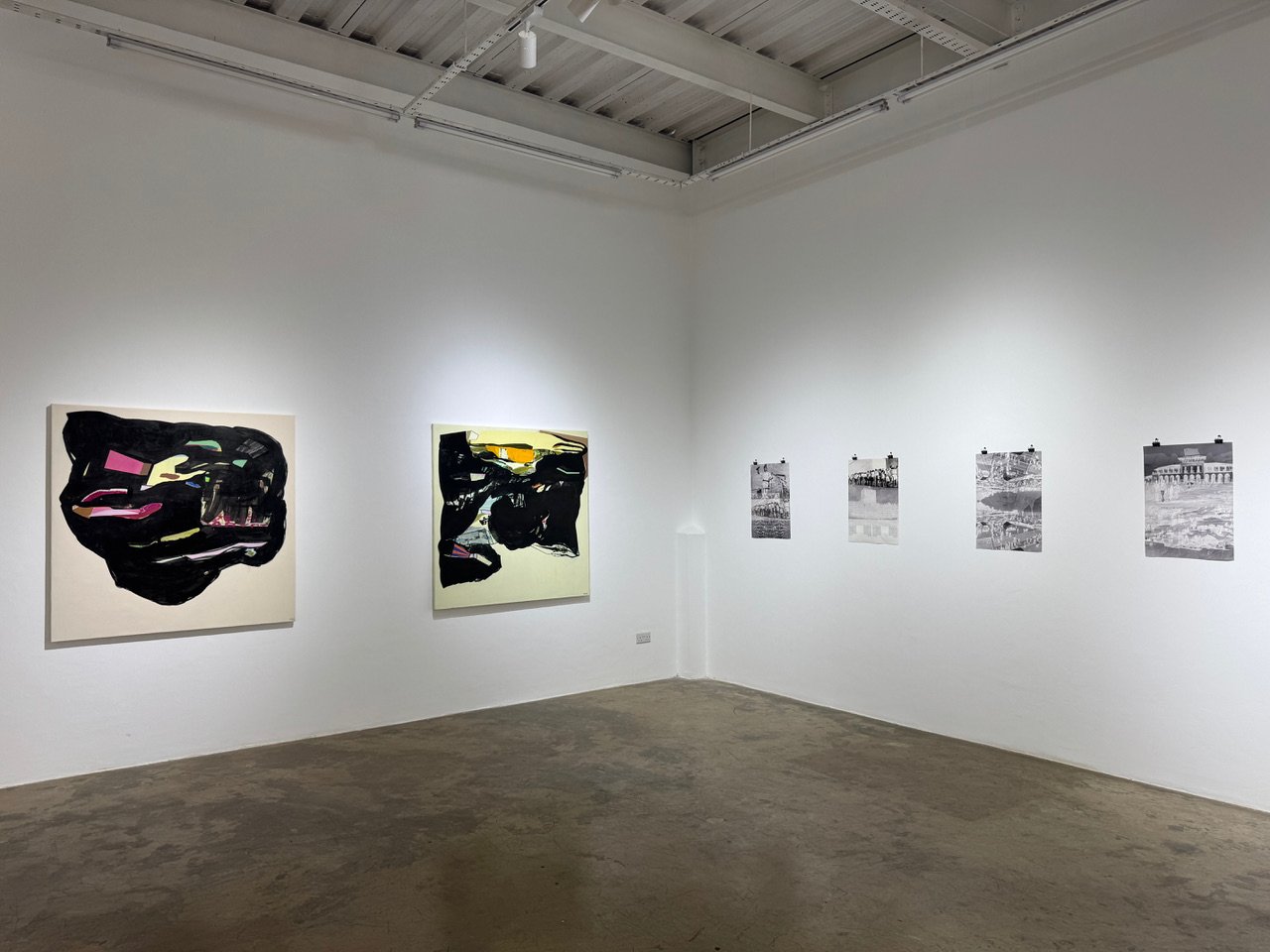
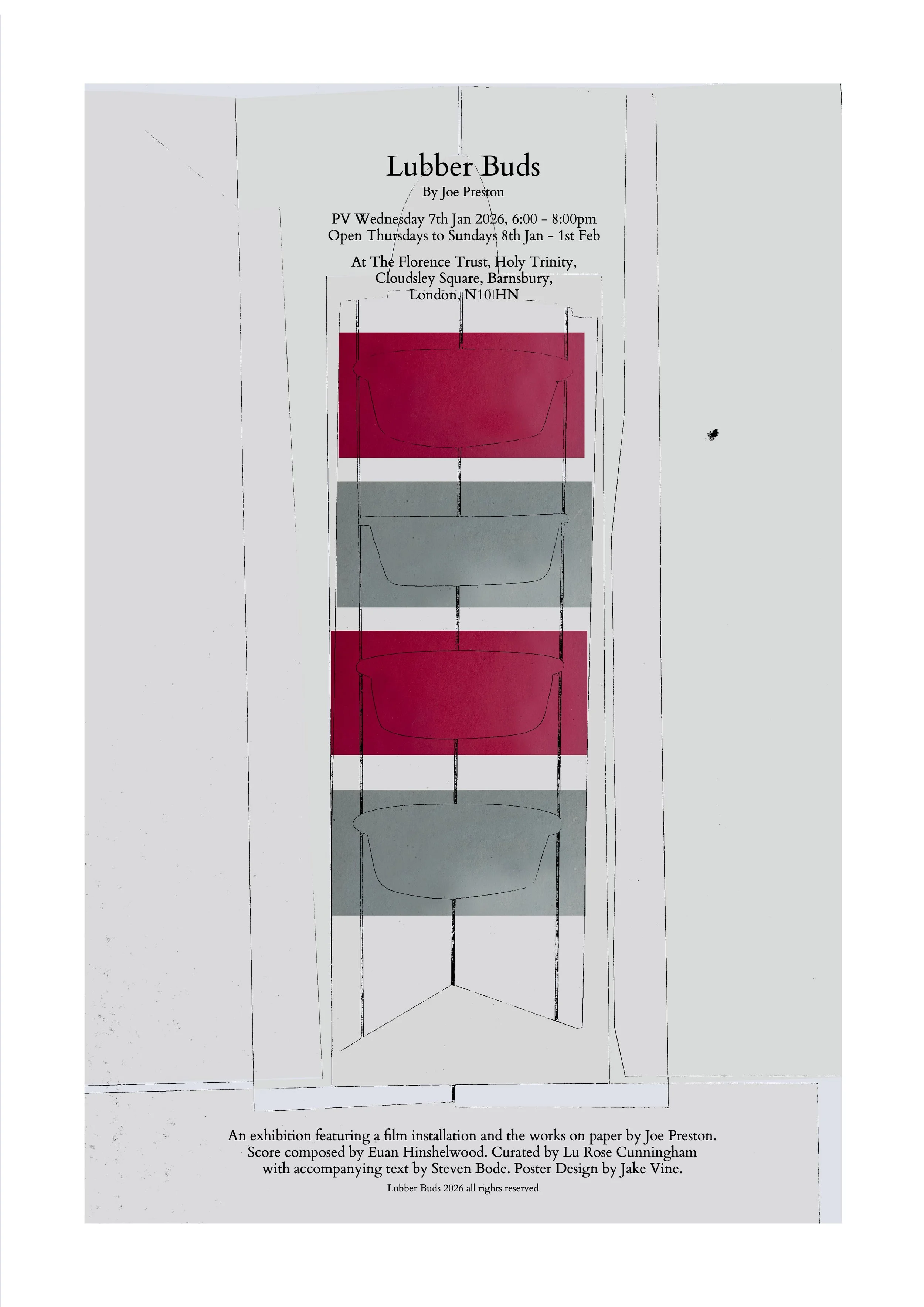
CEN member Lu Cunningham announces the opening of her latest curated exhibition.
EXHIBITION: Lubber Buds
Open: Thursdays to Sundays, 11-6pm Final Day: Sunday 1st February, 11-4pm
At The Florence Trust, Holy Trinity, Cloudesley Square, Barnsbury, London N1 0HN
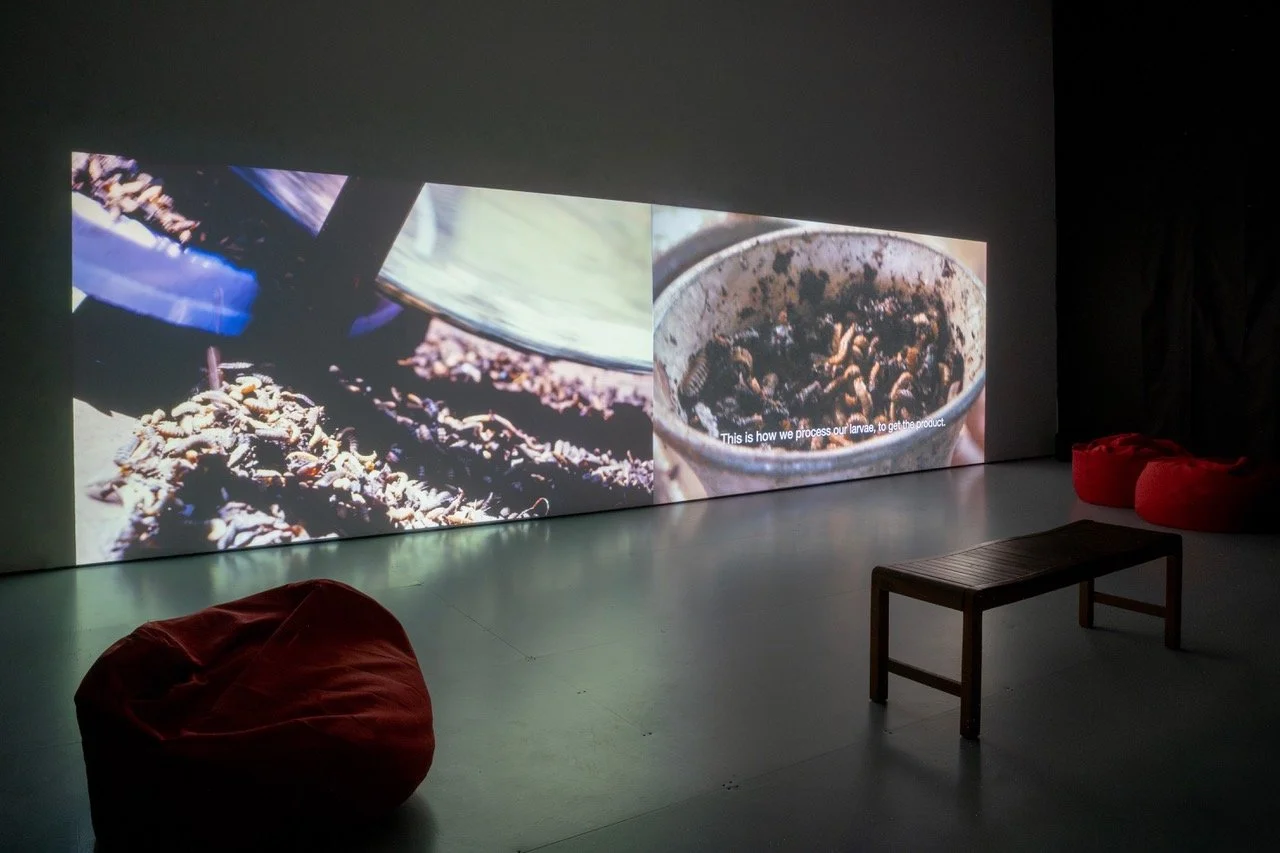
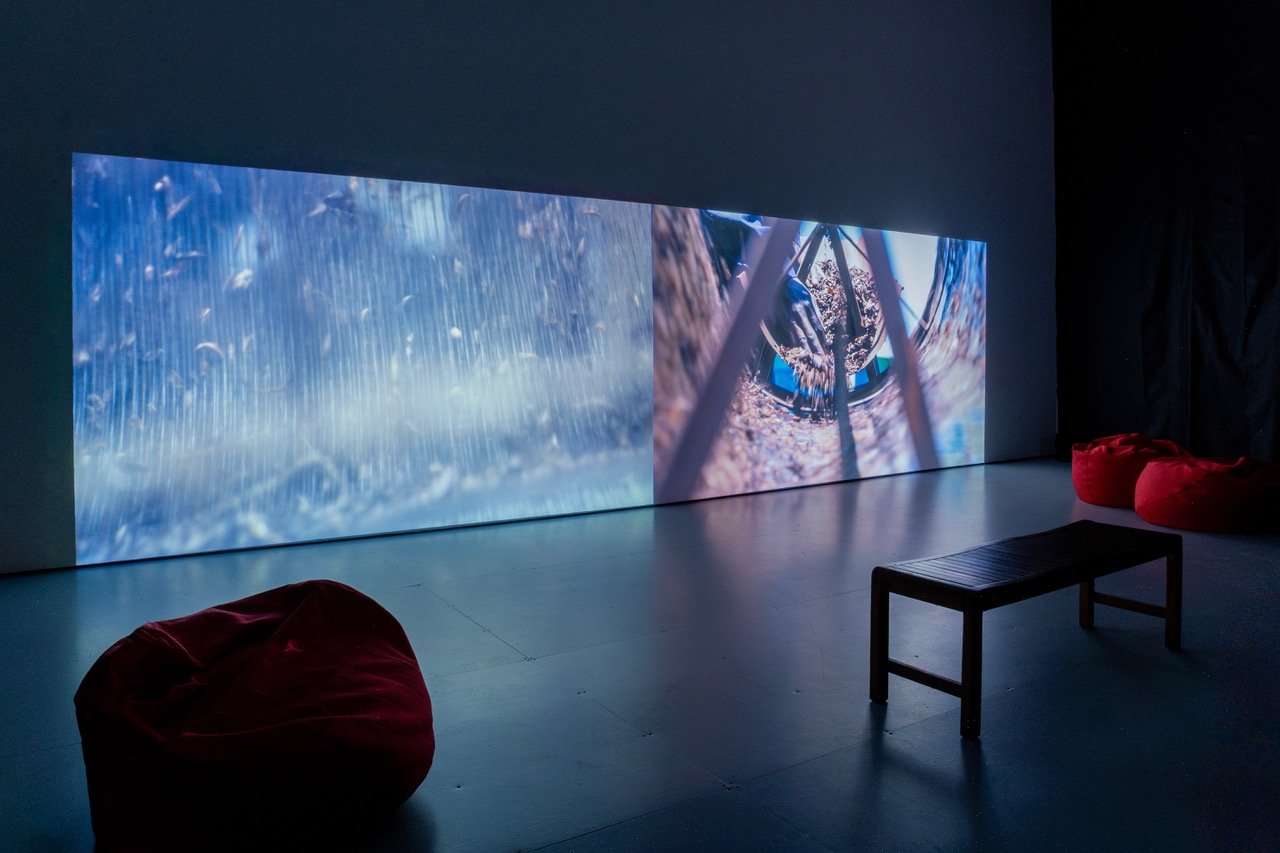
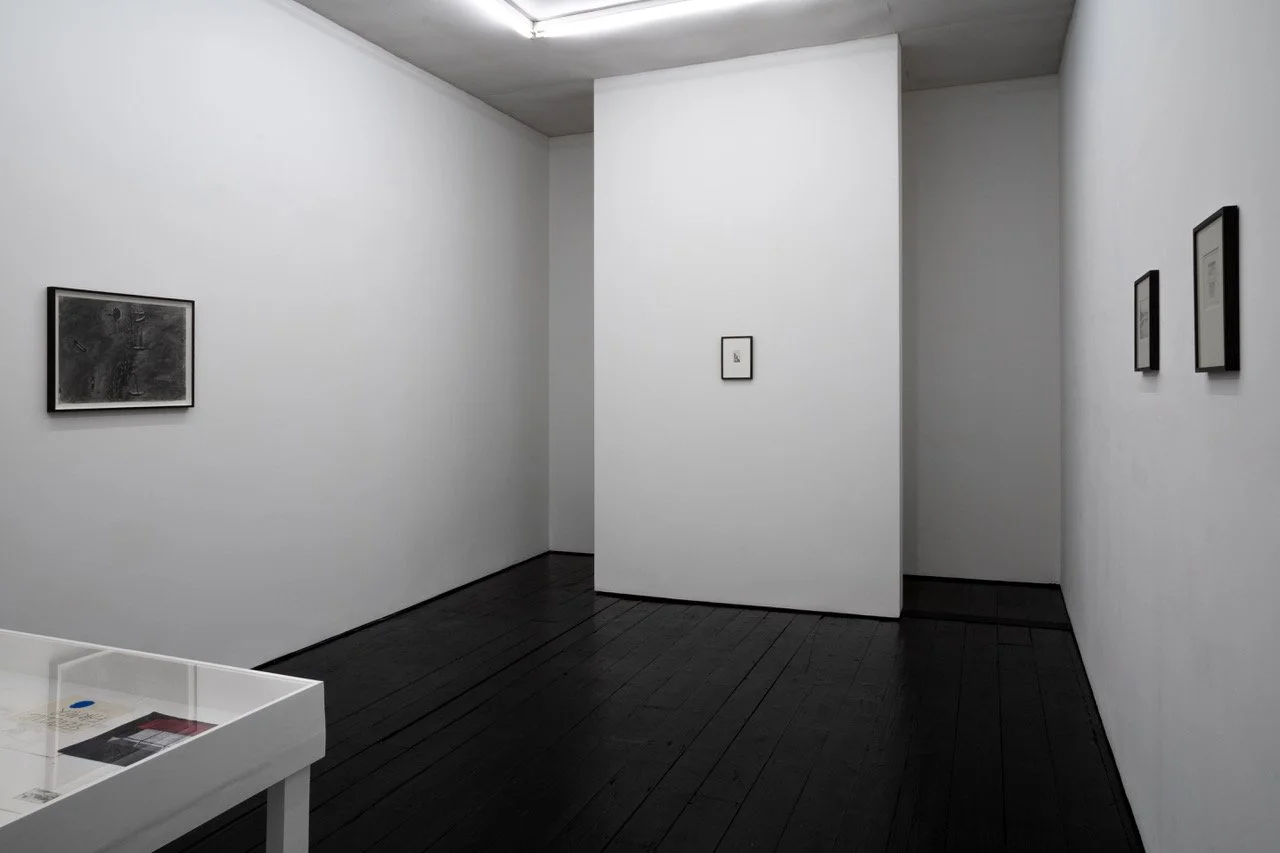
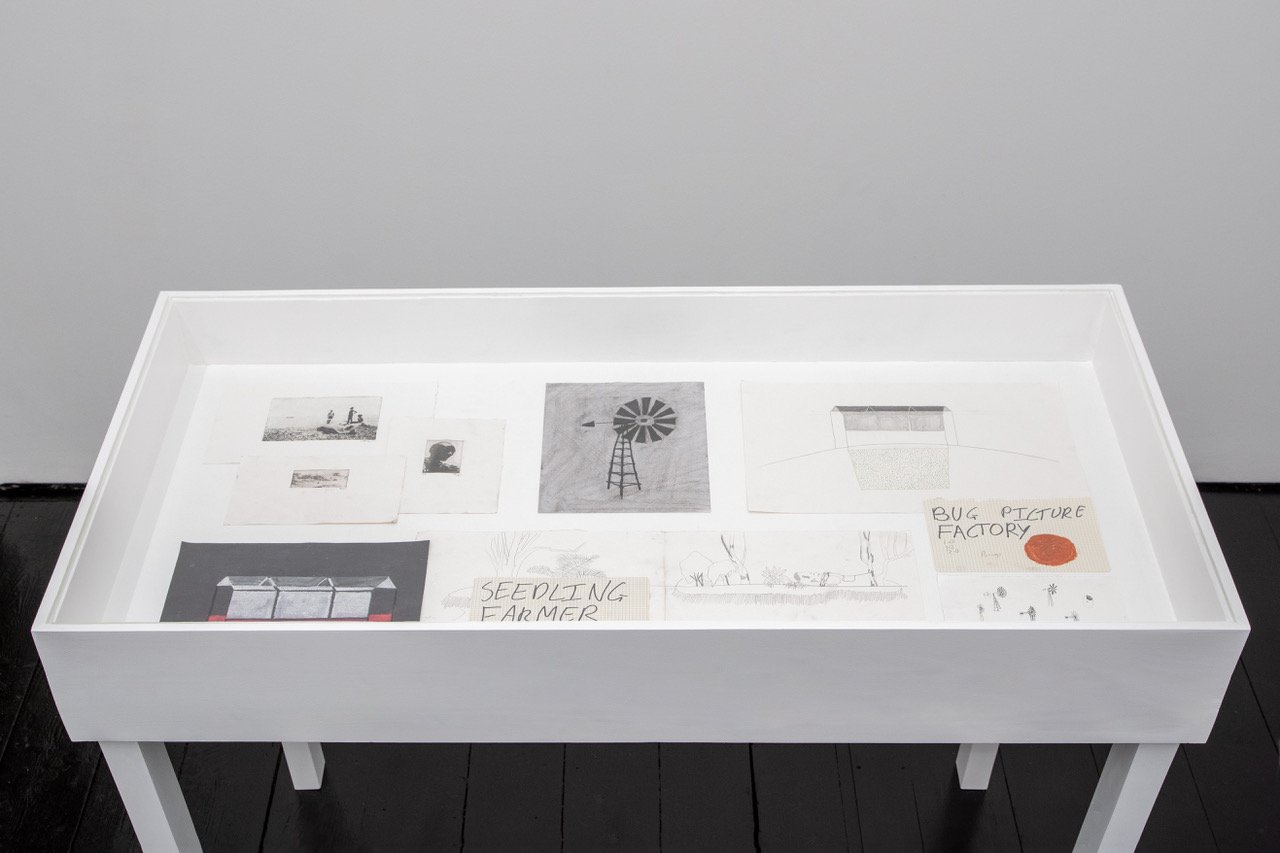
Lubber Buds presents Joe Preston’s cinematic film installation Closing the Loop, alongside etchings, photographs and drawings on paper.
The film attends to the routines and cycles that make up planet Earth’s delicate balance. This rhythm is one that over recent decades has been pushed more and more out of sync by climate change. It is part of a new body of work that examines human eco-systems and food and waste practices, at a time of environmental collapse. The film examines climate catastrophe, and the humans’ place within it, as a series of interlinked loops and cycles, like a musical score, that due to human interference is now out of time, with each cycle, season or year becoming more and more out of time with each other.
Filmed across the entire country, from the Masai Mara all the way across to the South Sudanese borderlands, Closing the Loop features an array of figures and organisations including Afriscout, Sanergy and The Bug Picture, centred around subsistence farmers and attempts towards ecological initiatives. Closing the Loop’s visuals are soundtracked by an original score by composer Euan Hinshelwood.
‘Preston highlights the pioneering work of an ecological initiative that aims to educate smallholder family farmers in organic alternatives for soil improvement, utilising material made from the offspring of abundant black soldier flies… Deftly switching between the micro and the macro, demonstrating how down-and-dirty hands-on involvement is a prerequisite of any well-meaning sustainable practice, [the film] Closing the Loop is disarmingly intimate, powerfully engaged and keenly observed.’
— extract from text by Steven Bode
Images: Lubber Buds, at The Florence Trust Gallery, Islington, of works by filmmaker Joe Preston. Photography by Roman Sheppard Dawson, @studio_reverse_magic.
Exhibition
Event
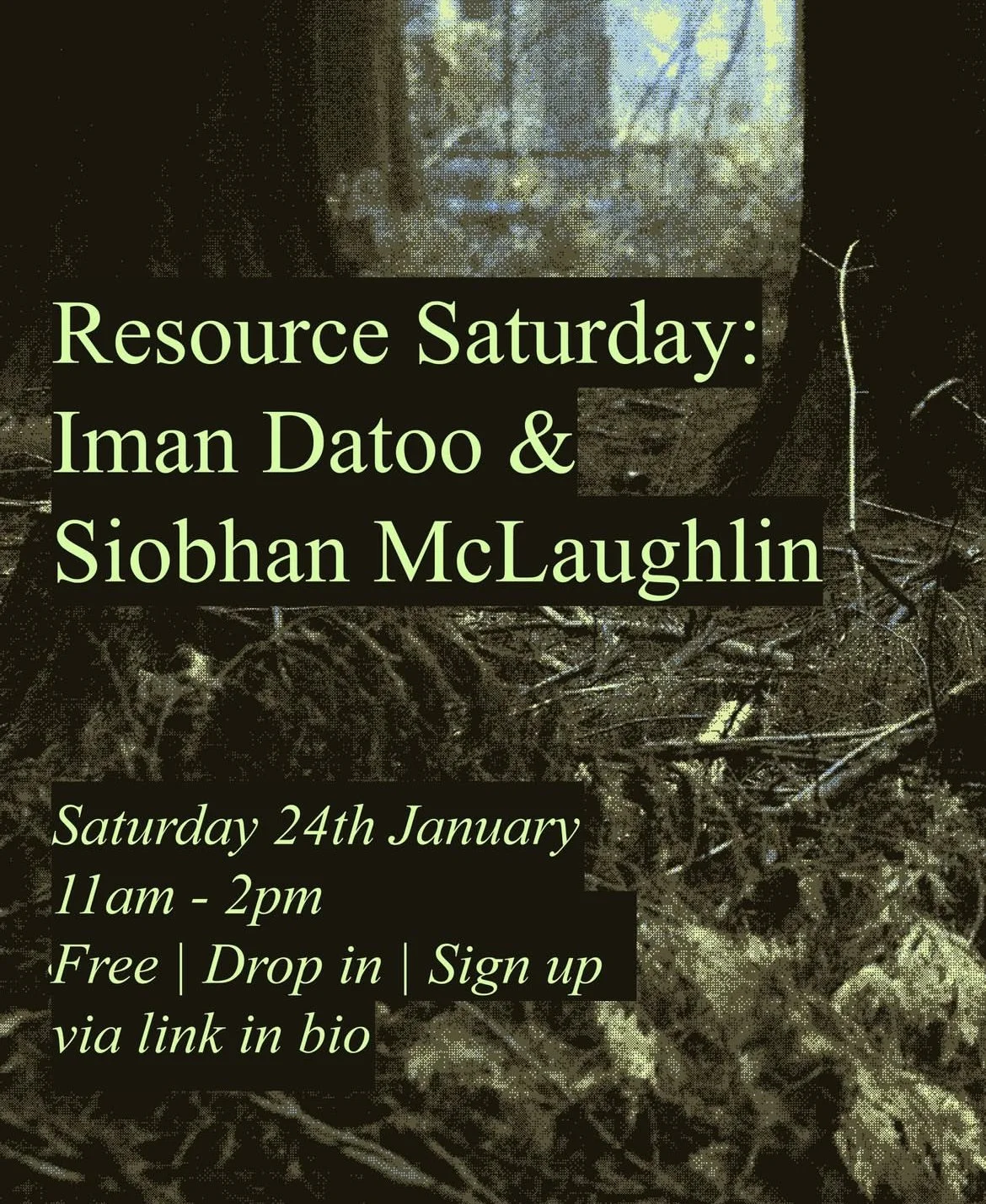
Iman Datoo and CEN member Siobhan McLaughlin will be hosting Resource Saturday on 24th January 2026 from 2-4pm at Radical Ecology studio in Webbers Yard, Dartington, UK.
Additional information:
Iman Datoo is a transdisciplinary artist and Head of Research and Community at Radical Ecology. Her practice investigates the world-making capacities of plants, soils and people - how we move, behave and make place. She is currently a PhD candidate at UCL’s Slade School of Art and is also the author of the 100 Year Care Plan, a report exploring the social and ecological value of Dartington’s North Wood.
Siobhan McLaughlin is an artist and curator based in Glasgow. Her practice explores themes of place, care and sustainability through painting and printmaking, to consider how past and current activities leave impressions on our ecologies. Since graduating from an MA in Fine Art at Edinburgh University in 2019, she has been awarded the SSA Wilhelmina Barns-Graham Award, a film commission from the Tate’s British Art Network, and the Stephen Palmer Travel Award.
Journal
Call for submissions: Special Issue- Conditions of Transcultural Curating: Ecology, Decoloniality, and Global Exhibition Practices
This Special Issue examines how curatorial practice mediates the transcultural circulation of art under contemporary ecological and geopolitical conditions. It invites contributions that explore exhibitions, collections, live programmes, and curatorial experiments engaging with environmental justice, extractivism, migration, and more-than-human relations. By foregrounding ecological and decolonial perspectives, the issue reframes global artistic circulation through locally situated, material, and ethical conditions of curatorial practice, addressing how art circulates, is interpreted, and is exhibited across cultures today.
Special Issue webpage:
https://www.mdpi.com/journal/arts/special_issues/957AG66HWM
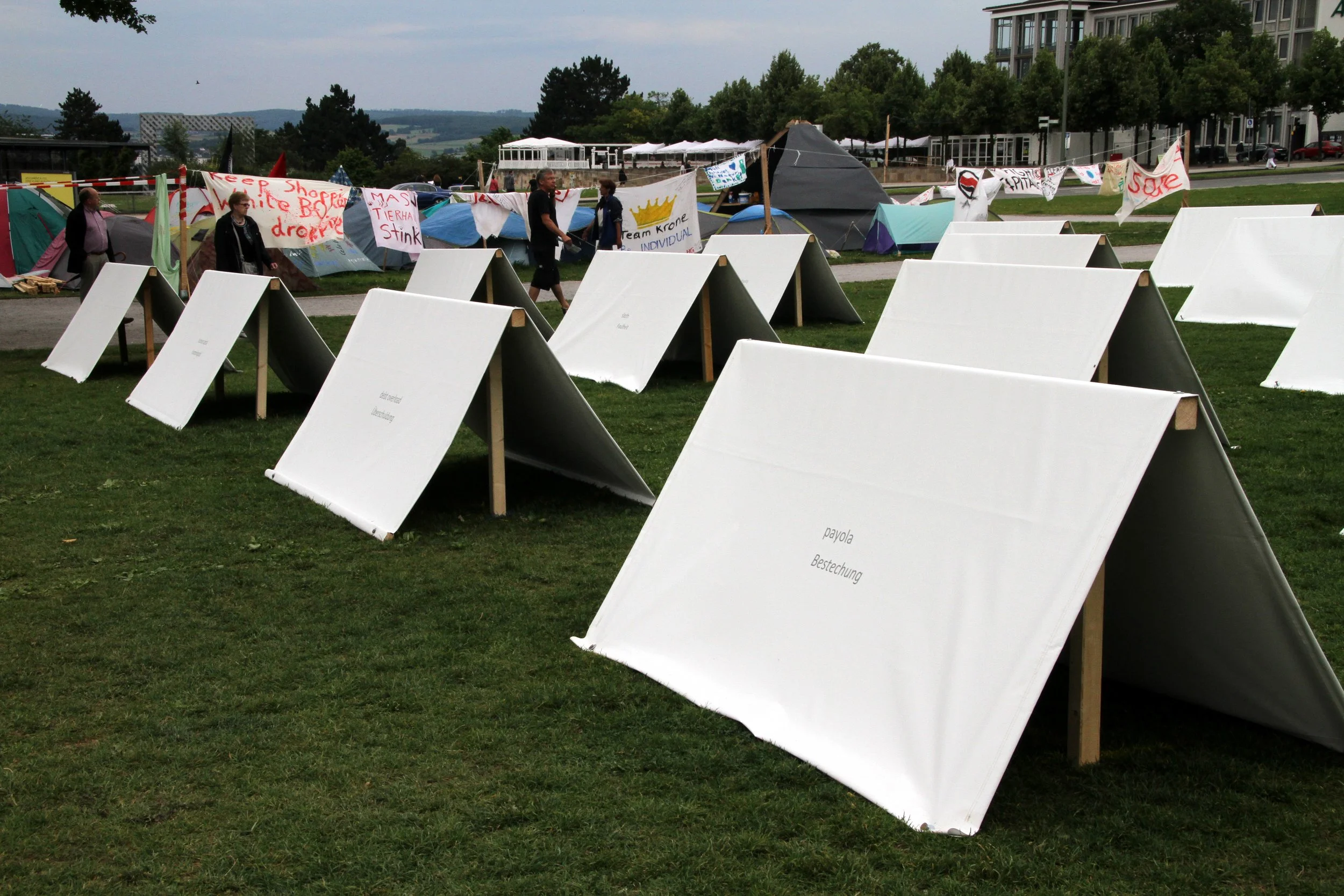
Image credit: Gerd Eichmann, CC BY 4.0 <https://creativecommons.org/licenses/by/4.0>, via Wikimedia Commons
Symposium
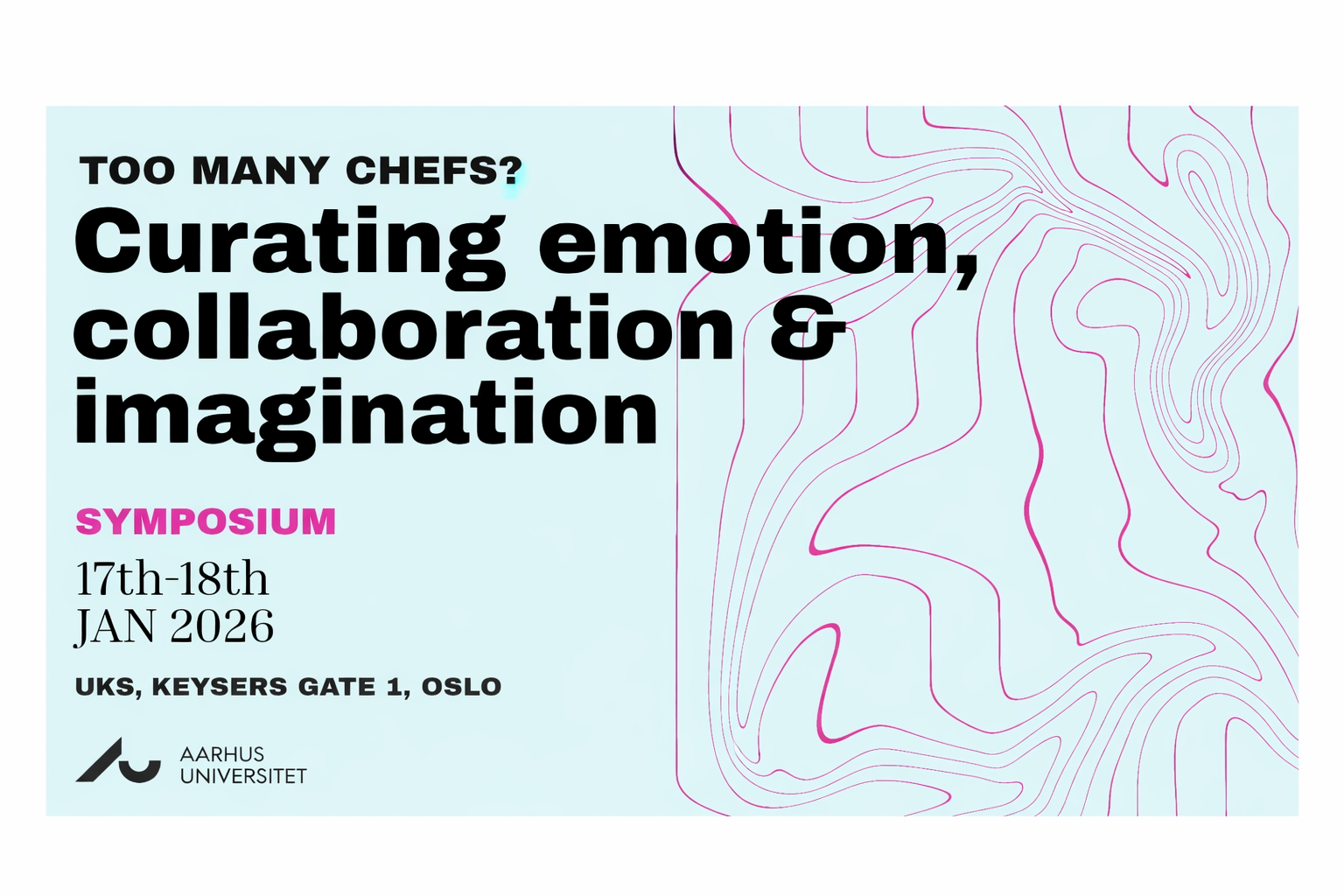
CEN members Dawit Algerson and Silla Simone announce NEW publications upcoming from the recent 'Two Many Chefs? Curating emotion, collaboration & imagination' Symposium.
More to follow. Please see below for information about the recent symposium.
A Two-Day Public Symposium on Collaborative Curating
Too Many Chefs? was a two-day public symposium exploring curating as a collaborative, imaginative, and emotionally engaged interdisciplinary practice. Hosted in Oslo at UKS Unge Kunstneres Samfund, the symposium brought together 24 curators from the Master’s programme in Curating at Aarhus University.
The event presented current research that rethinks curatorial work as a social, sensory, and political act rather than a strictly institutional role. Through experimental presentations, participatory formats, performed research, and collective exercises, Too Many Chefs? proposed curating as an expanded practice shaped by collaboration, affect, and shared responsibility.
The symposium’s title playfully challenged traditional hierarchies within curatorial work, using the familiar phrase “too many chefs” to question dominant models of authorship and authority. Instead, the symposium foregrounded co-creation, collective agency, and shared authorship as fertile grounds for developing new cultural forms and curatorial methodologies.
Across the two days, the symposium invited audiences to reflect on how three intersecting themes currently at the forefront of curatorial research shape the ways exhibitions and curated experiences are conceived, constructed, and sustained:
Collaboration focused on co-creation, audience involvement, and distributed authorship, asking how curators, artists, and communities can build projects together without replicating institutional power structures, and what happens when decision-making is shared.
Imagination addressed speculative thinking, activism, and interdisciplinary exchange as tools for re-reading the past and envisioning alternative futures. Presentations explored how curatorial work might generate new forms of knowledge, solidarity, and world-building.
Emotion examined affect, empathy, vulnerability, and embodied spectatorship, considering how feelings inform experience and how curators can design spaces that hold emotional complexity and encourage intimate, communal, or sensory modes of engagement.
Too Many Chefs? functioned both as a platform for presenting curatorial research and as a collective space for testing ideas, formats, and practices. The symposium emphasized curating not as a fixed professional identity, but as a dynamic, relational process shaped through collaboration, imagination, and emotional engagement.
Further information about the symposium, including documentation, updates, and future publications, will be made available through the Too Many Chefs? website and social media channels.
Video recordings from the symposium will be published on the website in the coming period,and the publication will be announced across the project’s Instagram, LinkedIn, and Facebook platforms.
www.instagram.com/too_many_chefs_curate/
Linkedin: too many chefs